
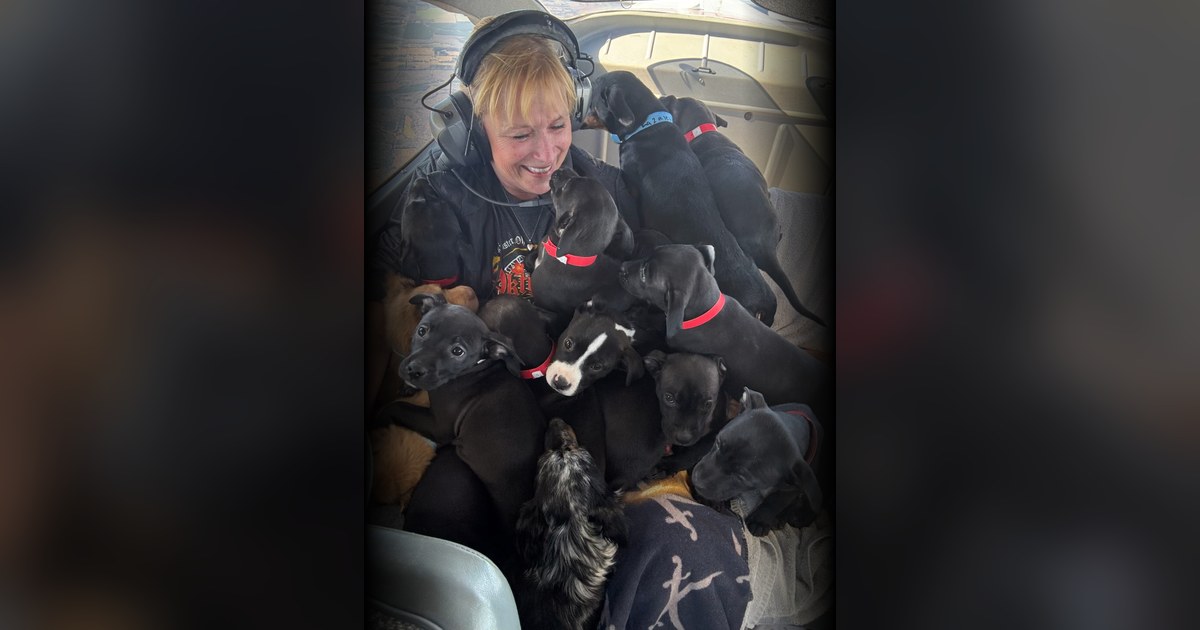
Seventeen puppies. One 1970 Cessna 182. Two and a half hours each way.
That’s the math behind one of the most unusual — and most rewarding — missions any pilot in our chapter has taken on. At our April meeting, Steve and Angie shared the story of their rescue flights: a growing operation that has carried close to 30 flights worth of shelter dogs from Enterprise, Alabama, to adoptive homes in Central Florida, one squirming, tail-wagging, occasionally gassy load at a time.
The Mission
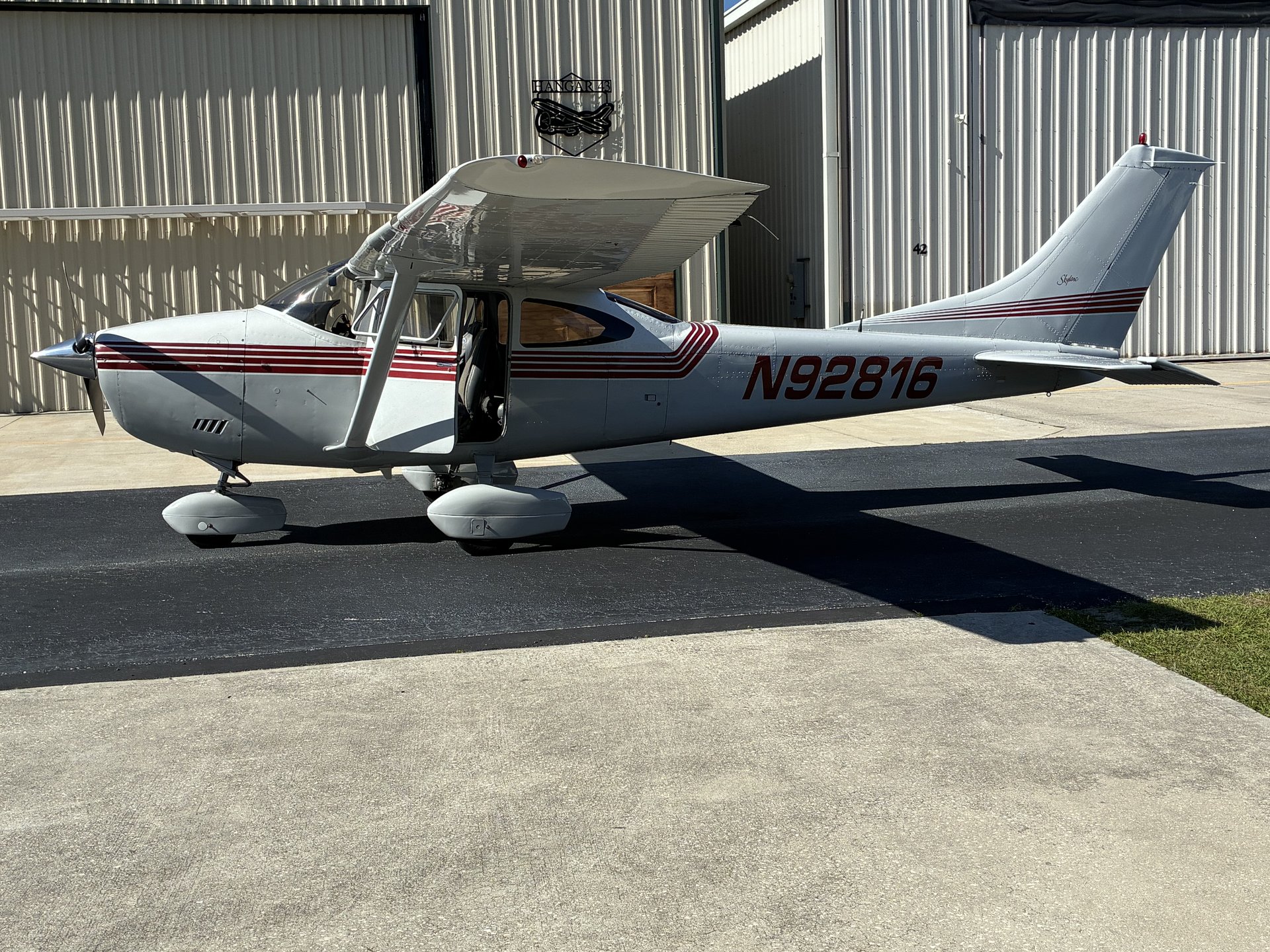
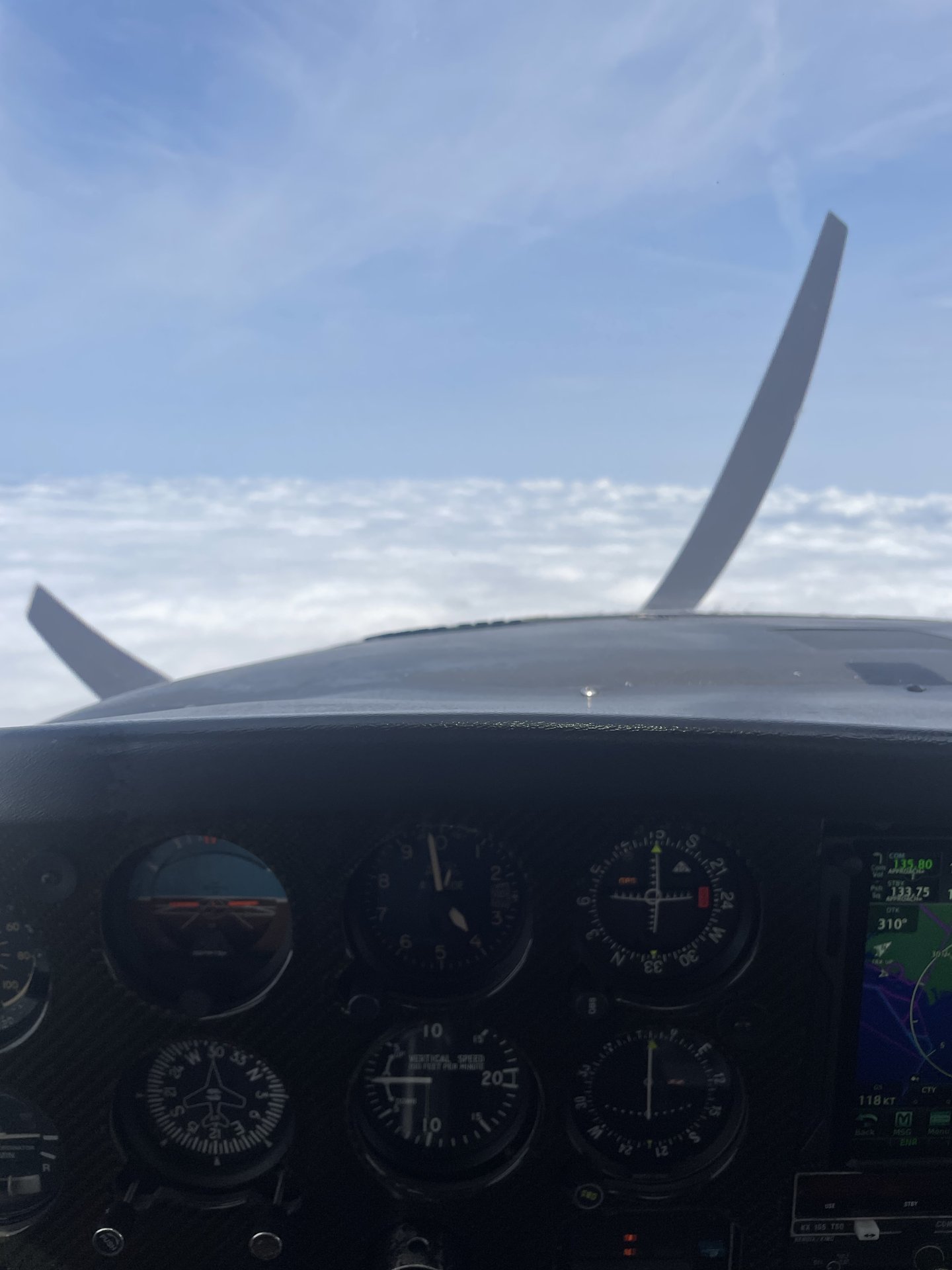
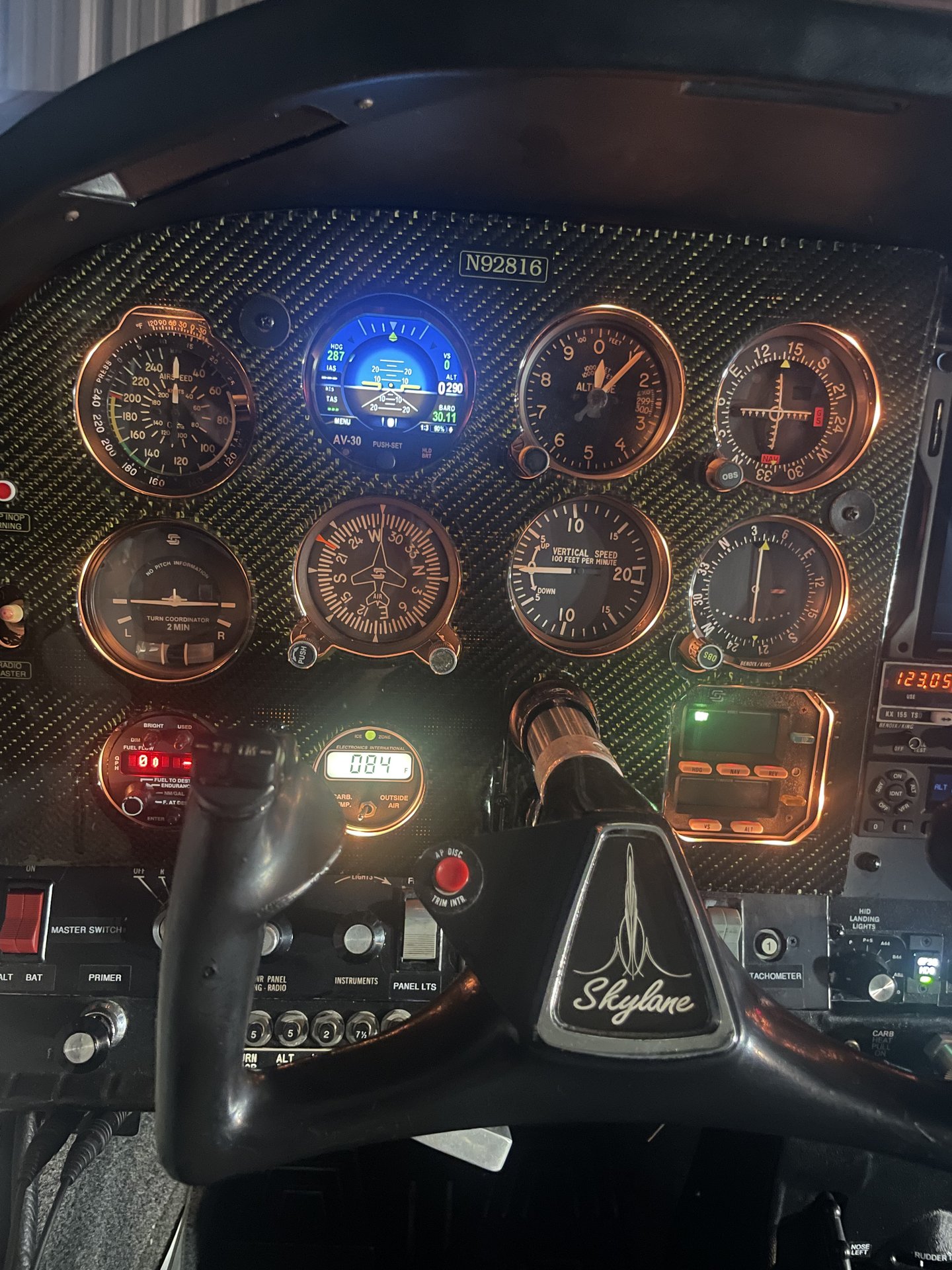
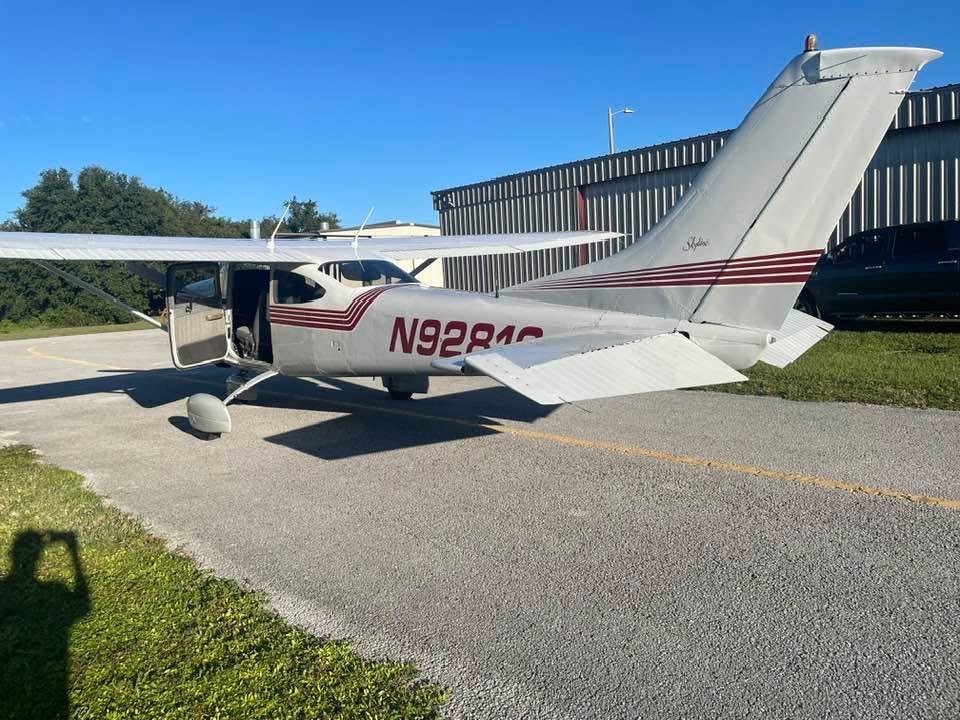
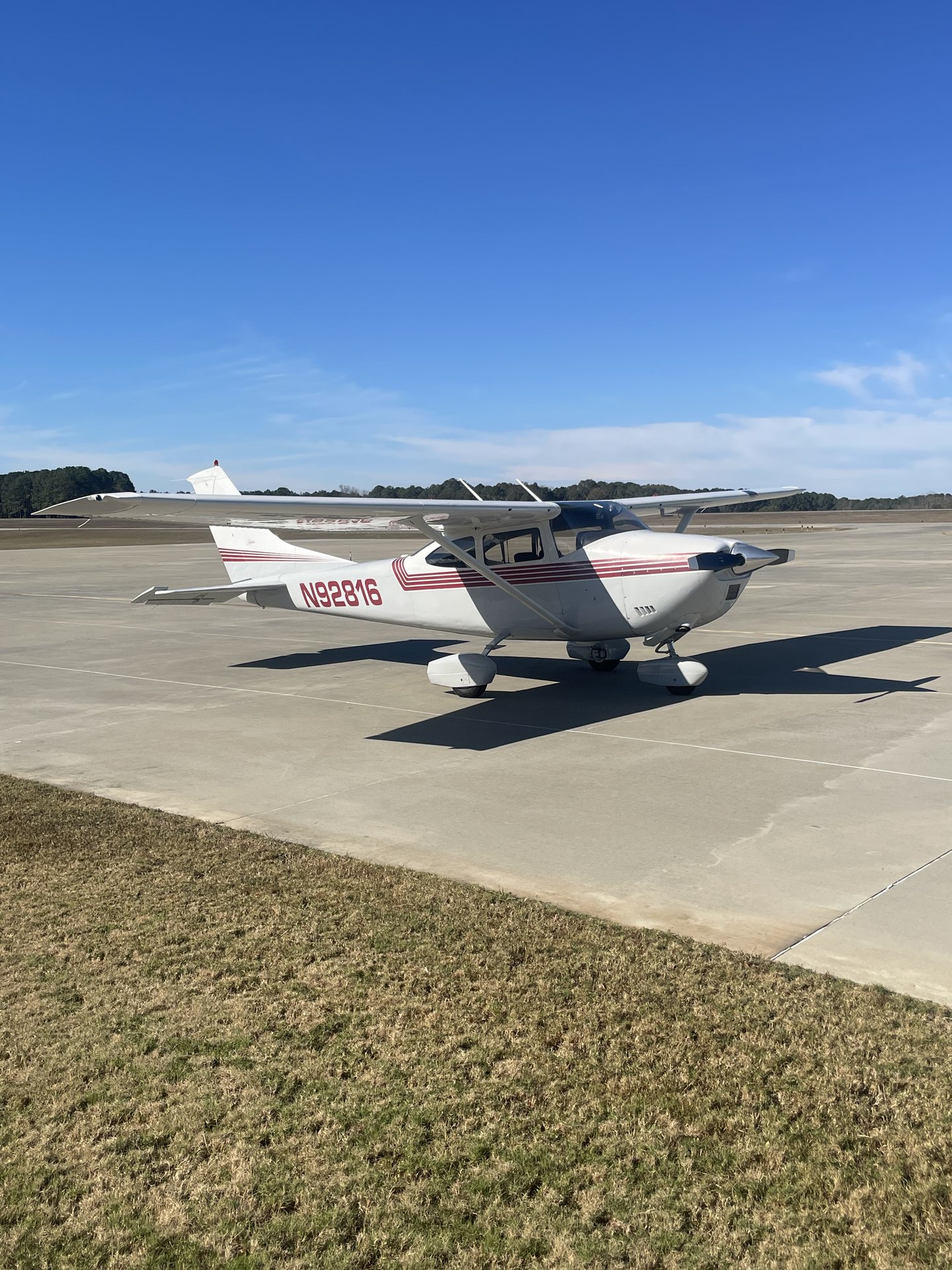
Steve flies N92816, his 1970 Cessna 182 — IFR-equipped, autopilot on board, and as he put it, “pretty much the pickup truck of the group.” It’s a fitting description. While fellow pilot Mike Young — the founder of Puppy Rescue Flights — runs the whole operation from the left seat of a Columbia at 180 knots, Steve’s job is to haul the cargo that doesn’t fit in a manifest line: puppies who were days away from euthanasia.
Puppy Rescue Flights runs with the precision of a small airline. Mike handles dispatch — weight and balance, dog manifests with every name and weight, crew assignments, all of it delivered by email throughout the week. By Sunday morning, when the planes depart, everyone knows the plan. Kay is the coordinator on the ground in Enterprise, managing the load-outs and keeping the operation running.
“He runs it like a little airline,” Steve said of Mike. “I called him the dispatcher. He’d never heard that word before.”
Between them, Steve and Angie bring a lifetime of aviation to the cockpit. Steve started flying in 1973, has owned airplanes since 1976 — N92816 is his sixth — and spent his career as a pilot for Frontier Airlines before retiring. Angie’s path was a little different: she started out as a professional ice skater, then found a second career as a flight attendant at Frontier. Both retired now — and both still very much in the air.
Enterprise, Alabama
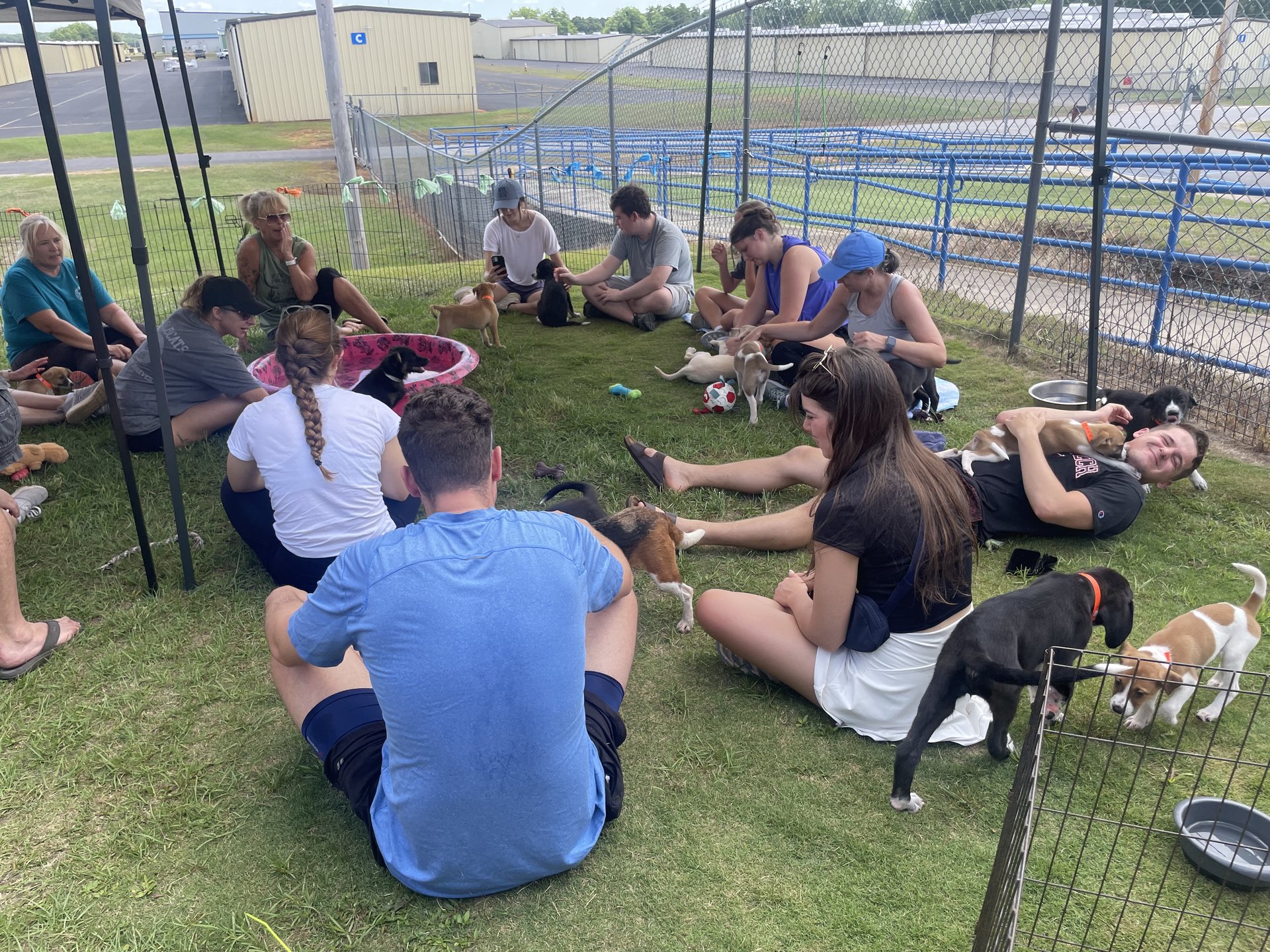
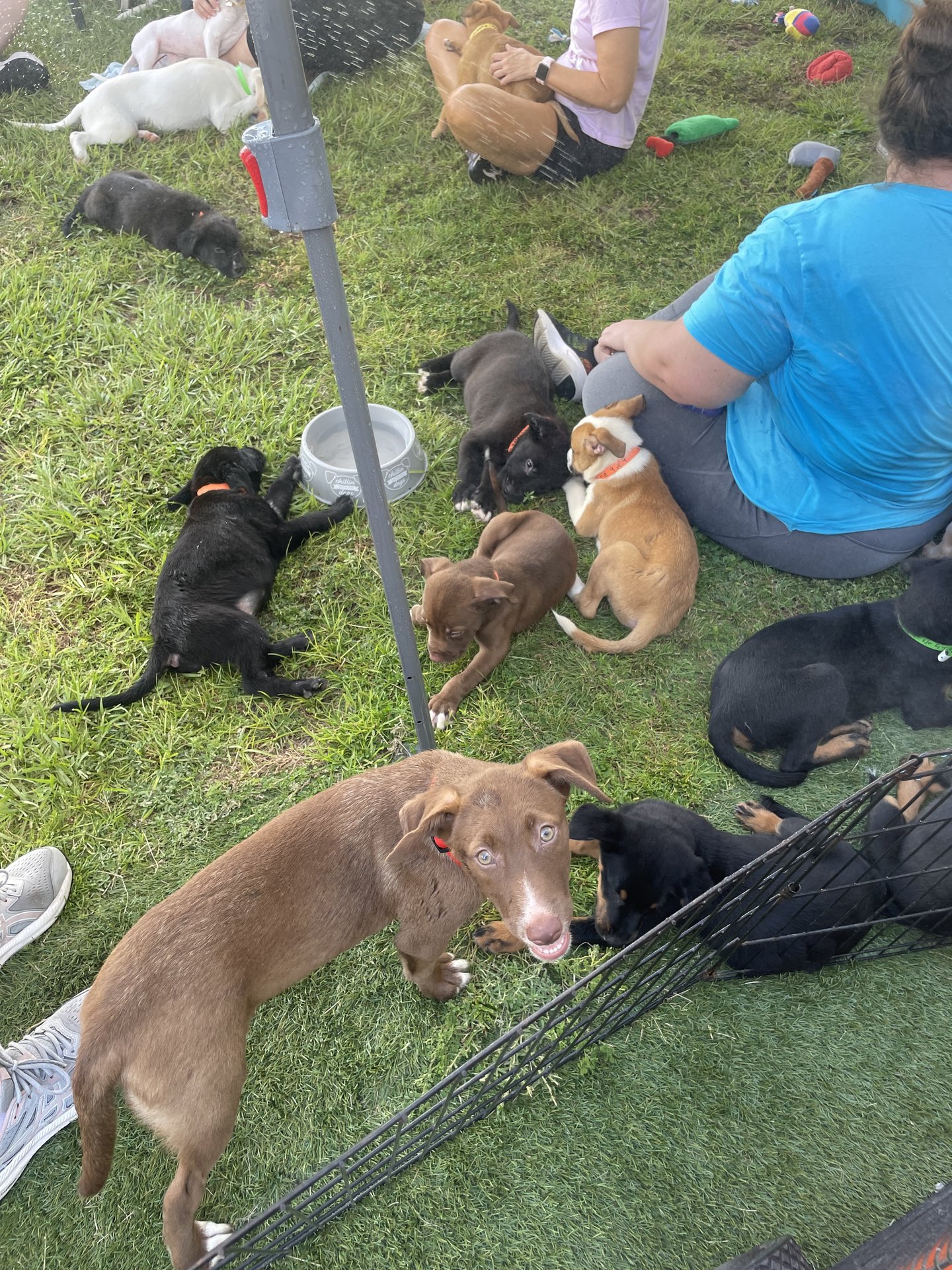
The staging area in Enterprise is part holding pen, part circus. When Steve and his fellow volunteer pilots arrive — usually three or four aircraft on a given Sunday — the dogs have already been transported in from shelters across Alabama by a network of local pilots. Volunteers keep them moving, and the pilots have learned to read the crowd quickly.
“You always have three types,” Angie said. “The escape artist. The bully. And the one that enjoys the ladies.” Knowing which is which before loading matters — especially when you’re about to share a small cockpit for two and a half hours.
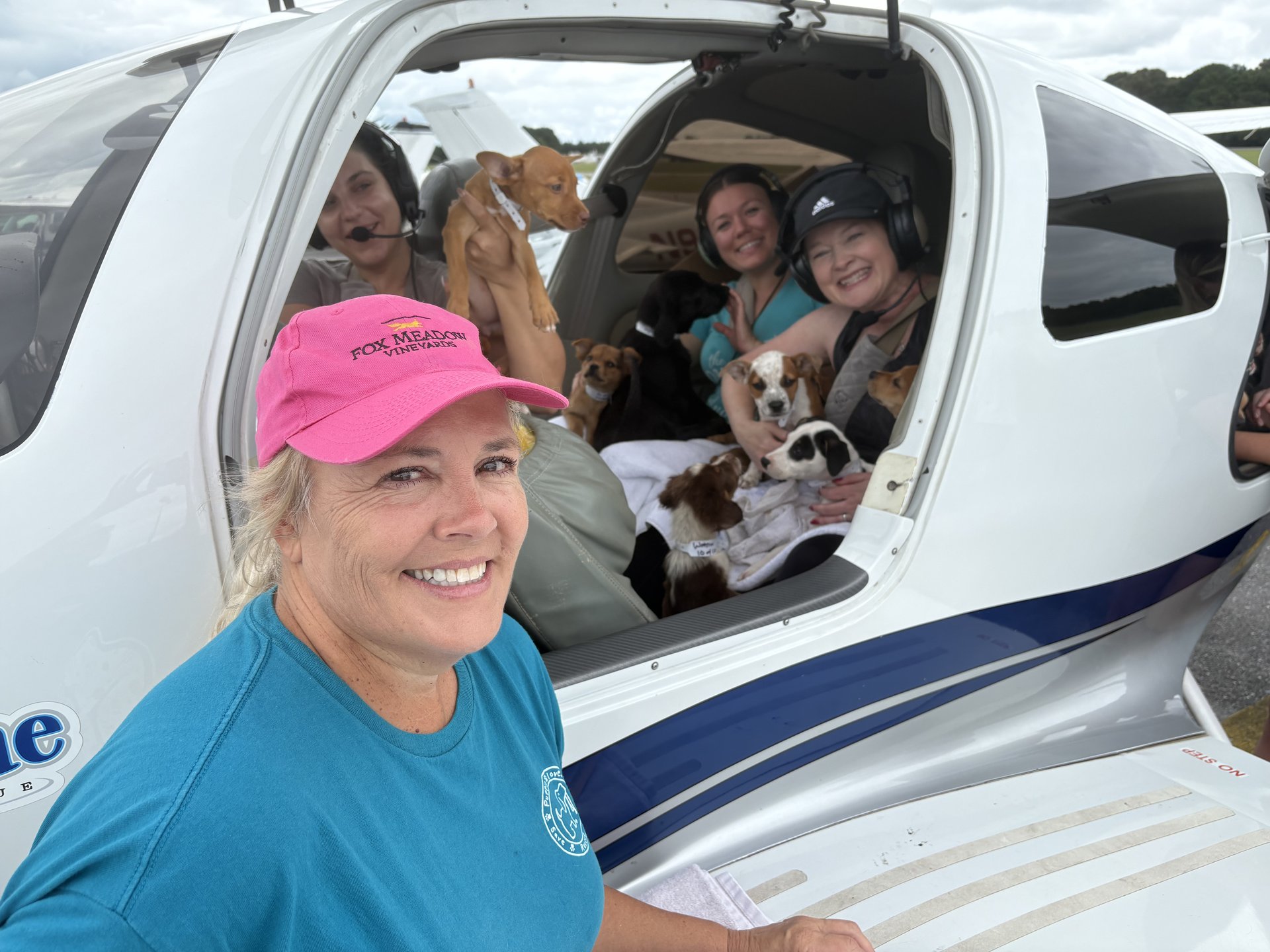
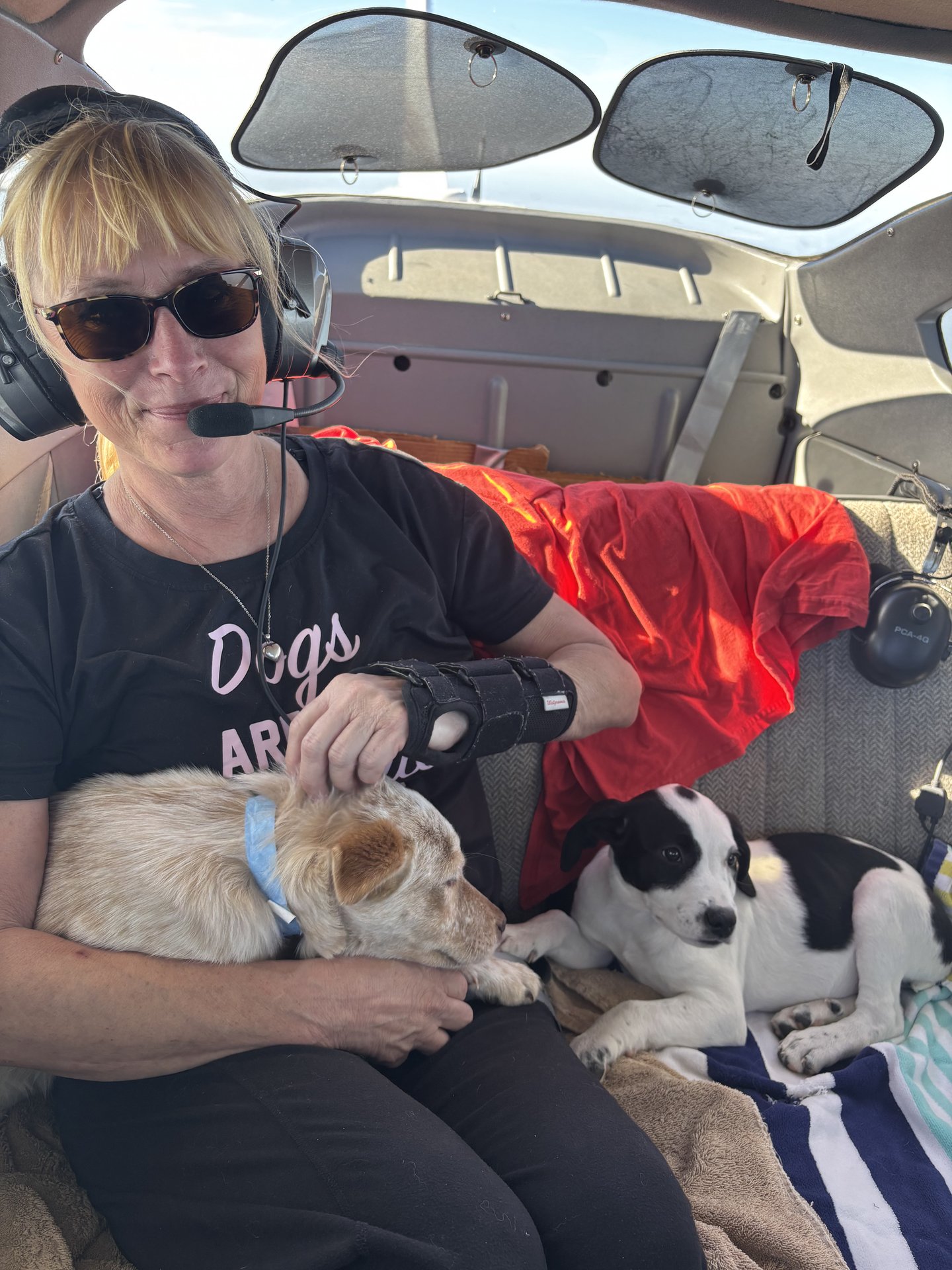
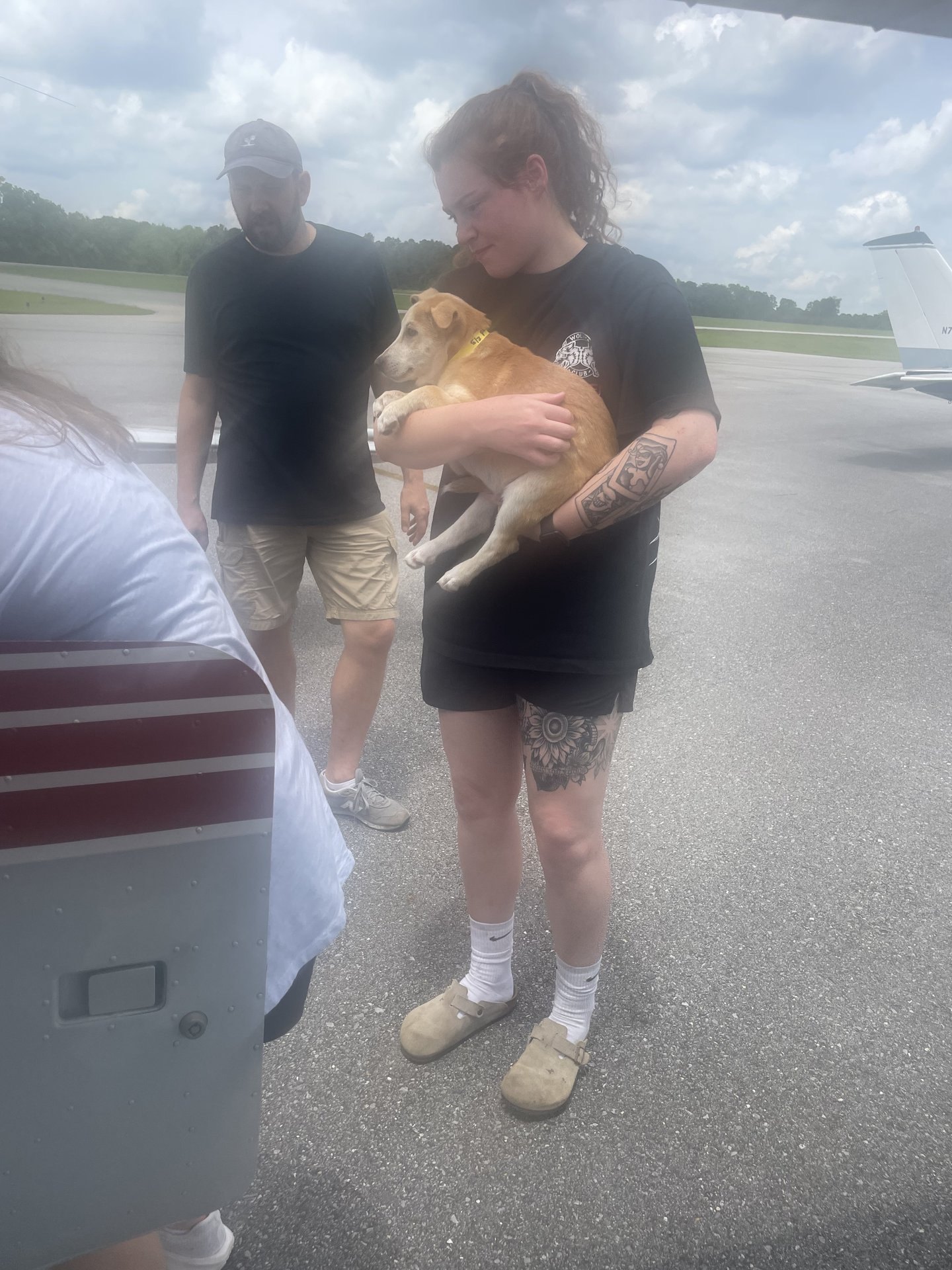
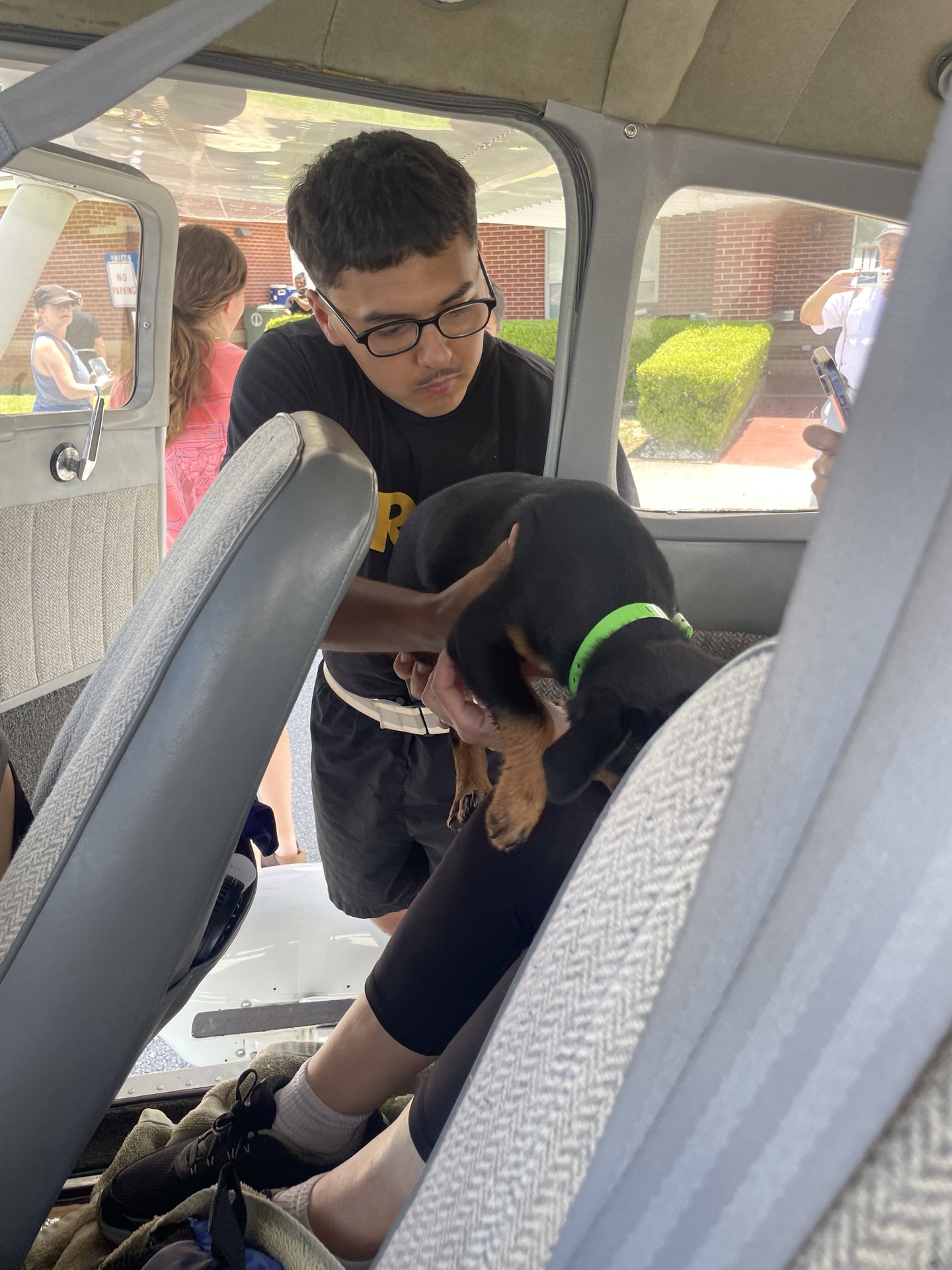
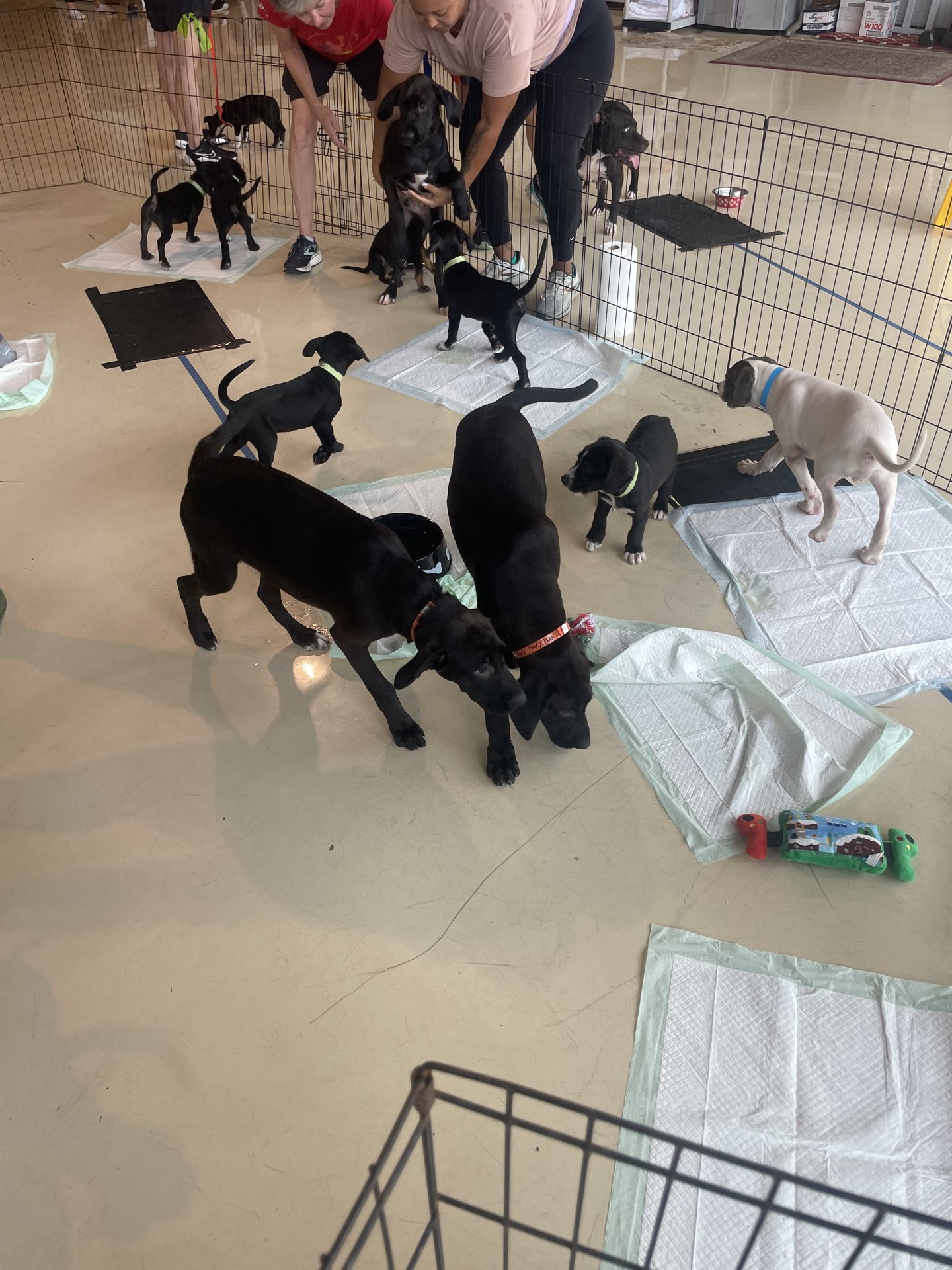
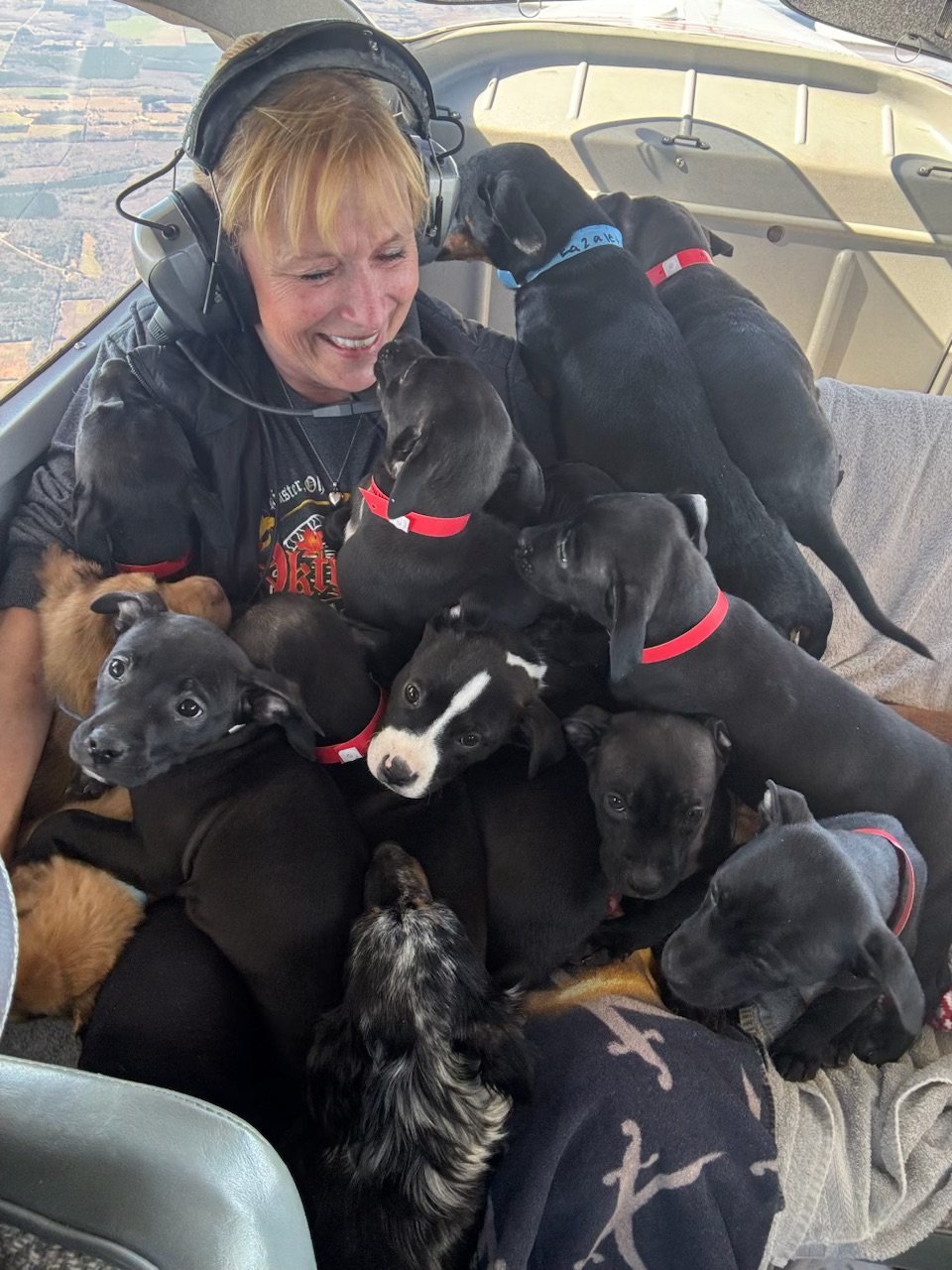
The FBO in Enterprise offers a place to cool off, file the return flight plan, and grab a bottle of water. After that, it’s time to load. Steve taxis his 182 to the staging area, floors covered with towels and cardboard, and the handoff begins — puppy by puppy by puppy, passed from volunteers into Angie’s arms.
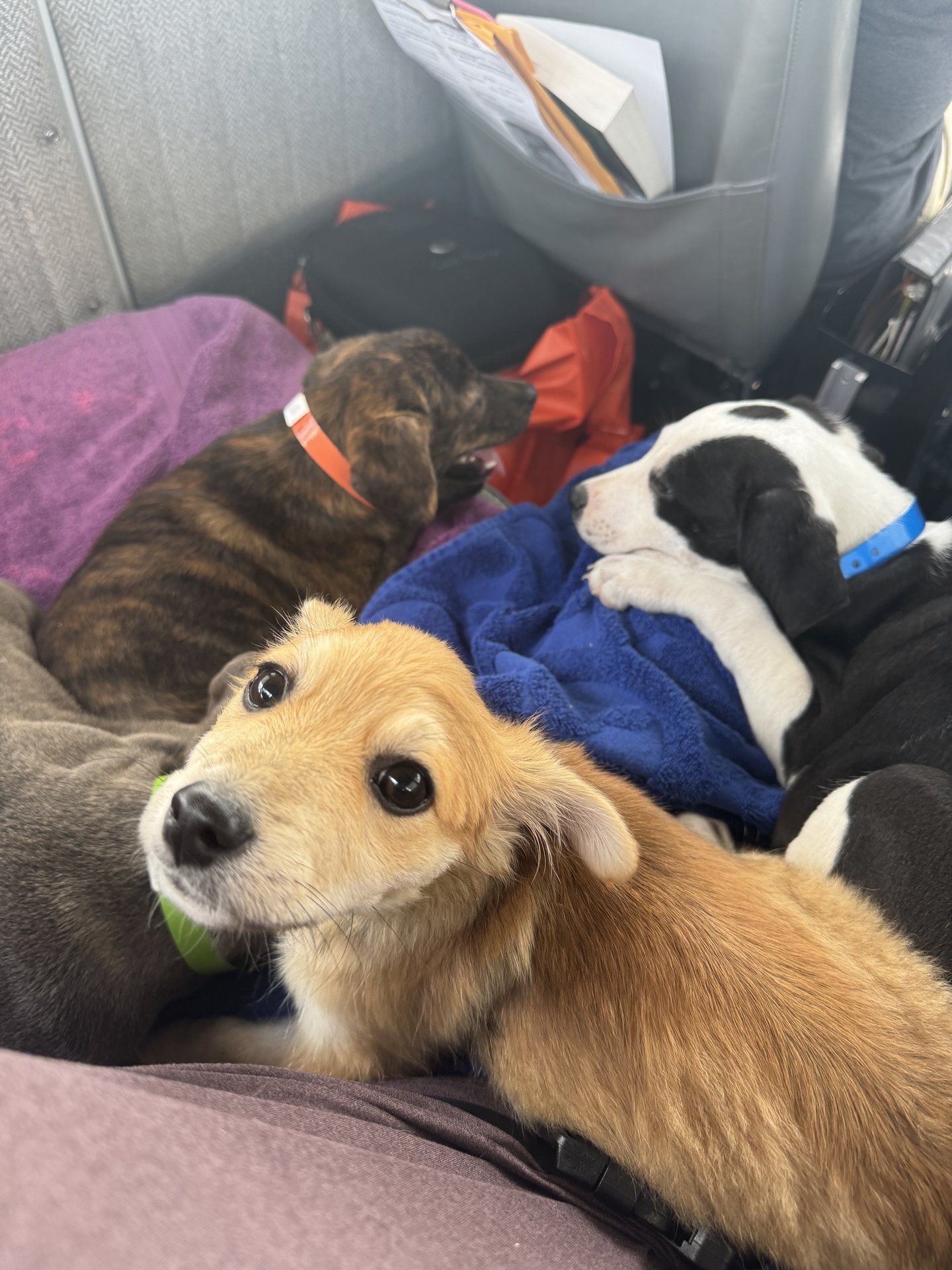
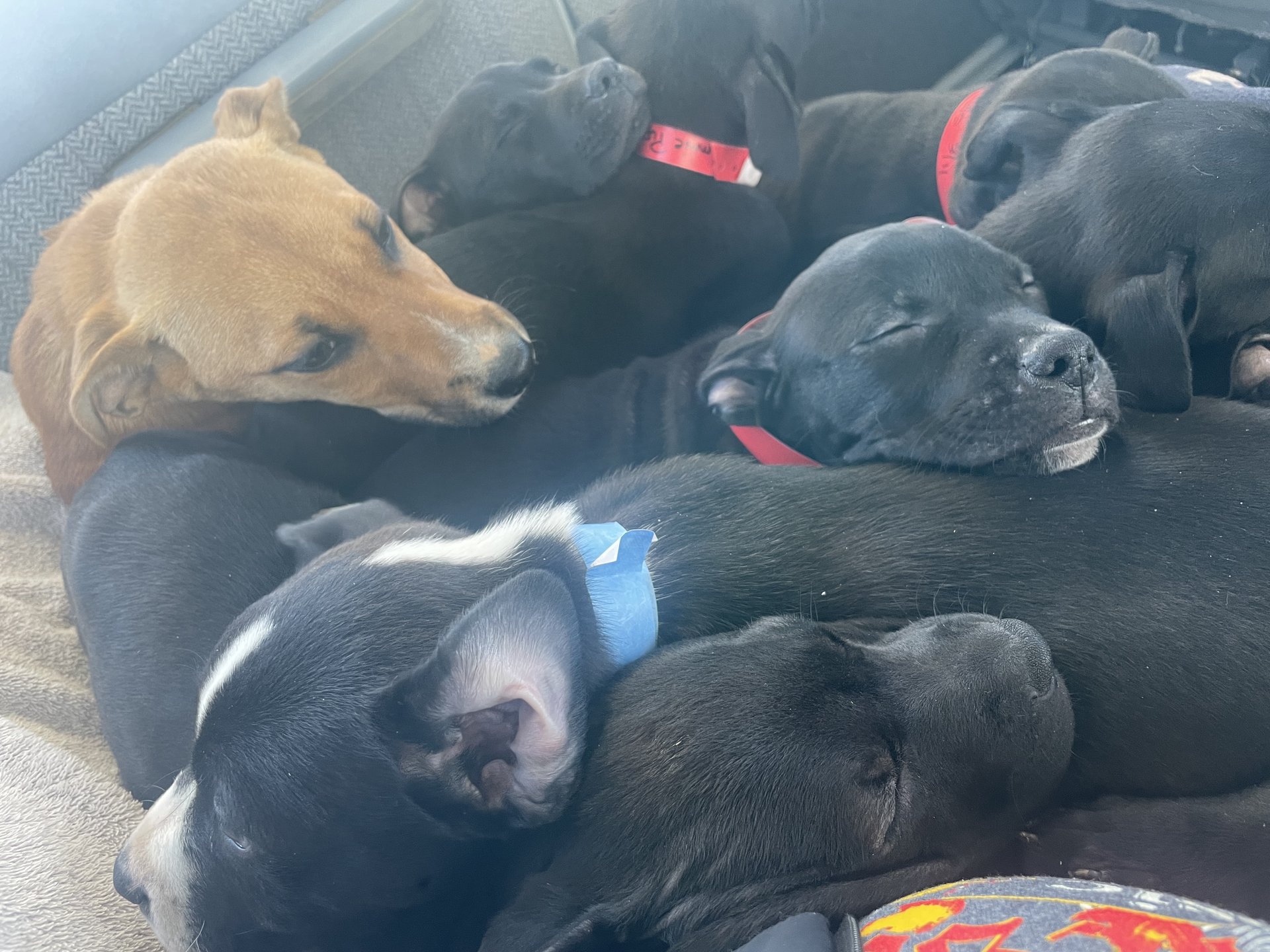
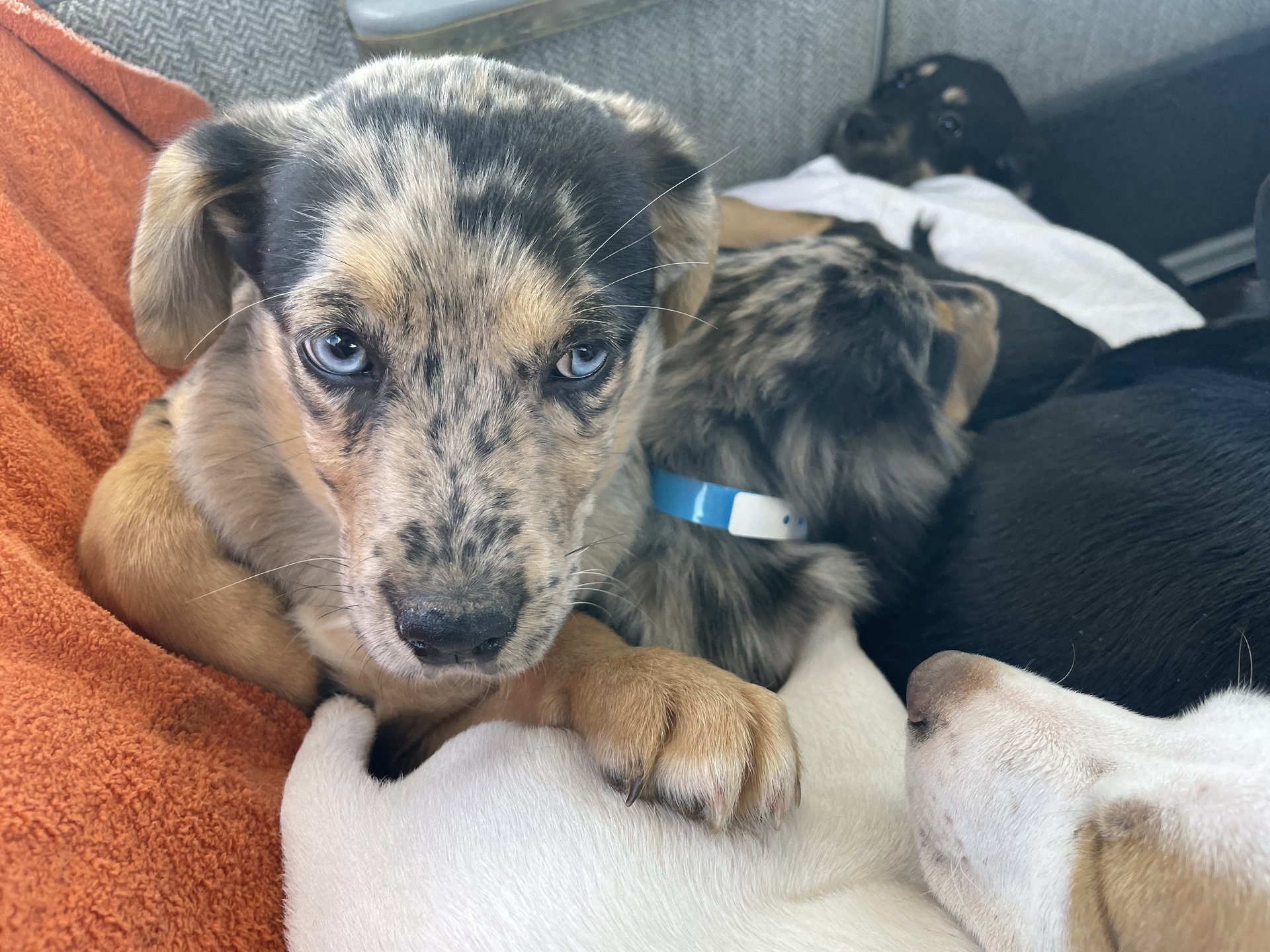
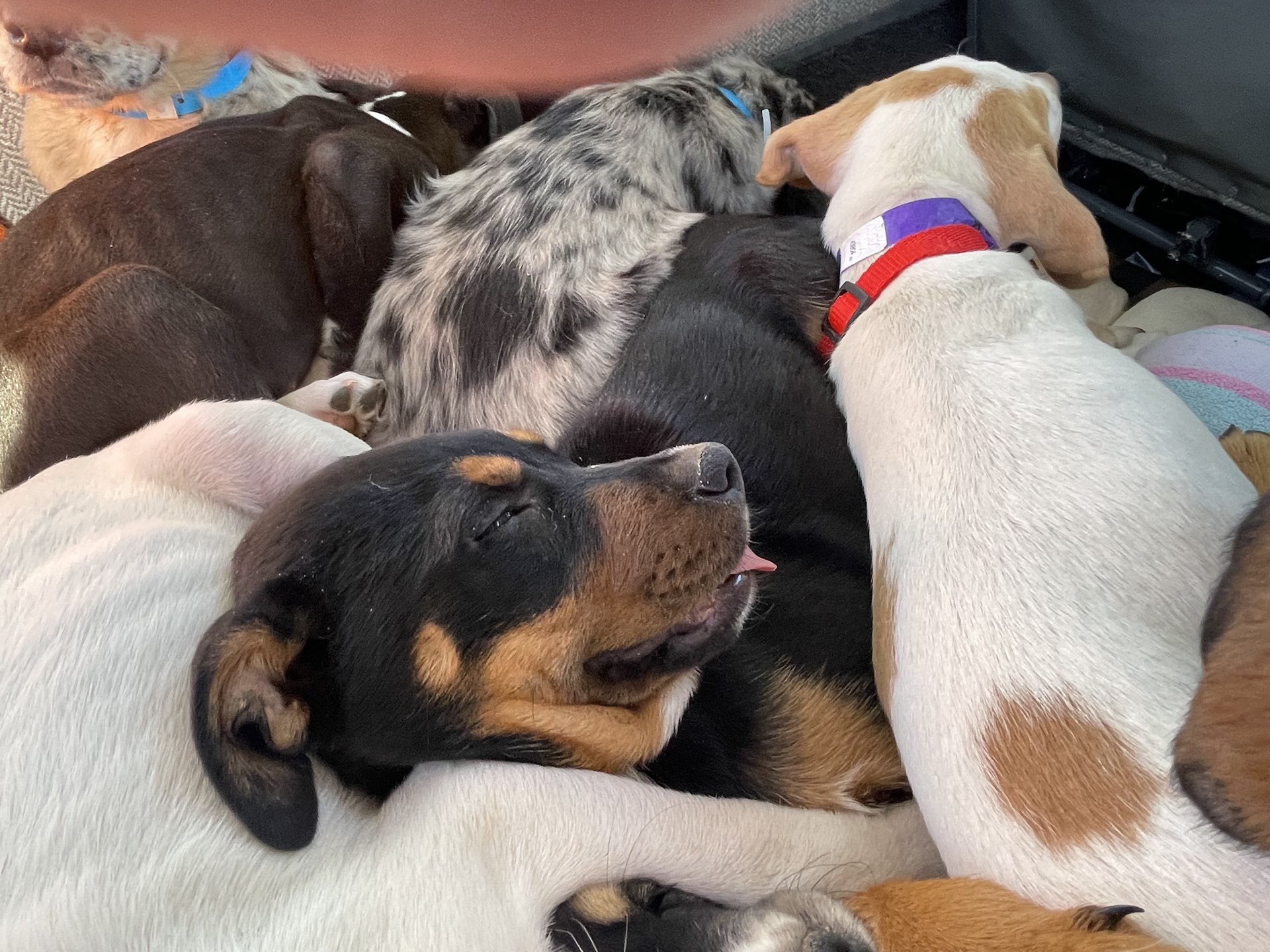
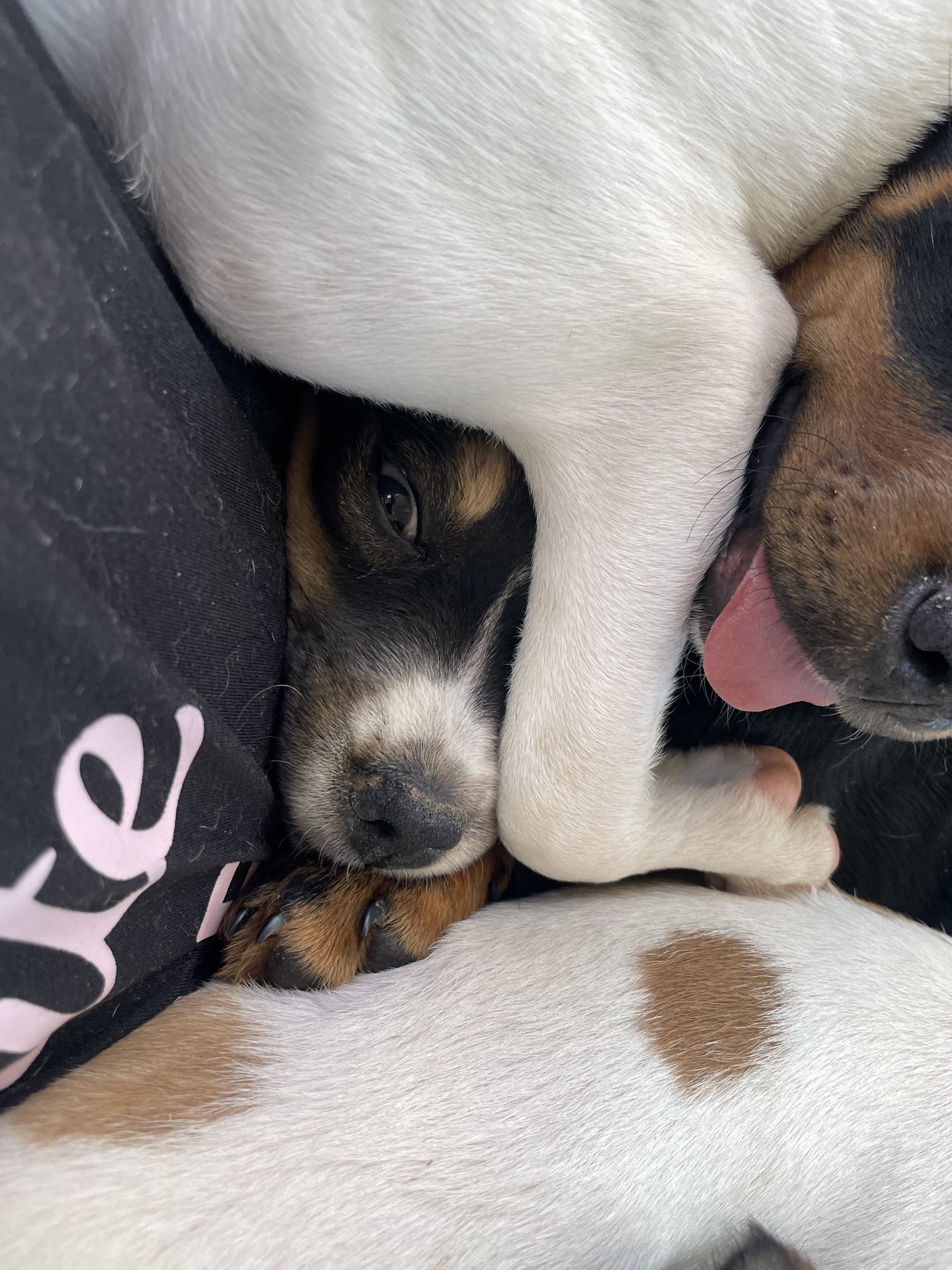
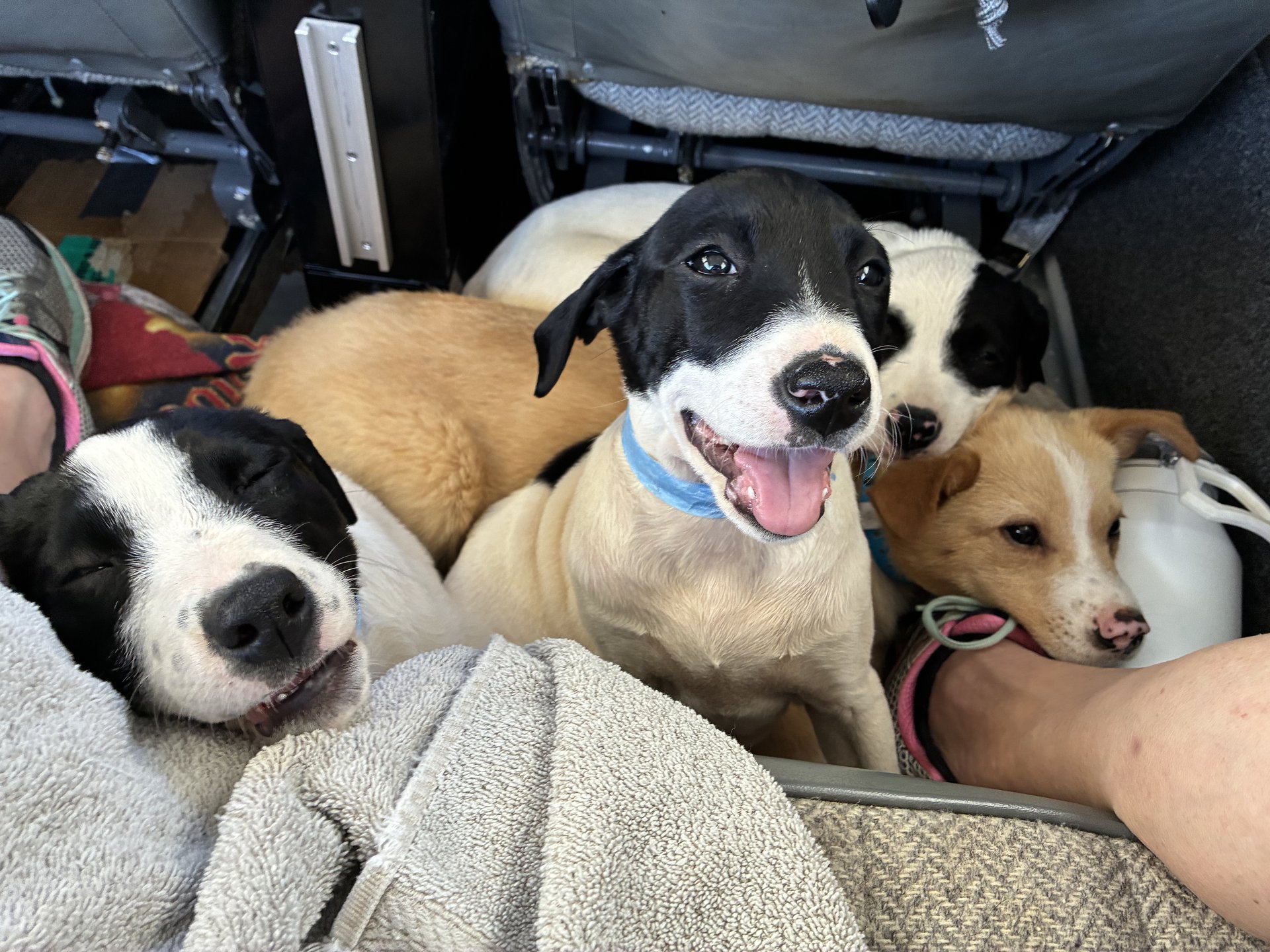
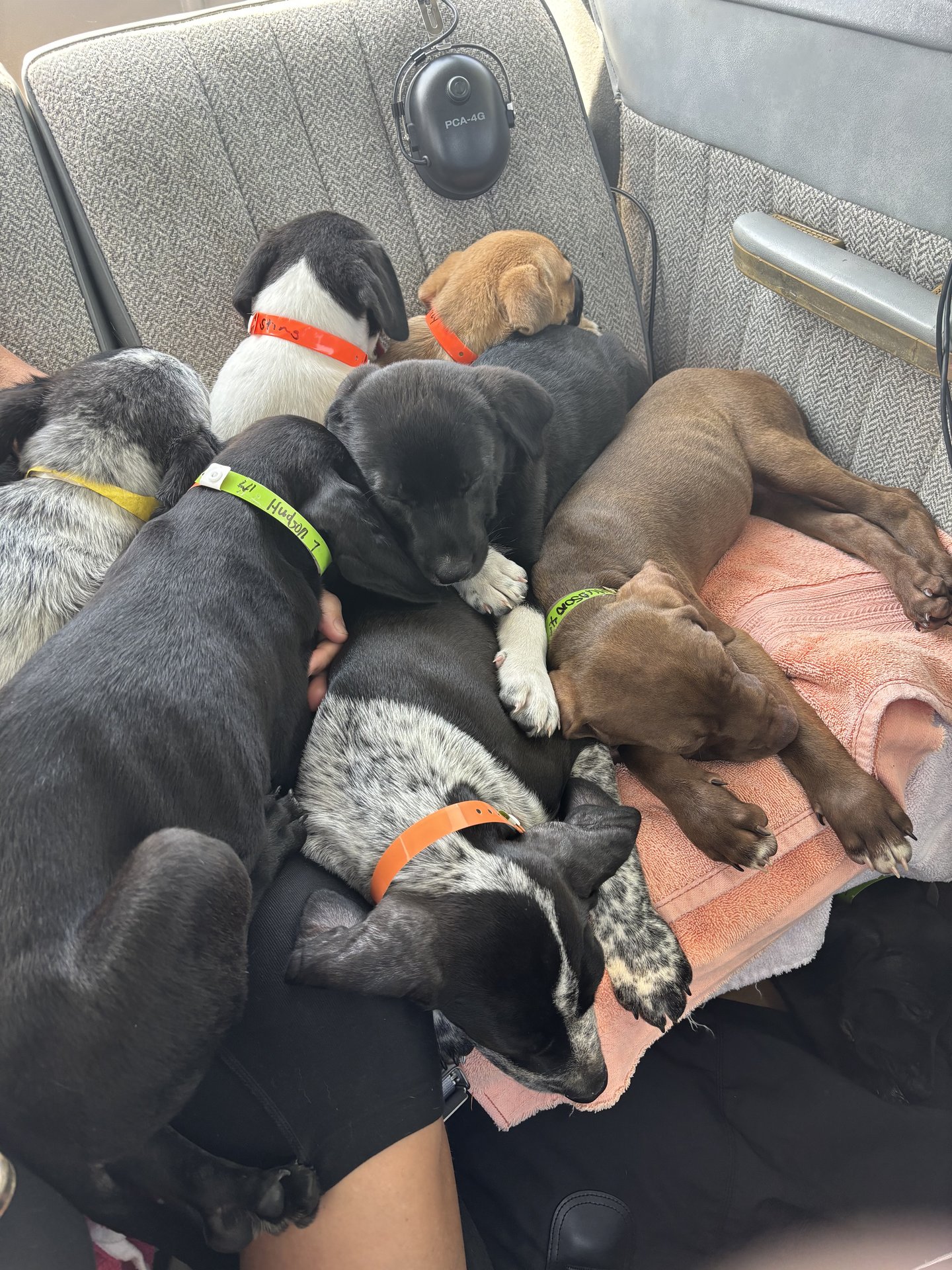
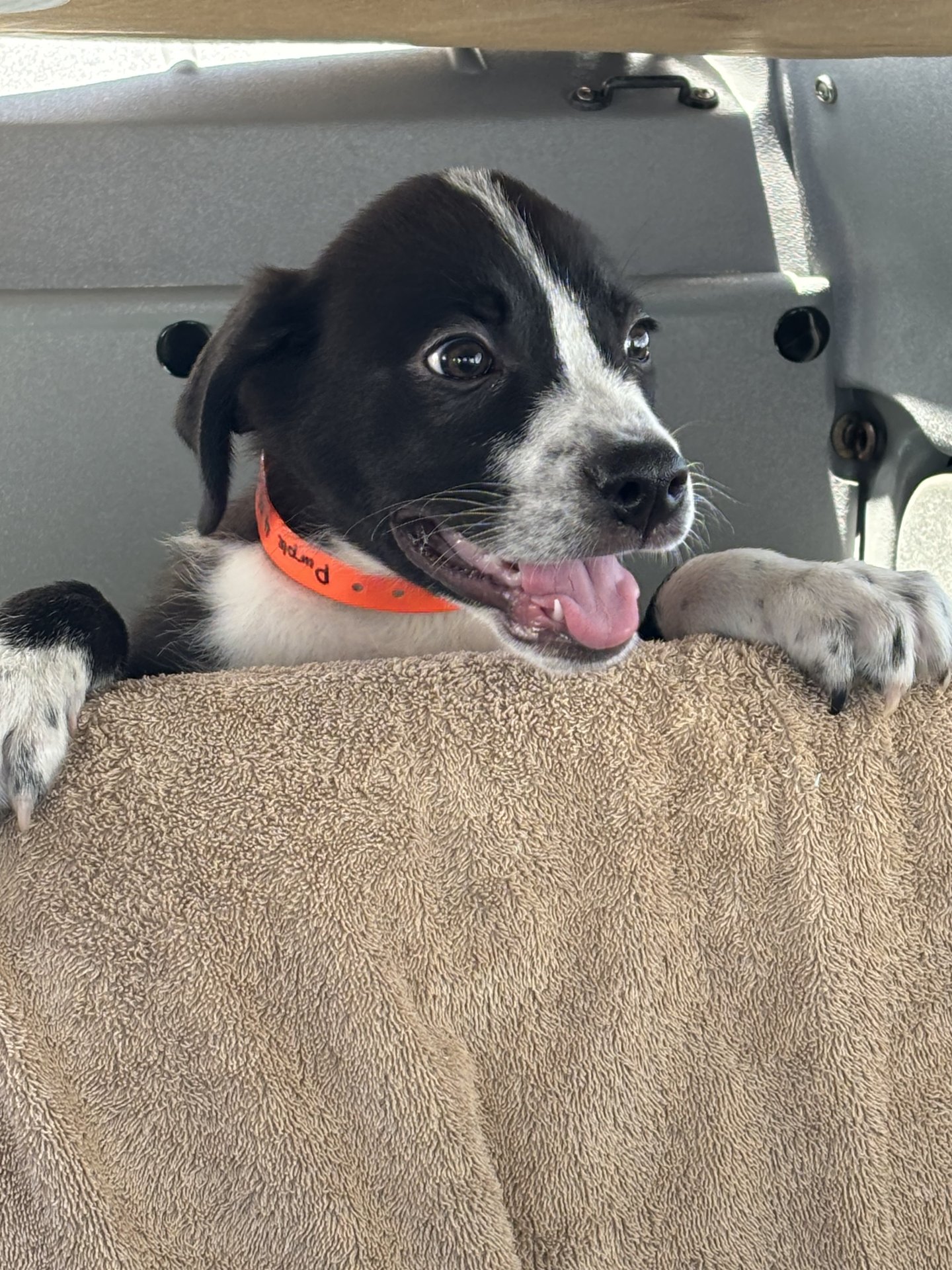
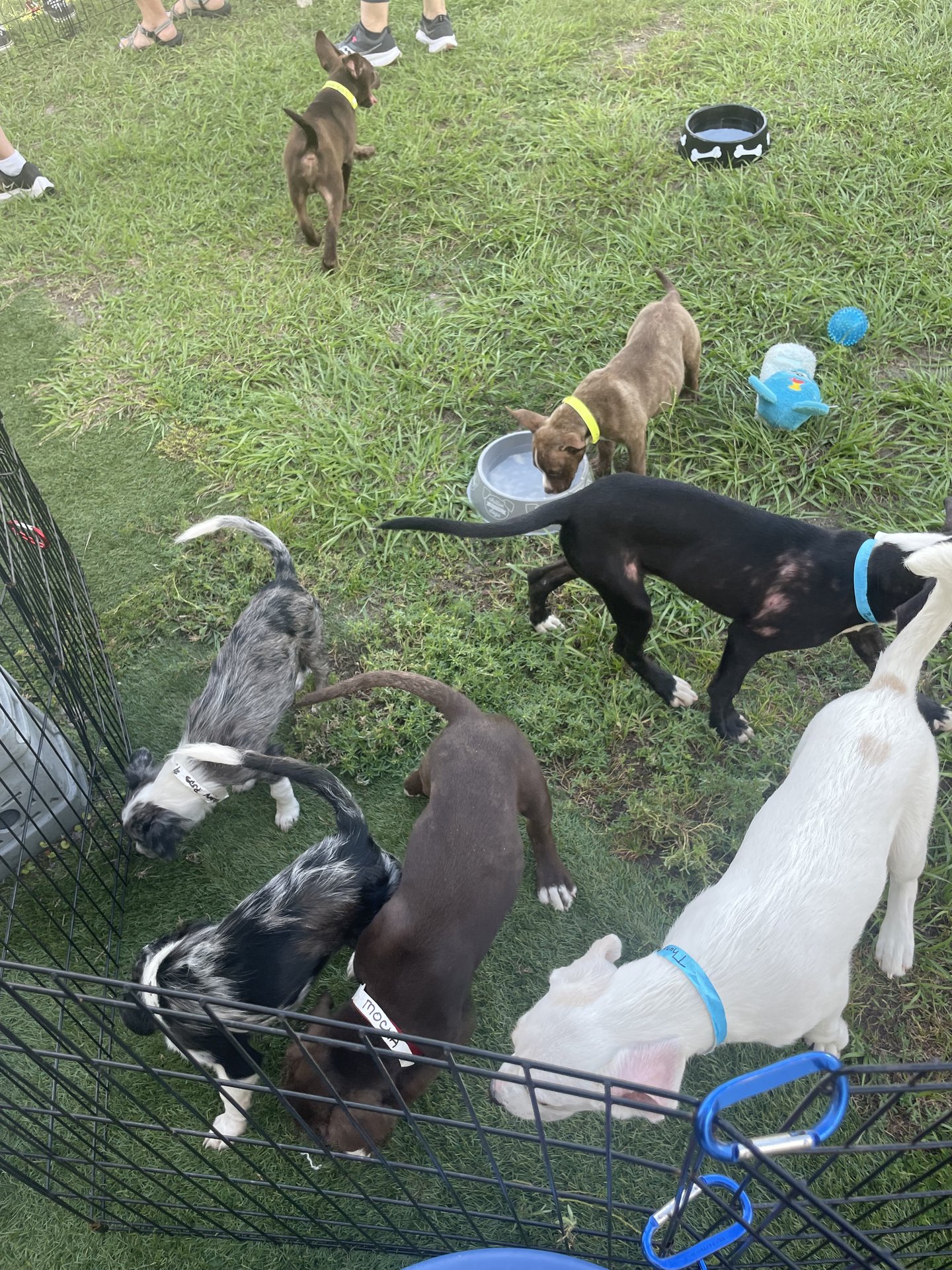
No crates. No cages. Just Steve, Angie, and another volunteer pilot, and whatever the manifest says: anywhere from a manageable handful to, on one memorable flight, seventeen dogs spread across the luggage compartment, the back seat, the floor, and every available lap.
The Flight Home
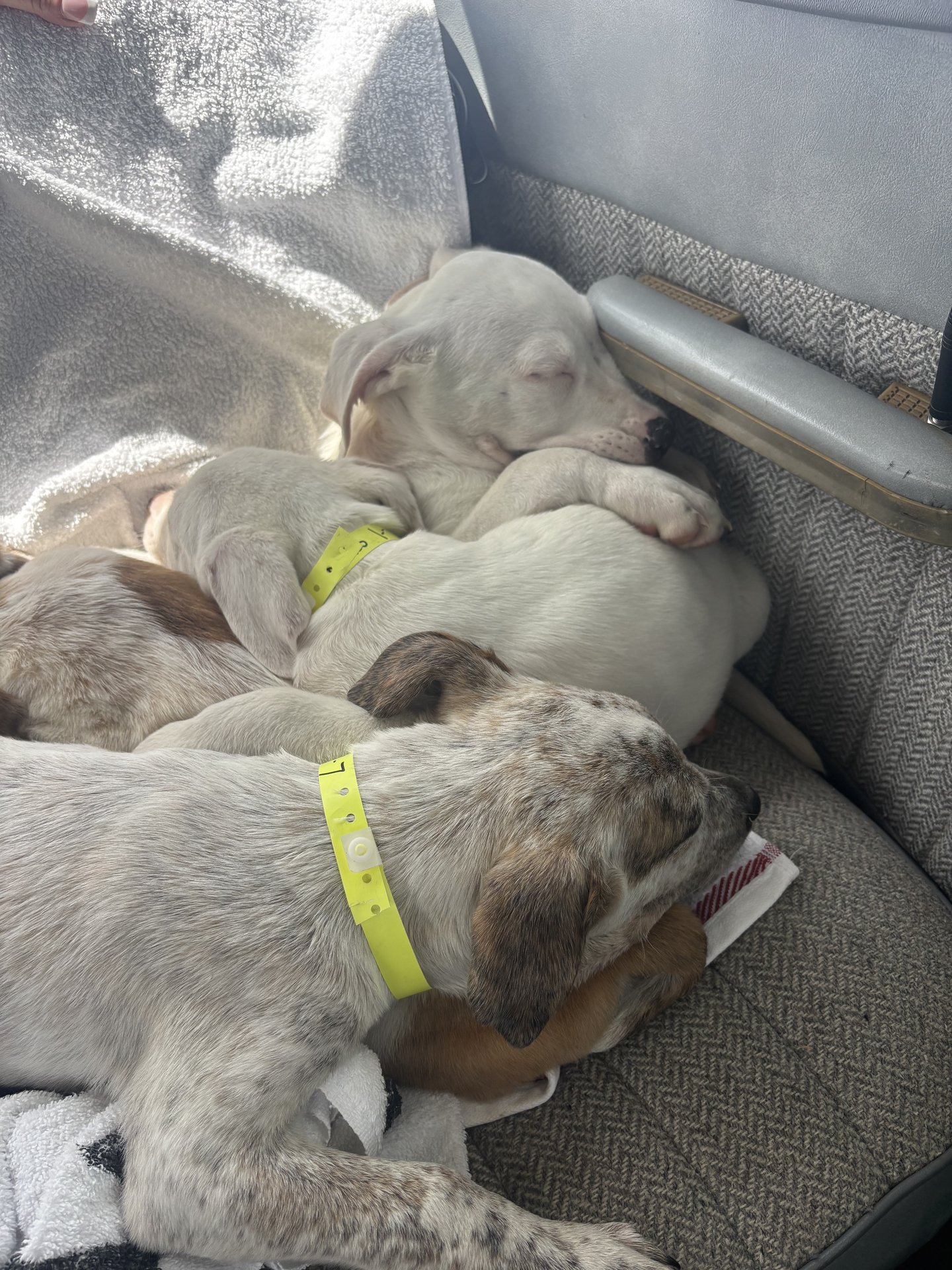
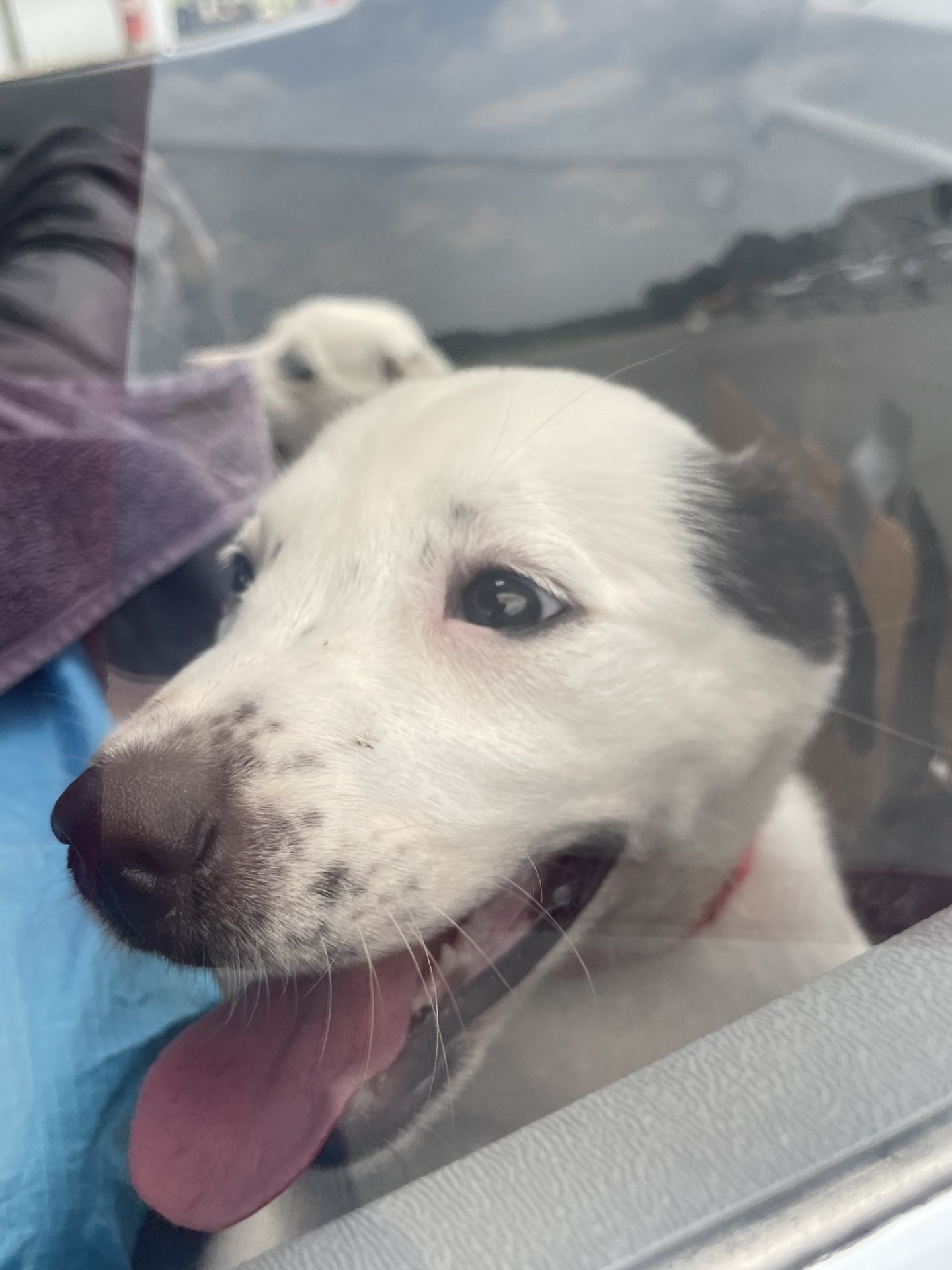
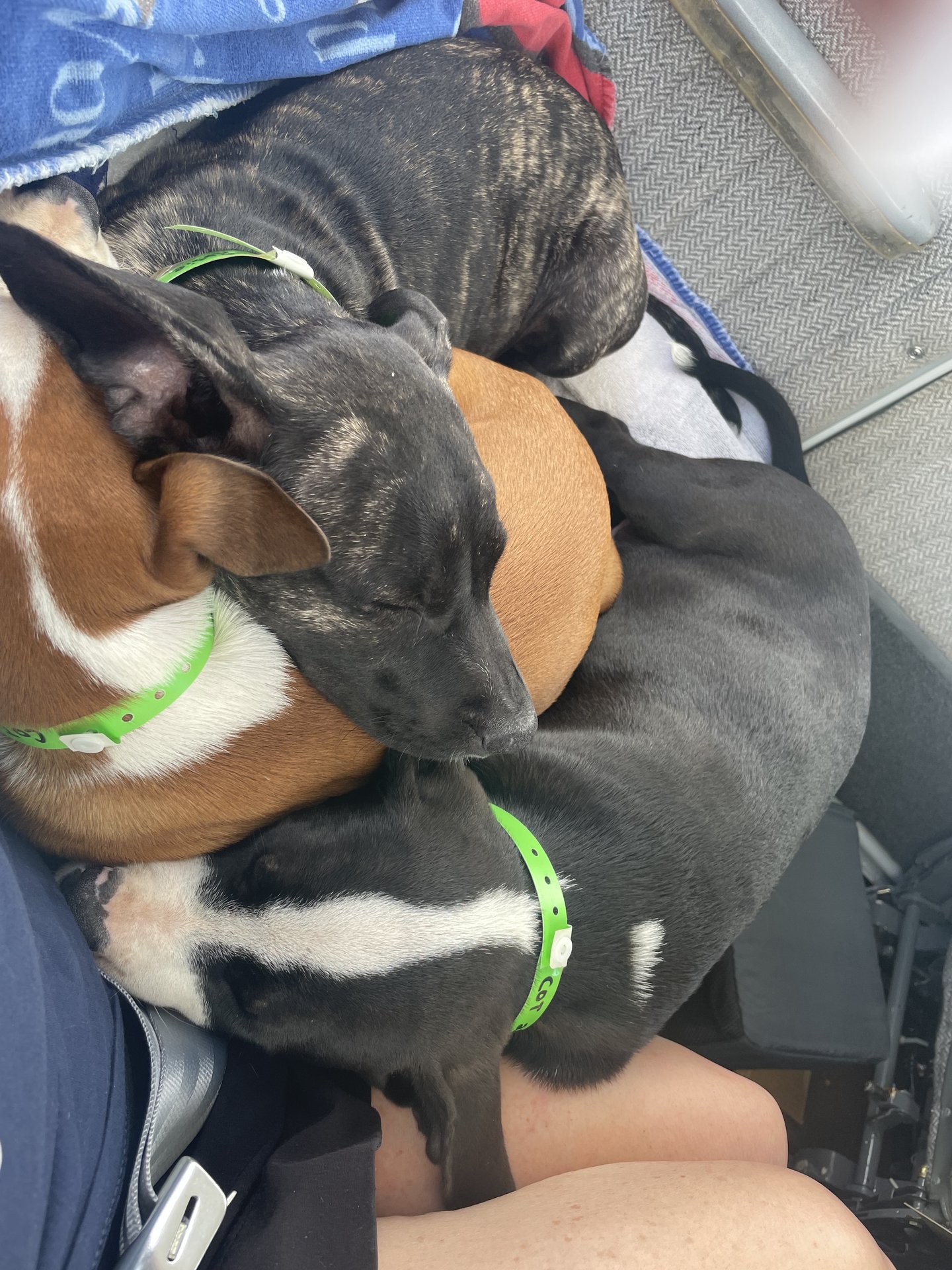
About fifteen to twenty minutes after wheels-up, something predictable happens: the puppies fall asleep. The engine noise, the altitude, the thin air — whatever the reason, the cabin quiets. “You always have one that’s a little too anxious,” Angie noted, “but typically they just go to sleep.”
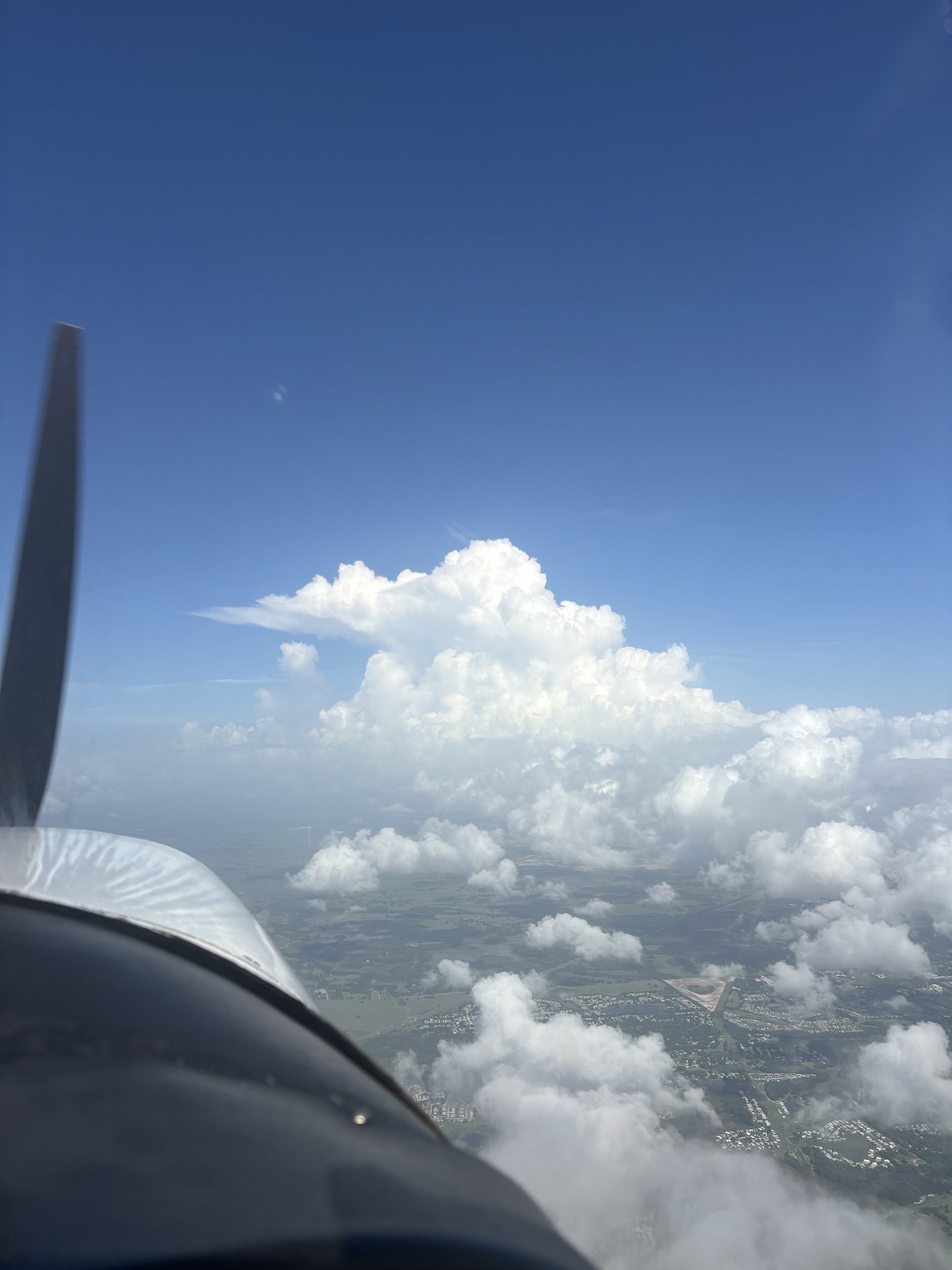
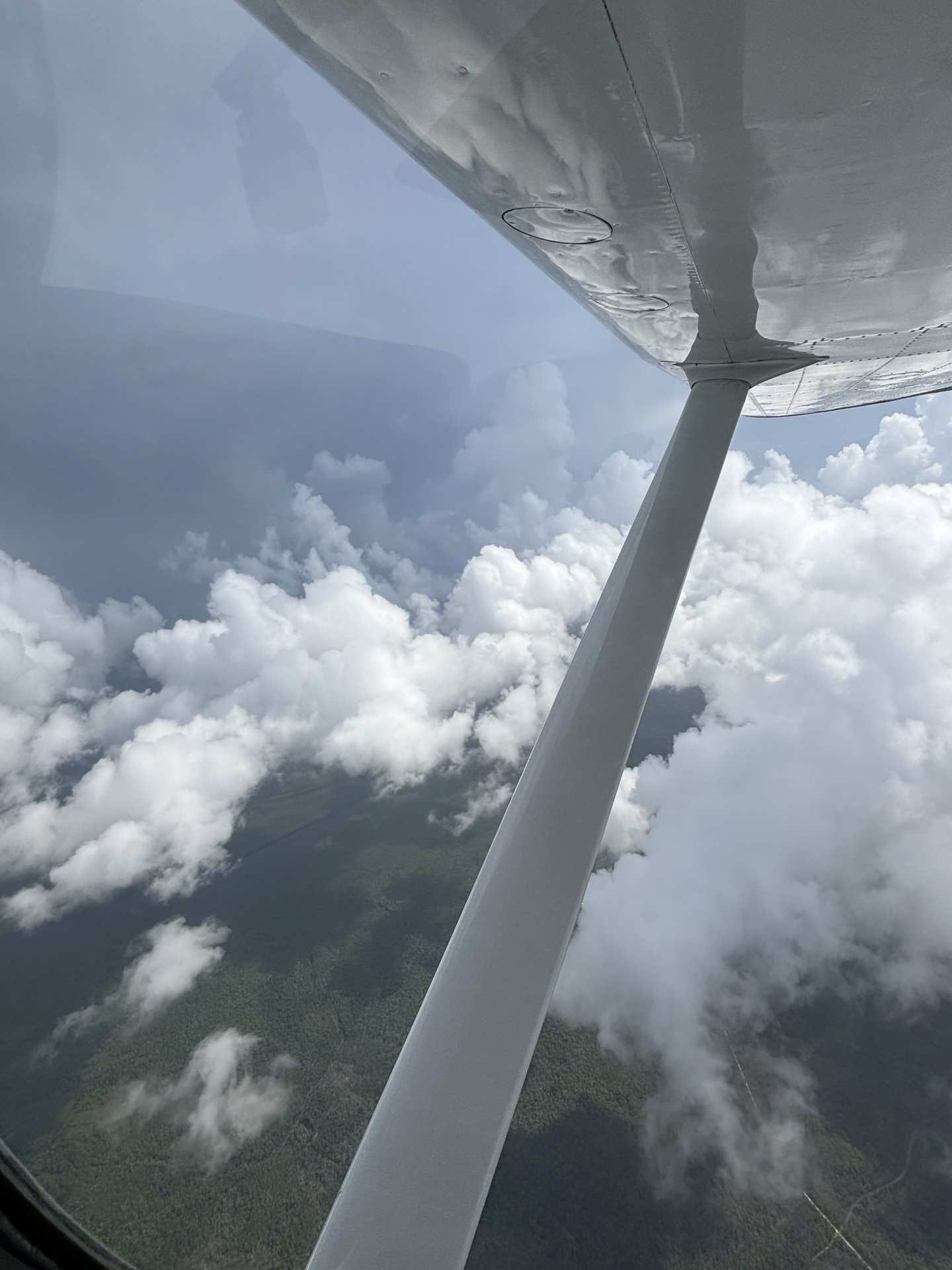
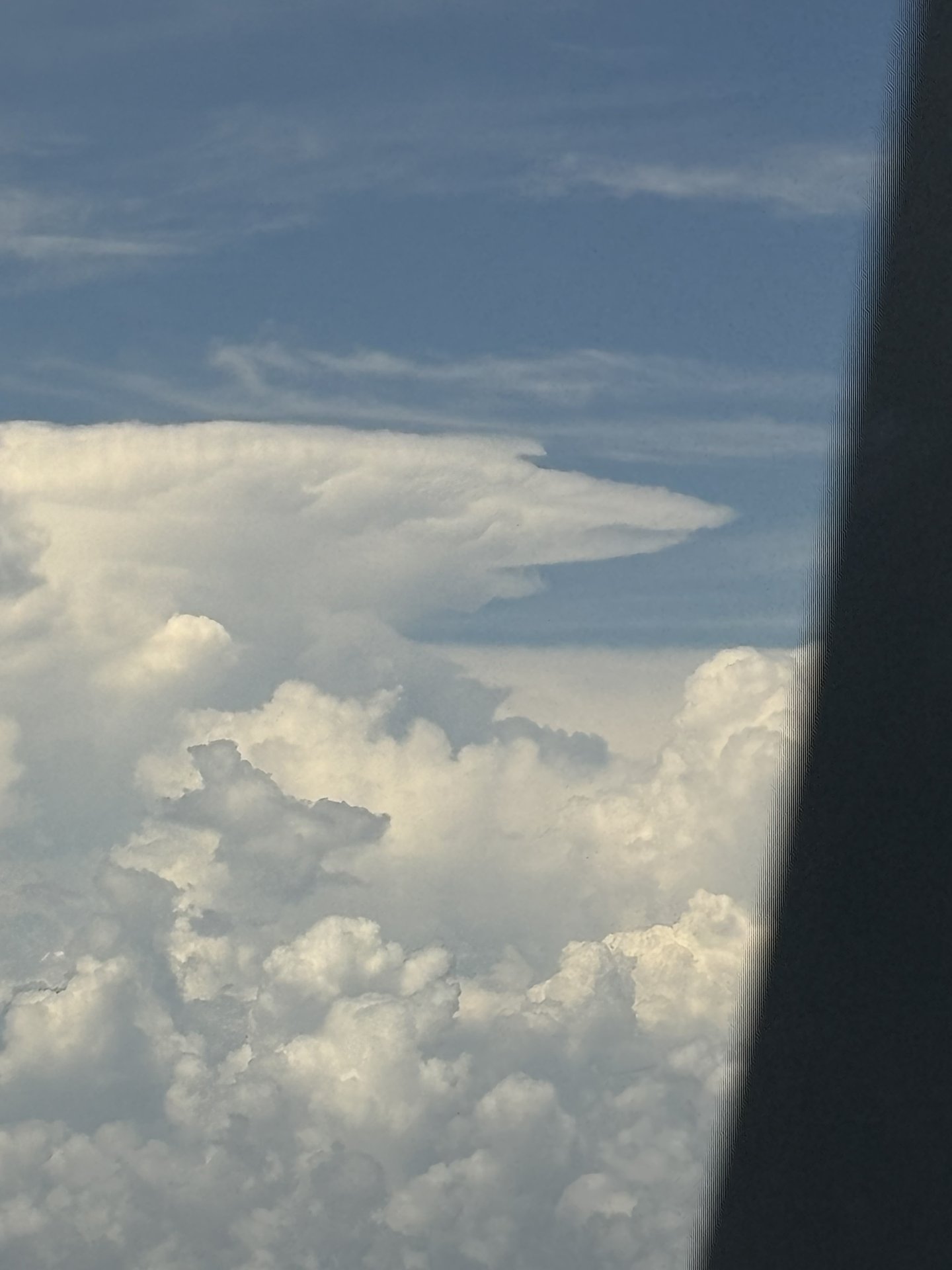
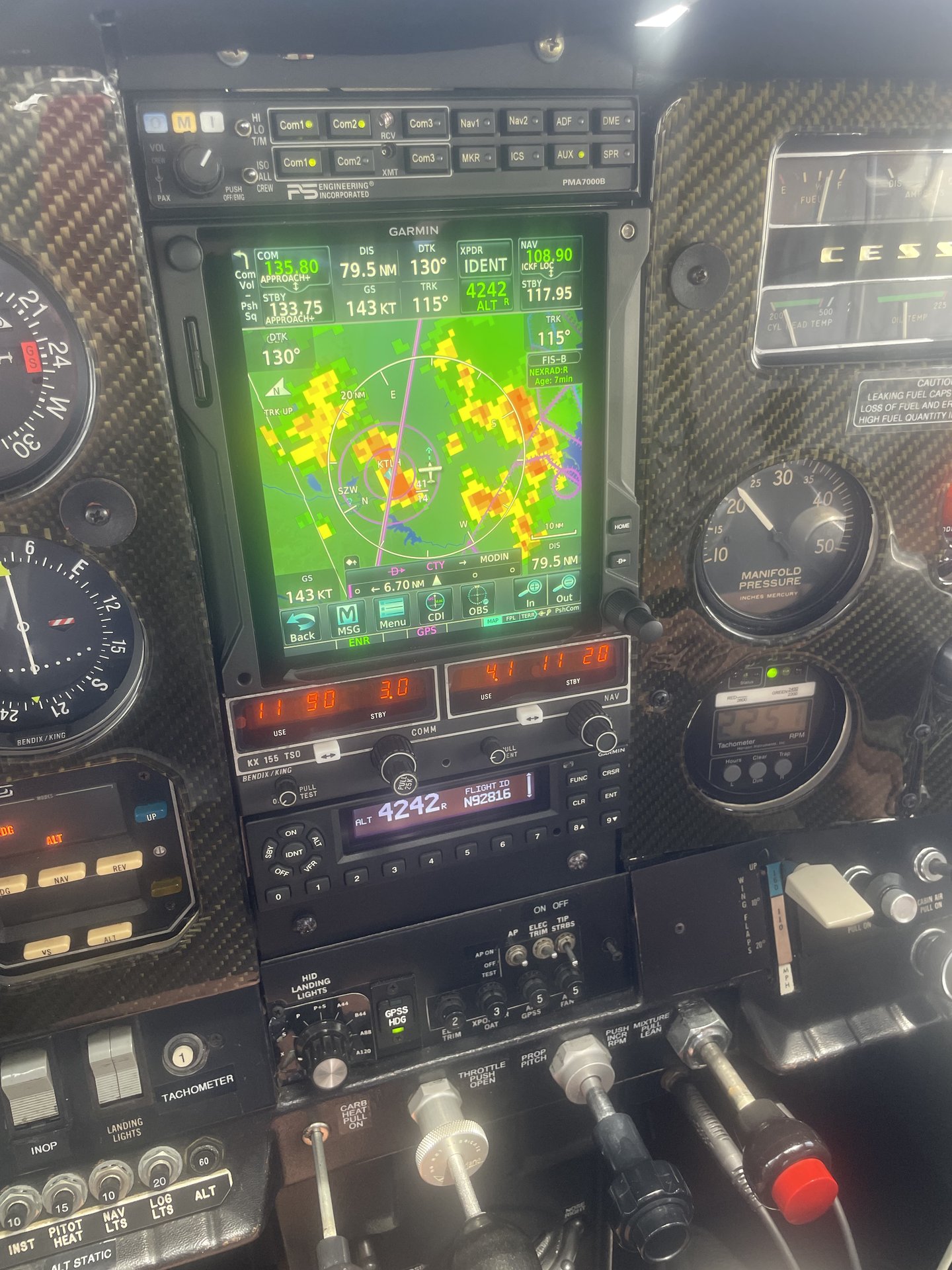
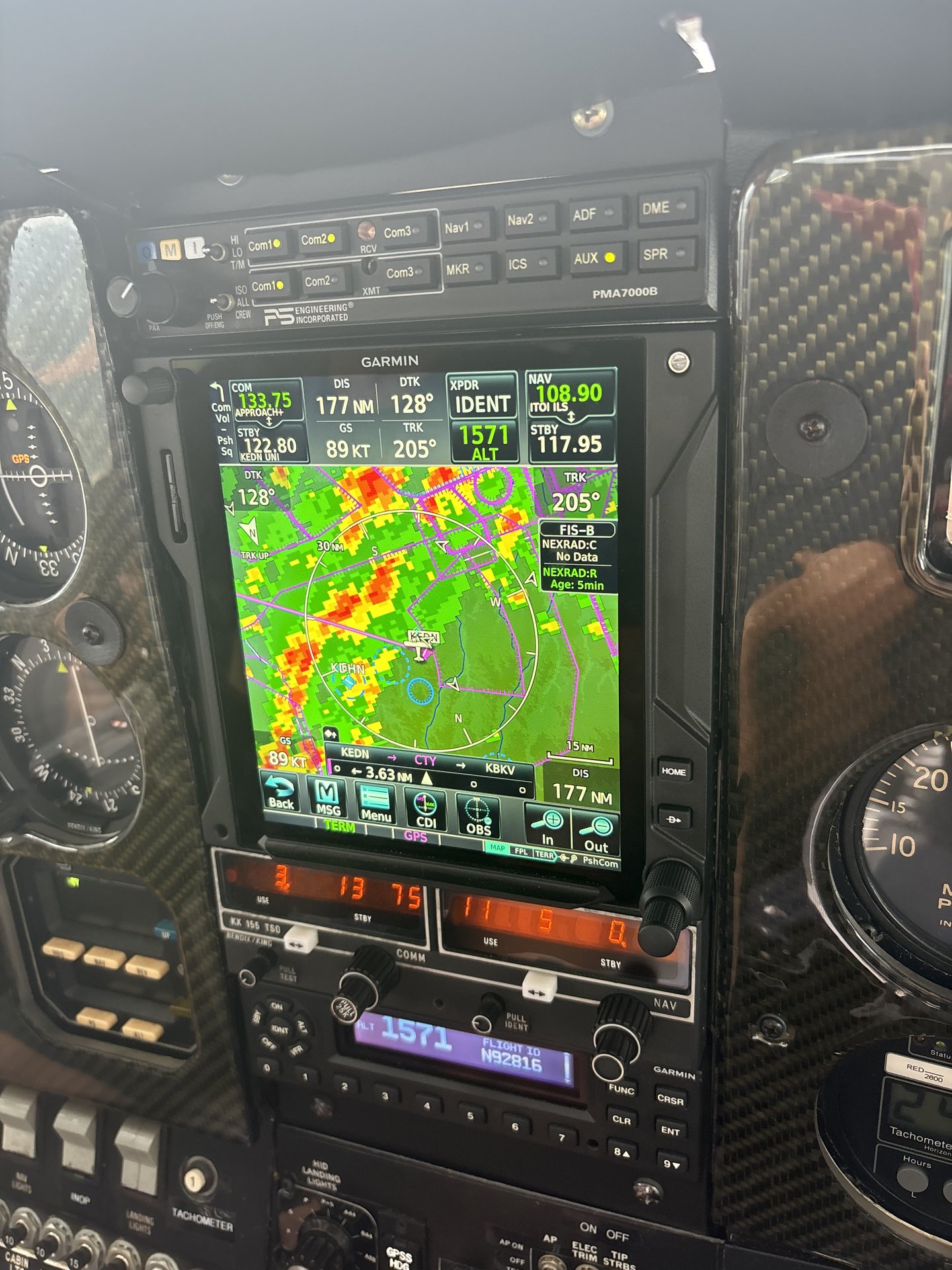
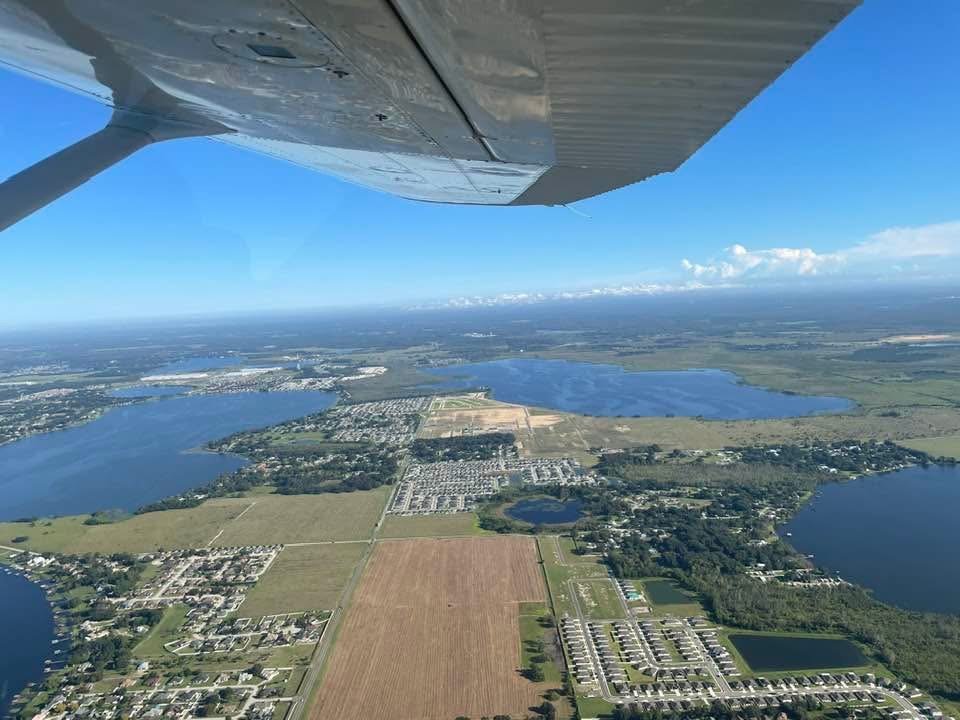
The descent home is flown at 500 feet per minute — no rushing it, so the pressure change doesn’t bother anyone in the back. Steve files IFR for the return because the Gulf Coast doesn’t always cooperate. He’s had days of clear-and-a-million all the way home. He’s also had to hug the coastline from Alabama to Florida to get around a line of weather that built in overnight.
“I’ve got a lot of time dodging thunderstorms,” he said, “and I never liked it.”
Still, they go. Because the dogs are waiting.
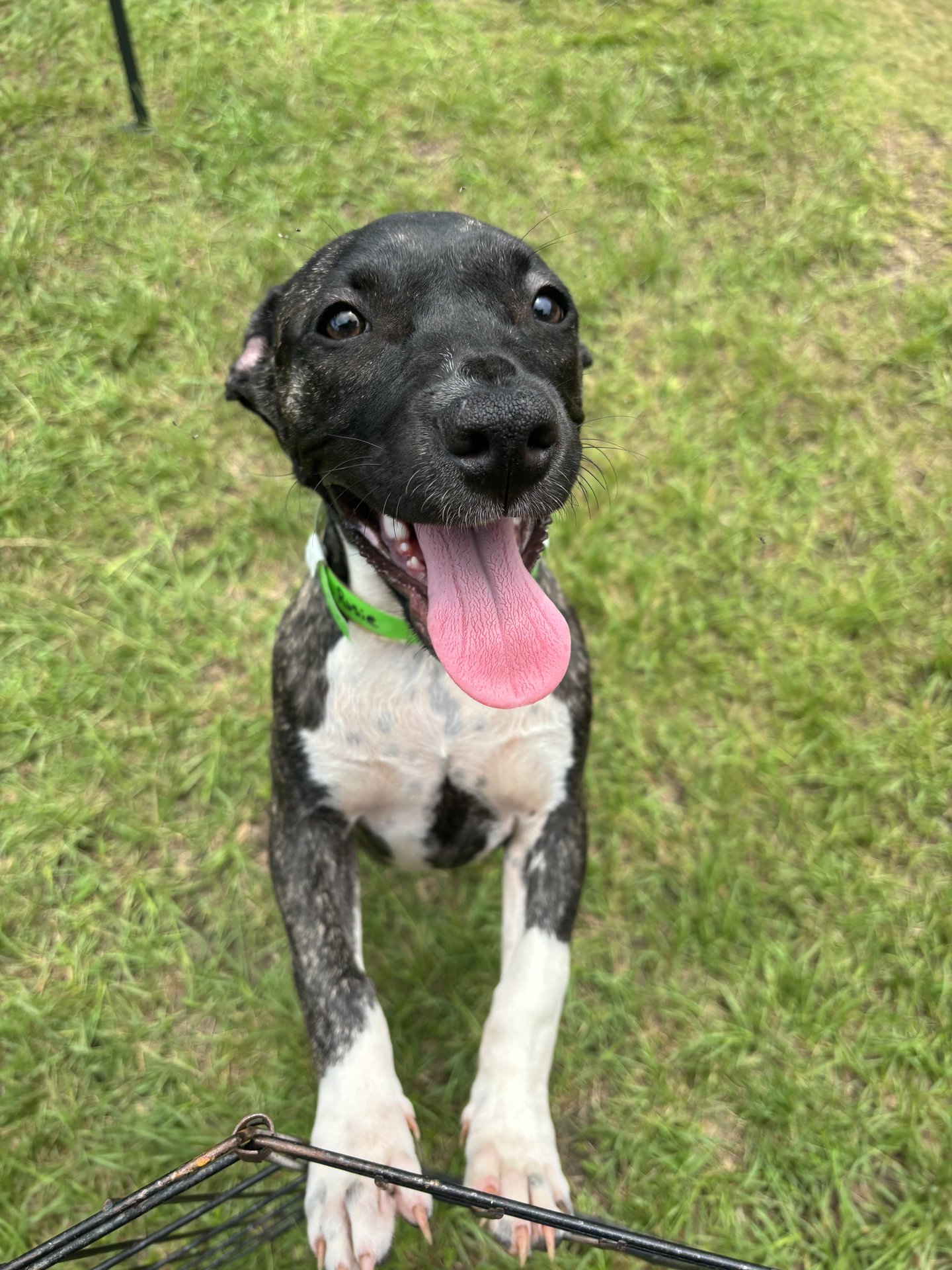
Rosie
Within a year of losing both their dogs — a Doberman and a Cairn Terrier, 14 years each — Steve and Angie had decided: no more dogs. The grief was too much.
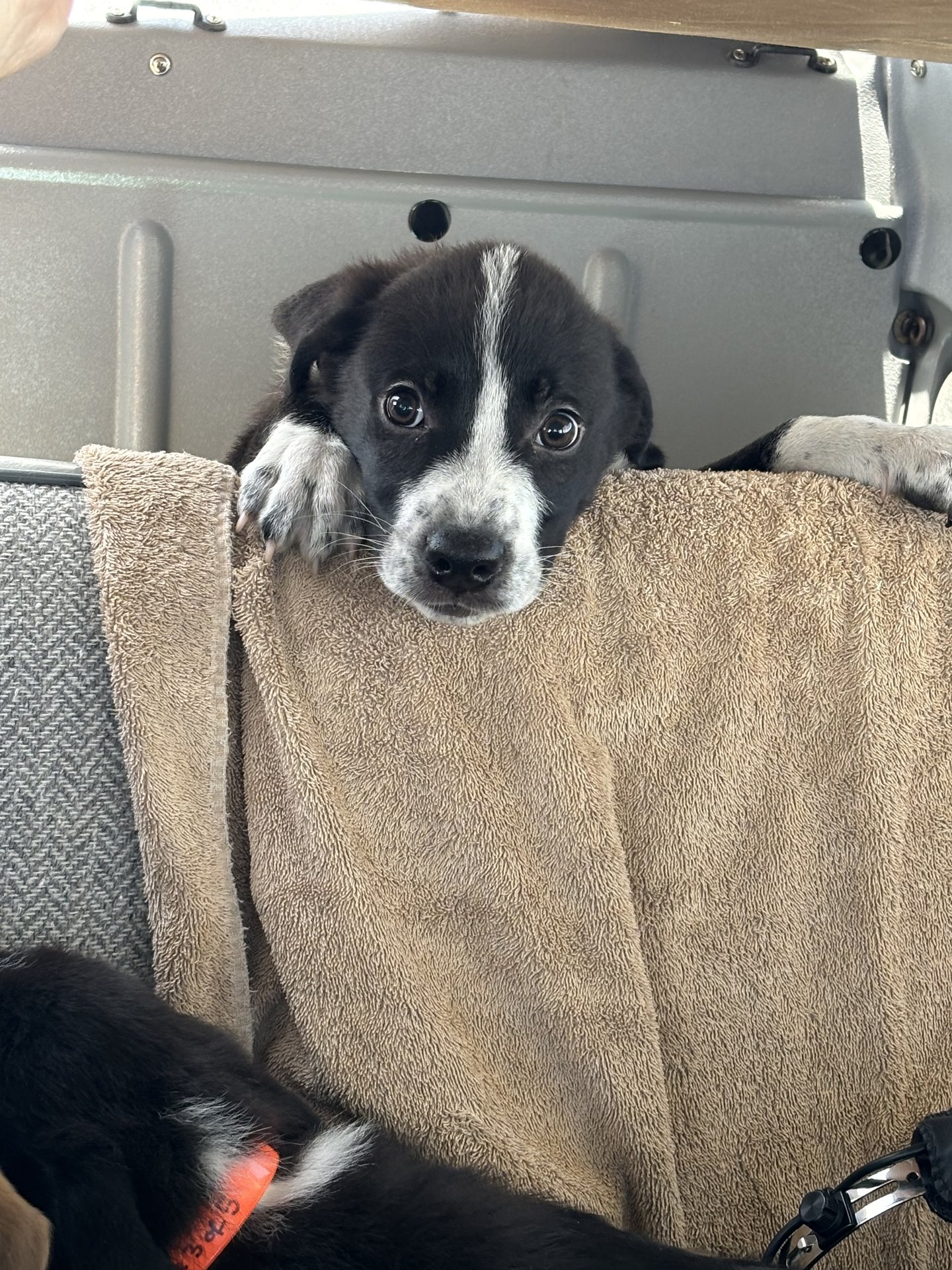
Then came one of the flights. A small, shy dog crawled into Angie’s lap and wouldn’t move. Kept one eye peeking out from under the pile the whole time. Stared at Steve the entire flight.
“She’s got my soul,” Angie said.
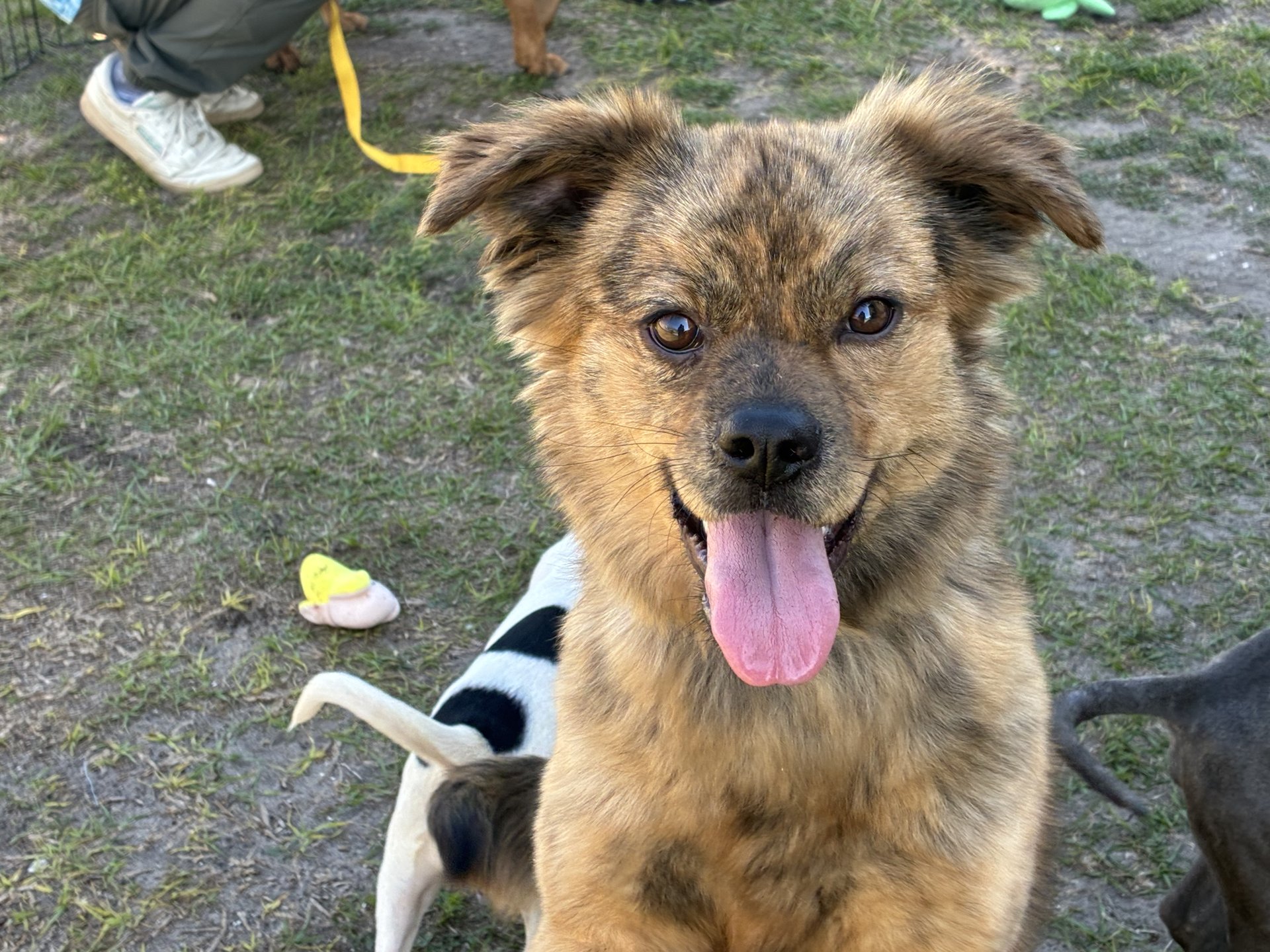
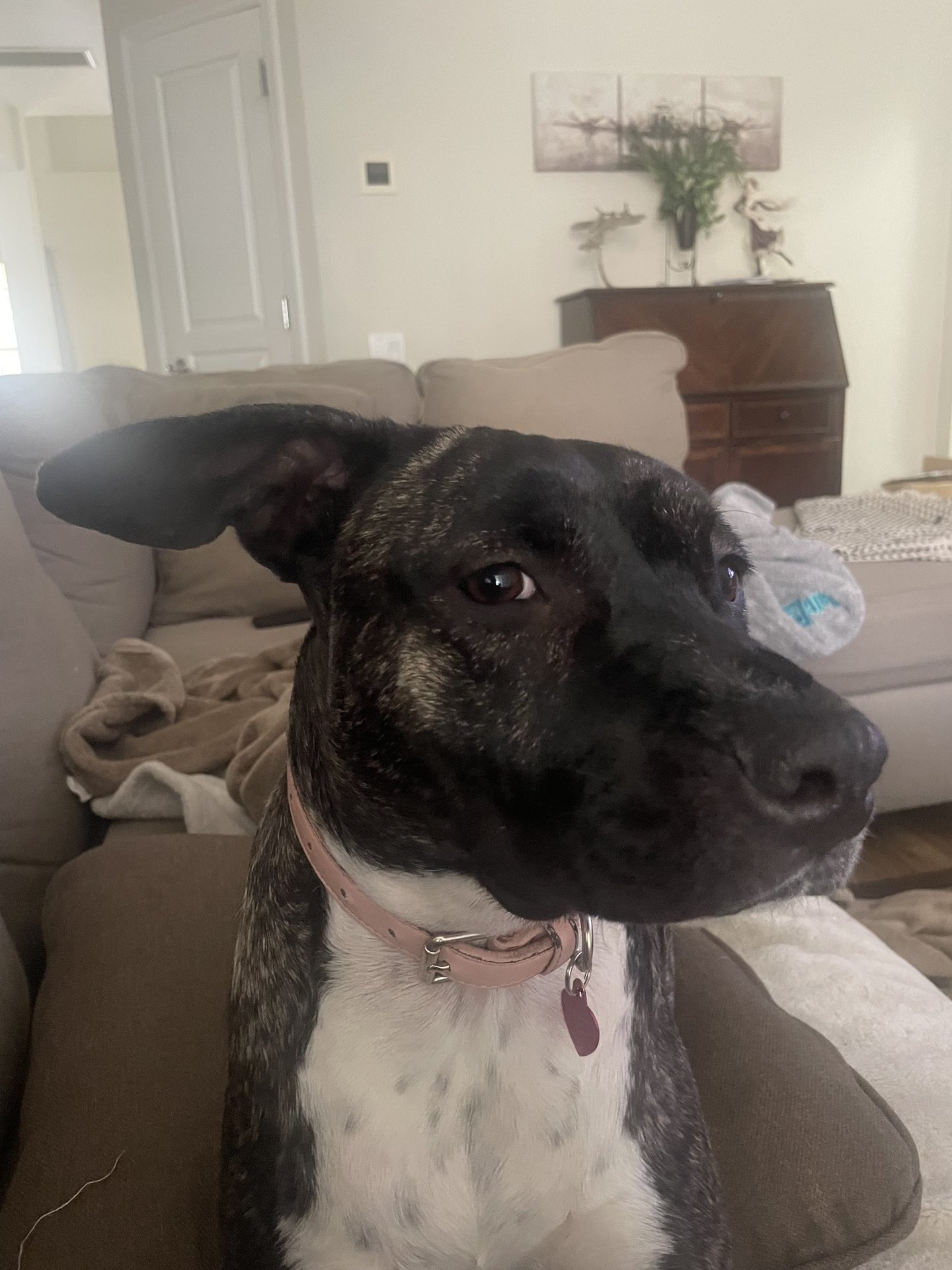
That dog was four months old, on the euthanasia list, and her name was Rosie. She flew home at 22 pounds. She’s 52 now, living on the couch, and — by all accounts — running the household.
“We work for her,” Steve said. “That’s for sure.”
By the Numbers
Close to 30 flights. As many as 53 dogs in a single week across four airplanes. Hundreds of animals that were scheduled to be euthanized, now in homes across Central Florida.
The gas and oil come mostly out of Steve’s pocket — he estimates 80% of fuel costs are his — written off as a charitable deduction under puppy rescue flights, Enterprise, Alabama. The operation runs on donations and the generosity of volunteers, including pilots like James — James Bond, actually — who parks his white and green Cessna 182 near the fuel pumps and flies when his trucking schedule allows.
“This gives me a reason to fly,” Steve said. “I’ve got a mission. I’m not going to let my airplane sit and rot.”
Wanting to save a puppy dog?
If you love animals and can sit in a back seat for two and a half hours, you qualify as a puppy flight attendant. No special training required — just a willingness to be covered in dog hair and to make sure the escape artist doesn’t get to the bully.
Pilots interested in flying rescue missions can apply directly through Puppy Rescue Flights at puppyrescueflights.org — Puppy Rescue Flights is a Florida charity, and the organization has a pilot application on the site. To hear more about what the flights are like firsthand, catch Steve at our next monthly meeting — first Saturday of the month, Hangar 100 at KGIF, 9:00 AM. You might leave with a dog.
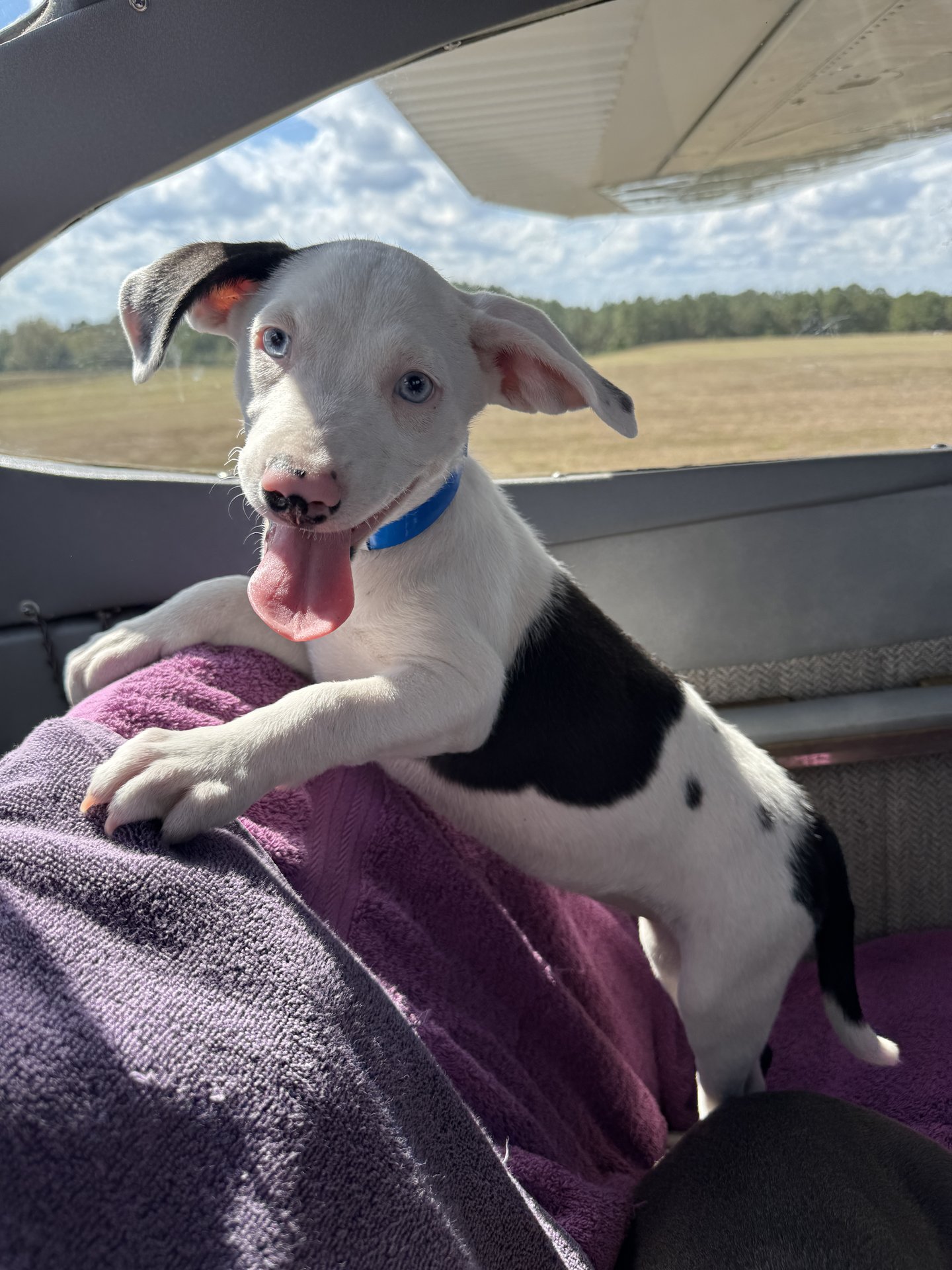
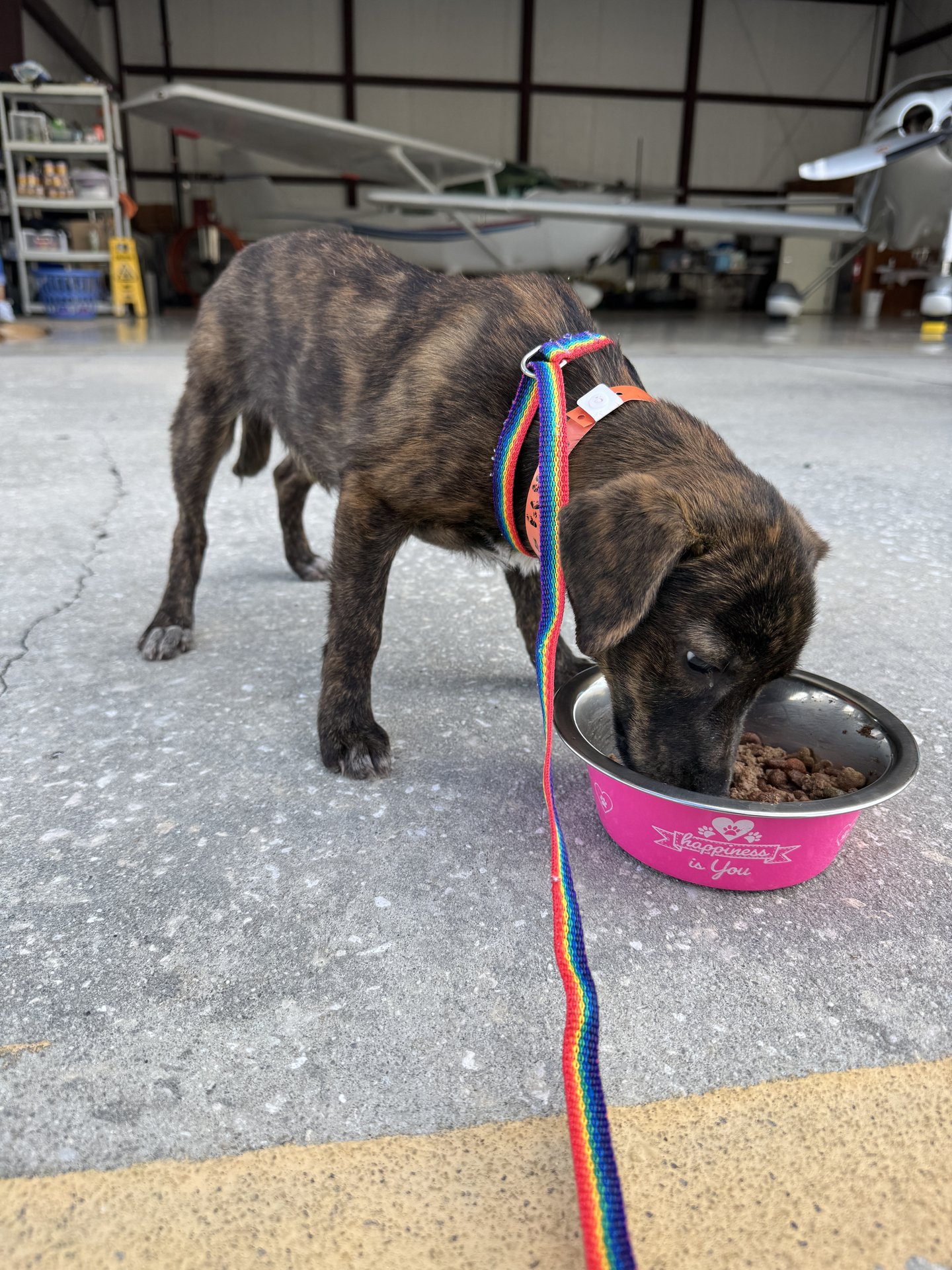
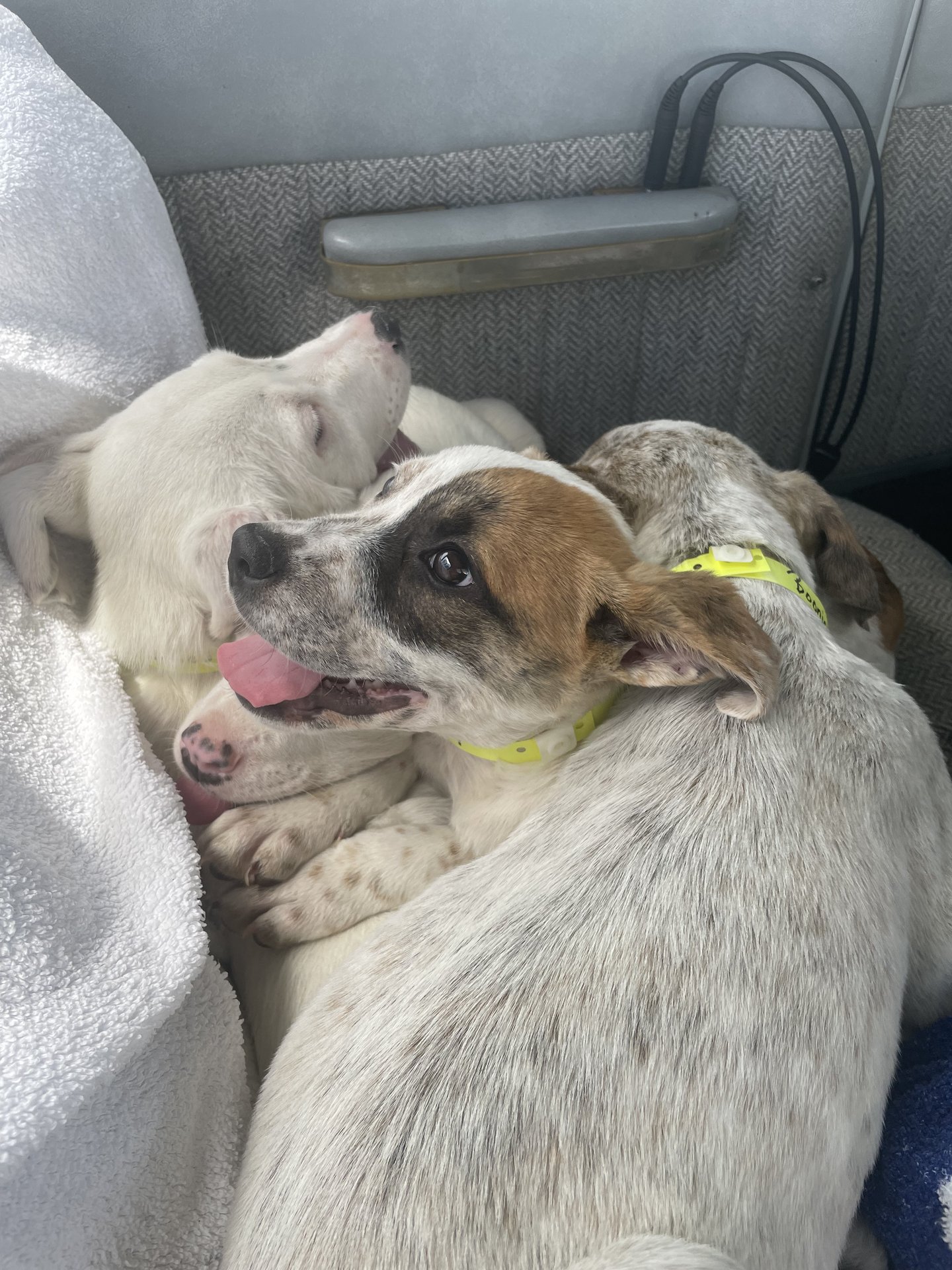
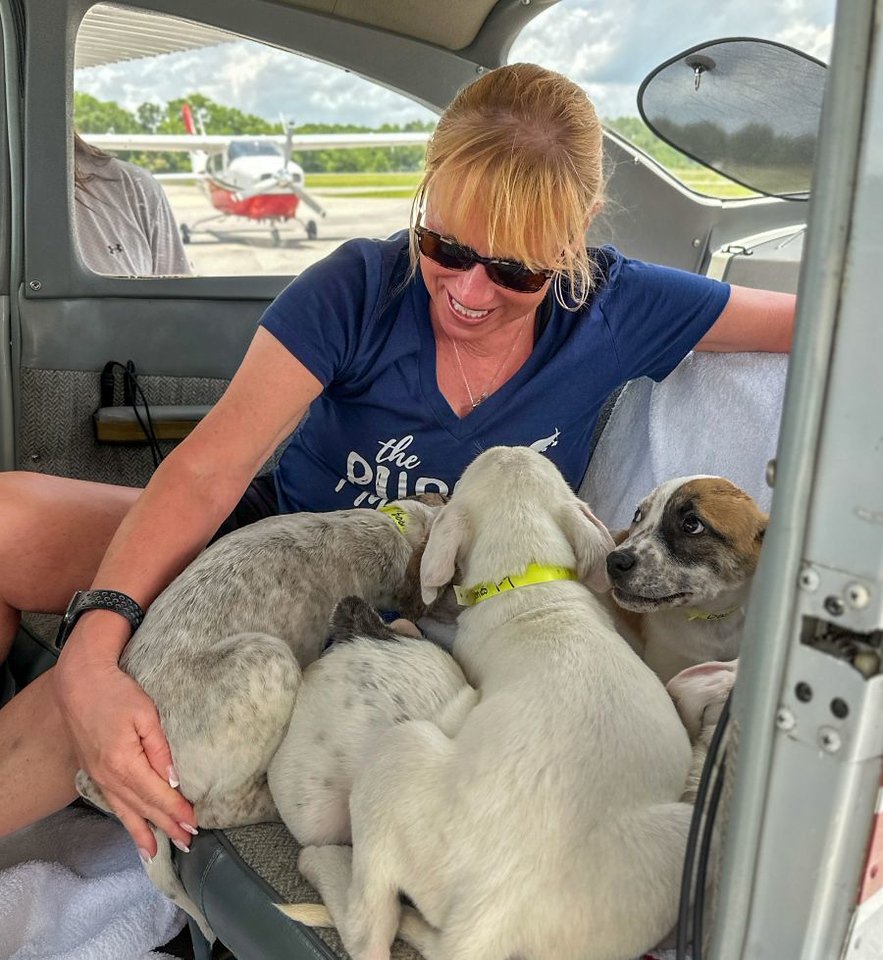
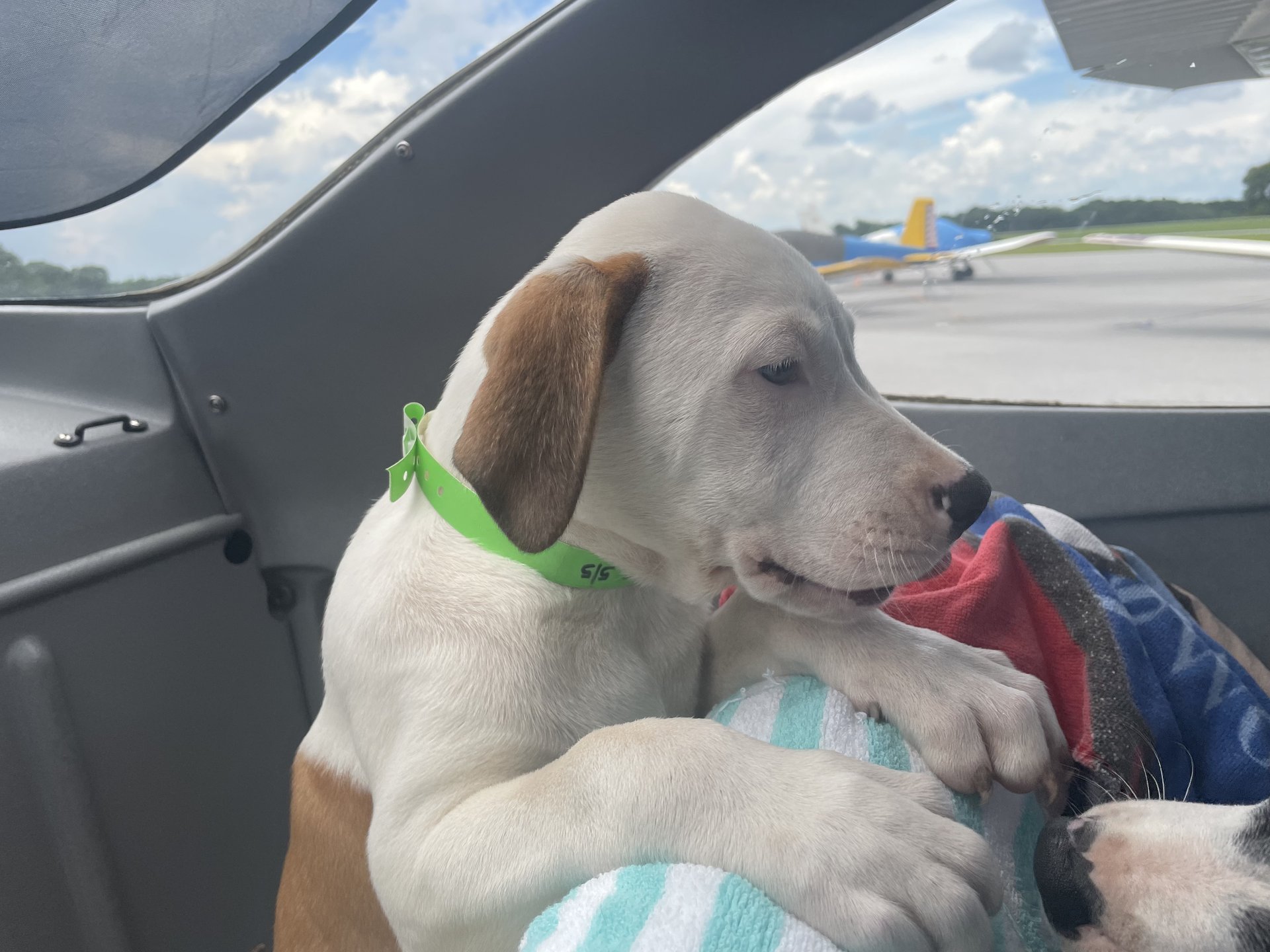
Photos courtesy of Steve & Angie.