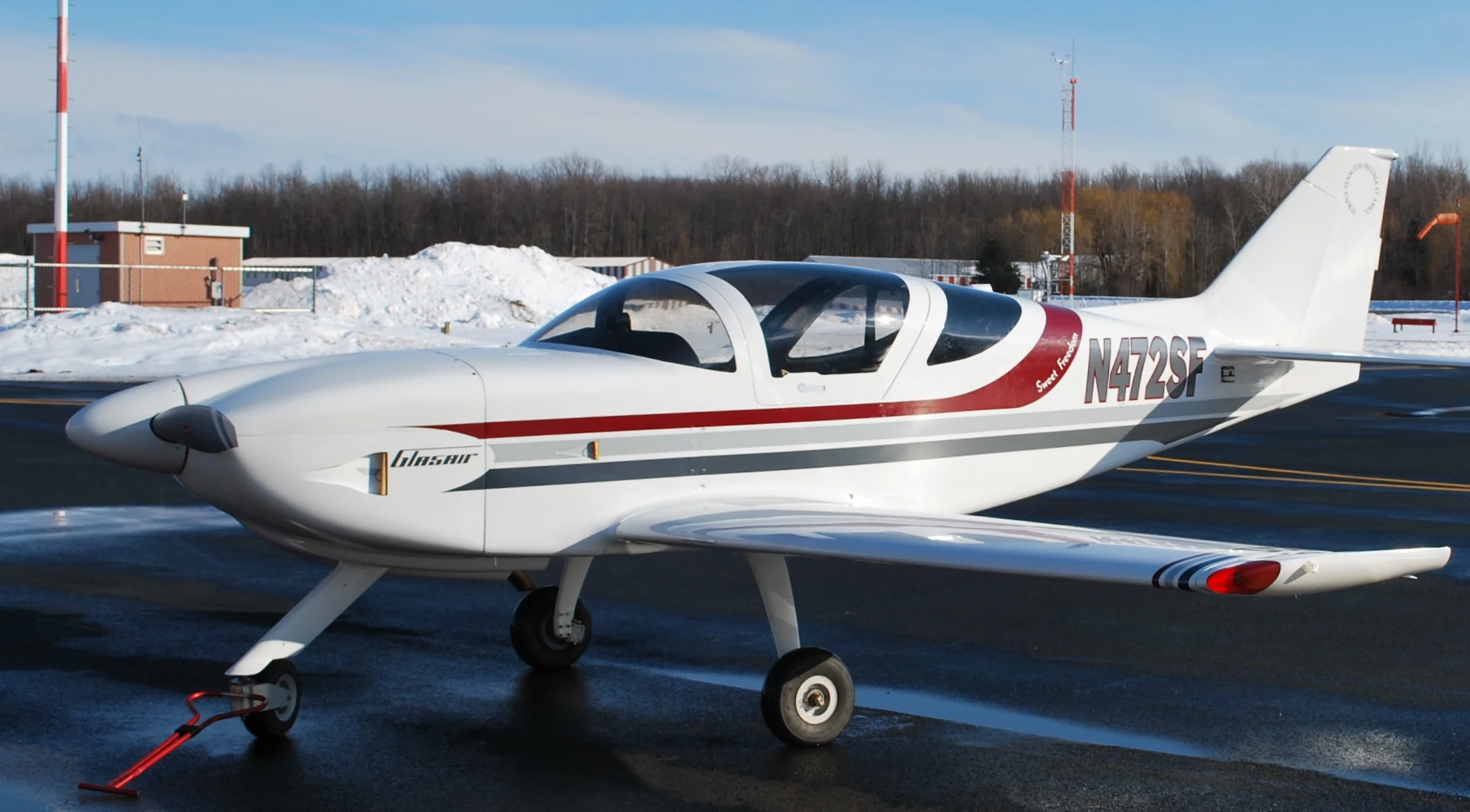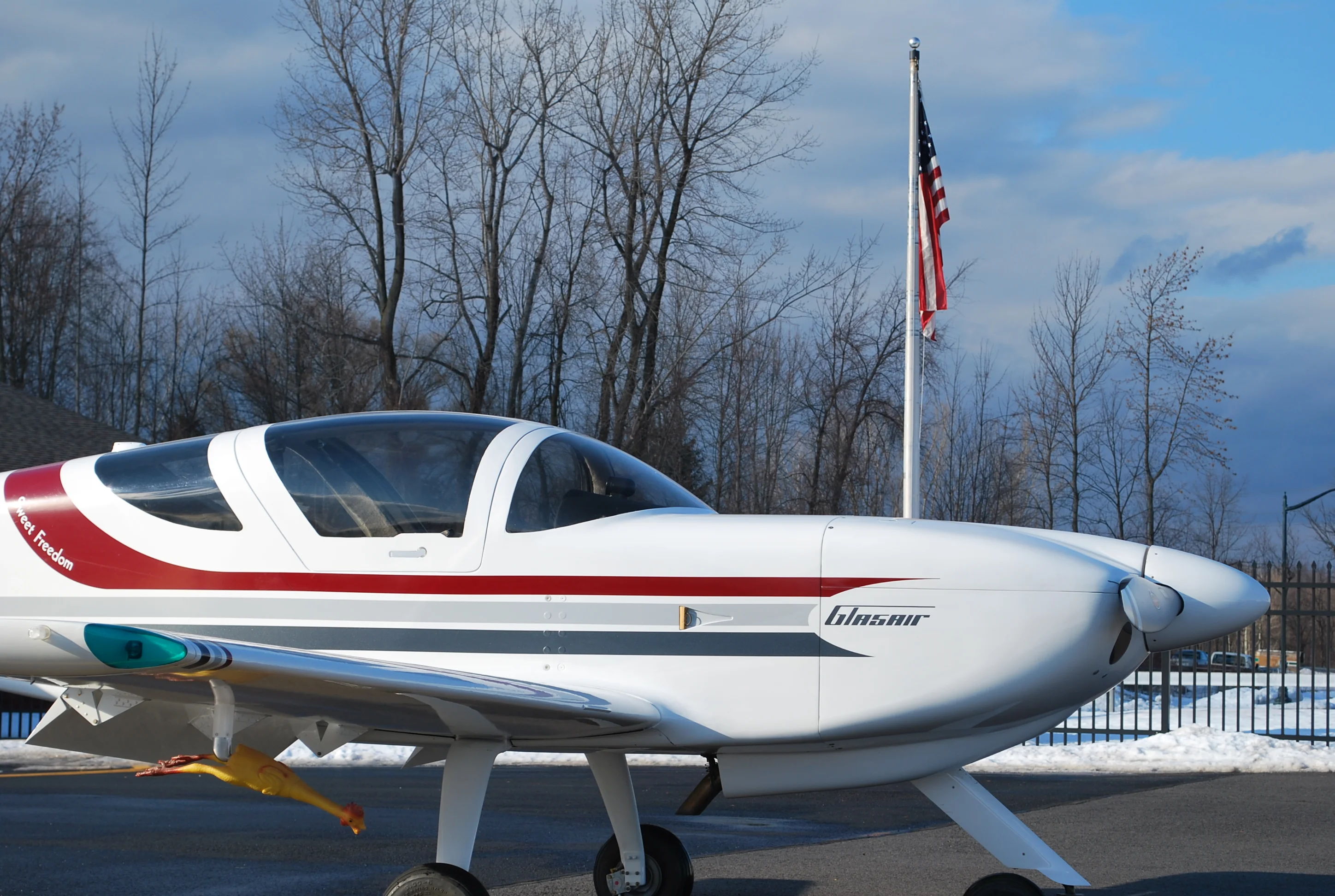
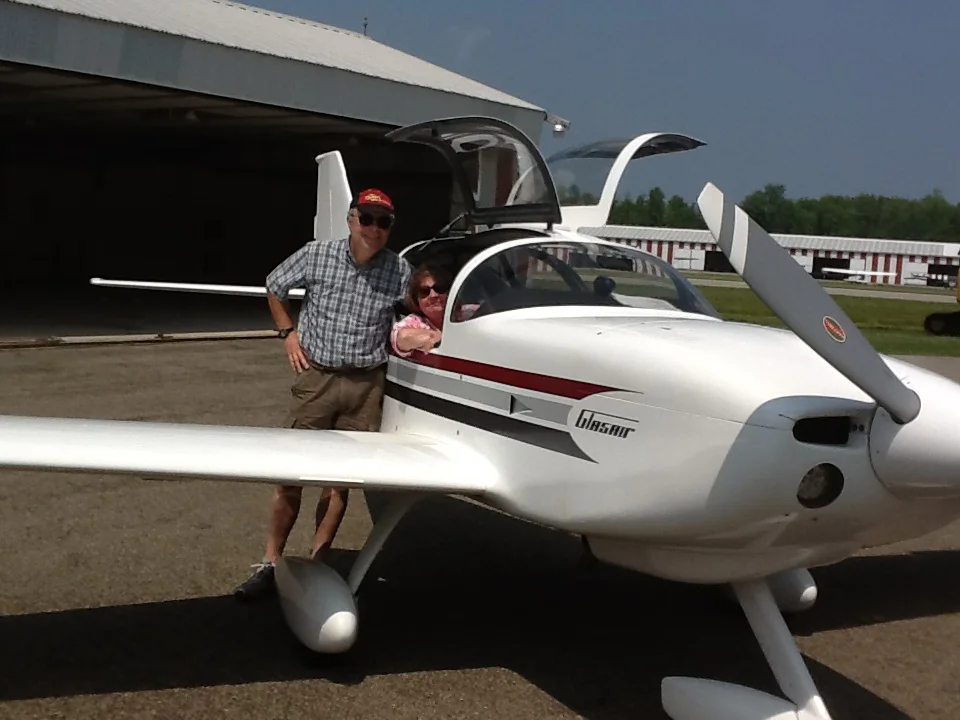
The semi backed up to the house in Western New York on December 4, 1991, and the driver helped unload what Dave Hurd had come to call simply the BIG BOX. Inside: a Glasair II-S model fixed gear trycicle kit — a plans-and-parts package for an experimental aircraft, meaning one built by its owner under FAA regulations — ordered that summer at EAA AirVenture Oshkosh. Twenty-one years and eleven months later, N472SF would lift off for the first time. This is that story.
Into Unknown Territory
Dave had never worked with composite materials before. The fiberglass that Glasair kits are built from behaves differently than aluminum — layup techniques, cure times, surface prep — none of it comes naturally without instruction. “In retrospect,” Dave told us, “attendance at one of the EAA Sportair weekend workshops for composite construction would have been worthwhile.” If you’re planning a composite build, his advice is worth taking seriously. Those workshops exist for exactly this reason.
The early years brought an unexpected setback. A factory design error in the original plans required Dave to build an entirely new, longer horizontal stabilizer and elevator assembly, then move the wing aft 1.5 inches. That single problem cost him more than a year of progress. He believes the company’s handling of the situation ultimately contributed to their financial difficulties. It’s a candid observation from someone who lived through it — and kept building anyway.
A Wife, a Garage, and a Chapter That Showed Up
Building an experimental aircraft takes more than tools and time. Dave’s wife gave up her half of the garage for well over a decade. “My understanding wife,” he calls her. Two words that carry ten years of mornings stepping around wing ribs on the way to the car.
Our chapter was there too. Members stopped by to encourage the work, lend advice, and help whenever an extra pair of hands made the difference. When Dave was closing in on completion and needed help with door and window fit-up, a fellow chapter member who holds an A&P certificate — the FAA certification authorizing an aircraft mechanic to maintain and repair airplanes — stepped in. That same member designed and installed all the upholstery, created the exterior artwork that became the vinyl graphics on N472SF, and handled the paint work. Dave was allowed to shoot just a bit of the primer and finish coat — enough to say he did part of it. He made no boo-boos.
That A&P’s boss, a highly respected IA (Inspection Authorization holder — an experienced mechanic authorized to conduct annual inspections on Certificated aircraft (Cessnas, Pipers, etc.)), conducted a condition inspection, reviewed the completed airframe, and made a few final suggestions. The result: the DAR — a Designated Airworthiness Representative, an FAA-authorized individual who issues airworthiness certificates for homebuilt aircraft — issued Dave’s Special Airworthiness Certificate without much fuss at all.
The All-Electric Decision
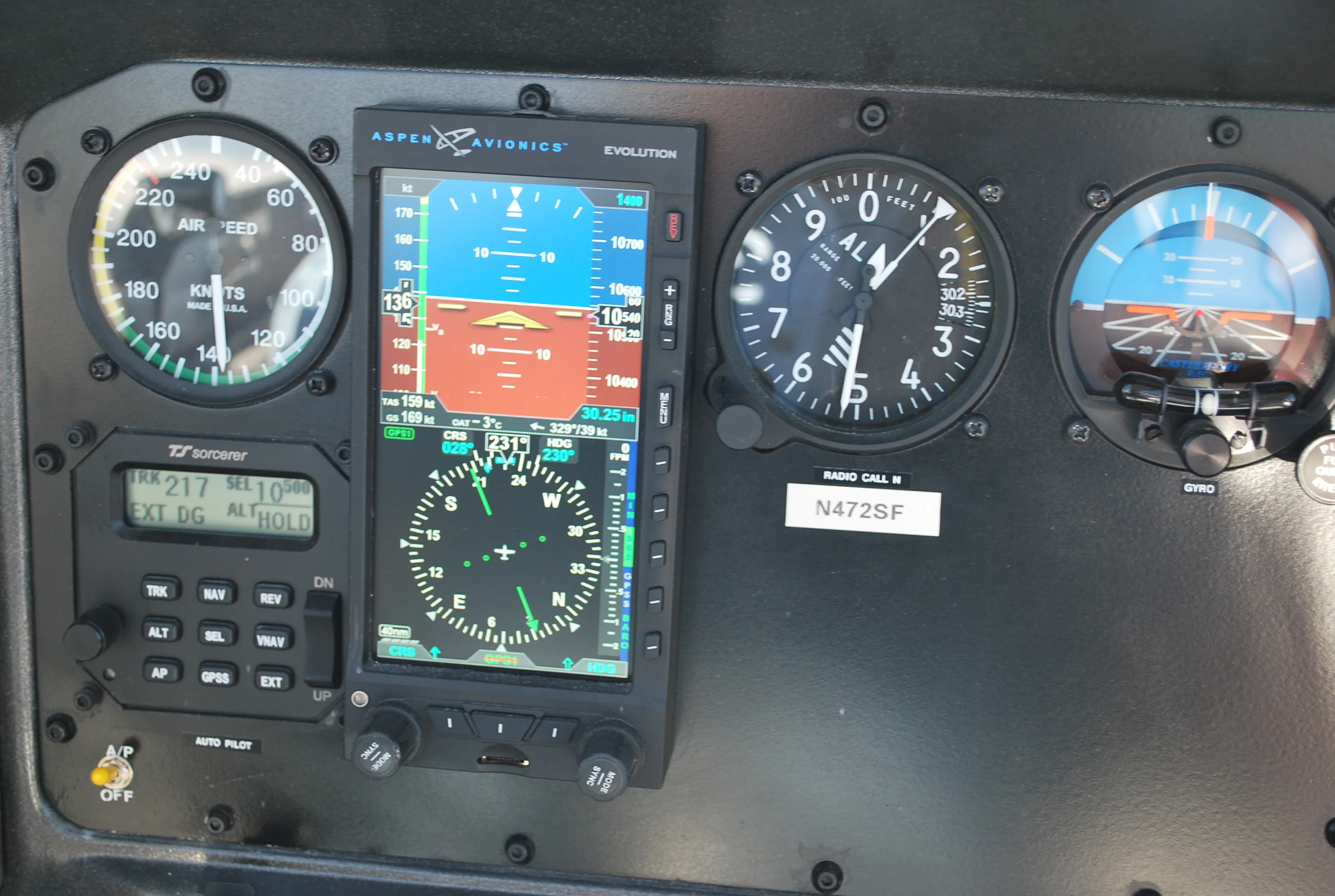
N472SF has no vacuum pump. That was intentional. Years earlier, Dave had experienced a vacuum pump failure in flight — fortunately in VFR conditions, meaning good visibility and clear of clouds, so the outcome was a story worth telling rather than one that wasn’t. That experience shaped everything that came after.
Dave built a robust, semi-redundant electrical system from the start: dual batteries, as few moving parts as possible, and a panel that doesn’t depend on engine-driven accessories to stay alive. The avionics include an Aspen Pro EFIS — an electronic flight instrument system that replaces traditional spinning gauges with integrated digital displays — along with a two-axis autopilot and a full suite of radios and navigation gear.
When Dave powered up the panel for the first time inside the finished airframe, everything worked. “No expensive smoke escaped from anywhere,” he told us. “A really good day.”
First Flight — Second Attempt
Dave had planned to have a chapter member handle the first flight — a retired Air Force test pilot with the experience and the temperament for it. Then that pilot got knocked off his ten-speed bicycle by a little old lady who pulled away from a stop sign without looking. Broken leg. Best-laid plans.
Dave held a commercial pilot certificate and was current. He and his grounded colleague worked out a set of conservative test cards — a structured, step-by-step plan for methodically exploring an aircraft’s flight envelope before expanding the envelope further — and Dave strapped in. The wheels of N472SF left the ground for the first time twenty-one years and eleven months to the day from when the BIG BOX landed in the garage.
The first attempt didn’t go quite as scripted. Shortly after liftoff, Dave noticed fuel coming from the port fuel cap. Quick landing. His A&P friend made the fix. First flight — try 2. No leaks, and the test program began for real.
425 Hours and Still Climbing
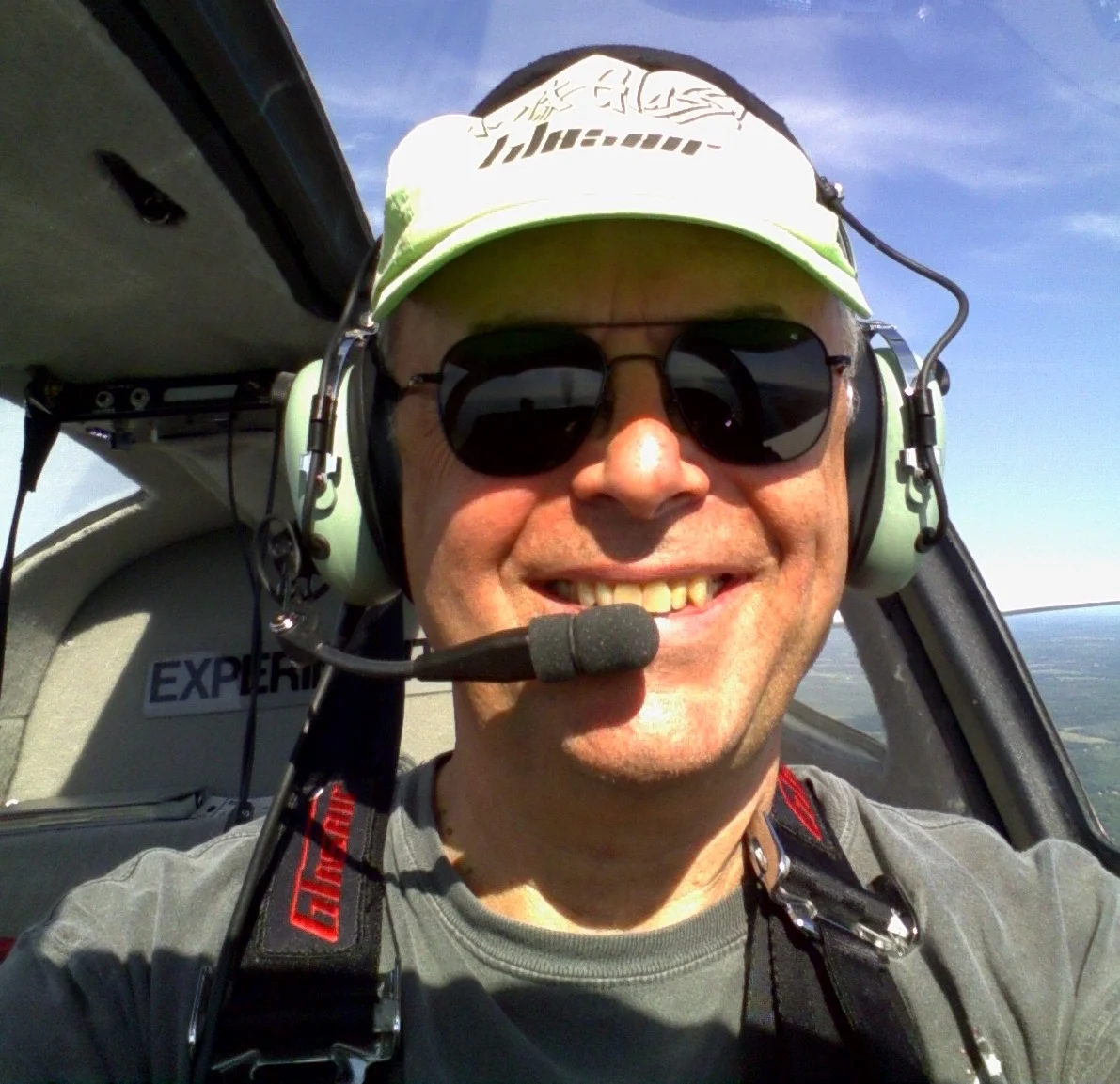
N472SF has around 425 Hobbs hours on the airframe now — Hobbs time being the engine-running hours tracked by an onboard meter, the standard measure of how much an aircraft has actually flown. Dave has taken it from Western New York to Florida and back three times. He’s flown roughly 75 Young Eagles from the left seat, and — in his words — “a goodly number of Old Buzzards like myself.”
The airplane Dave built is doing exactly what EAA was founded to make possible: an experimental aircraft, constructed by its owner, flown by its owner, carrying people into the air and into aviation.
Come Hear the Stories
Dave shared this story at one of our chapter meetings, and we’re glad he did. The design error, the decade in the garage, the A&P who painted the plane, the test pilot with the broken leg, the fuel cap on the first flight — this is what building an airplane actually looks like. Twenty-two years of it, and 425 hours of flying after.
If you’d like to hear more stories like Dave’s — or if you’ve ever wondered what it takes to build one yourself — we’d love to see you at Hangar 100. We meet the first Saturday of each month at 9:00 AM at KGIF Gilbert Field in Winter Haven. No commitment, no prerequisites. Just come.