
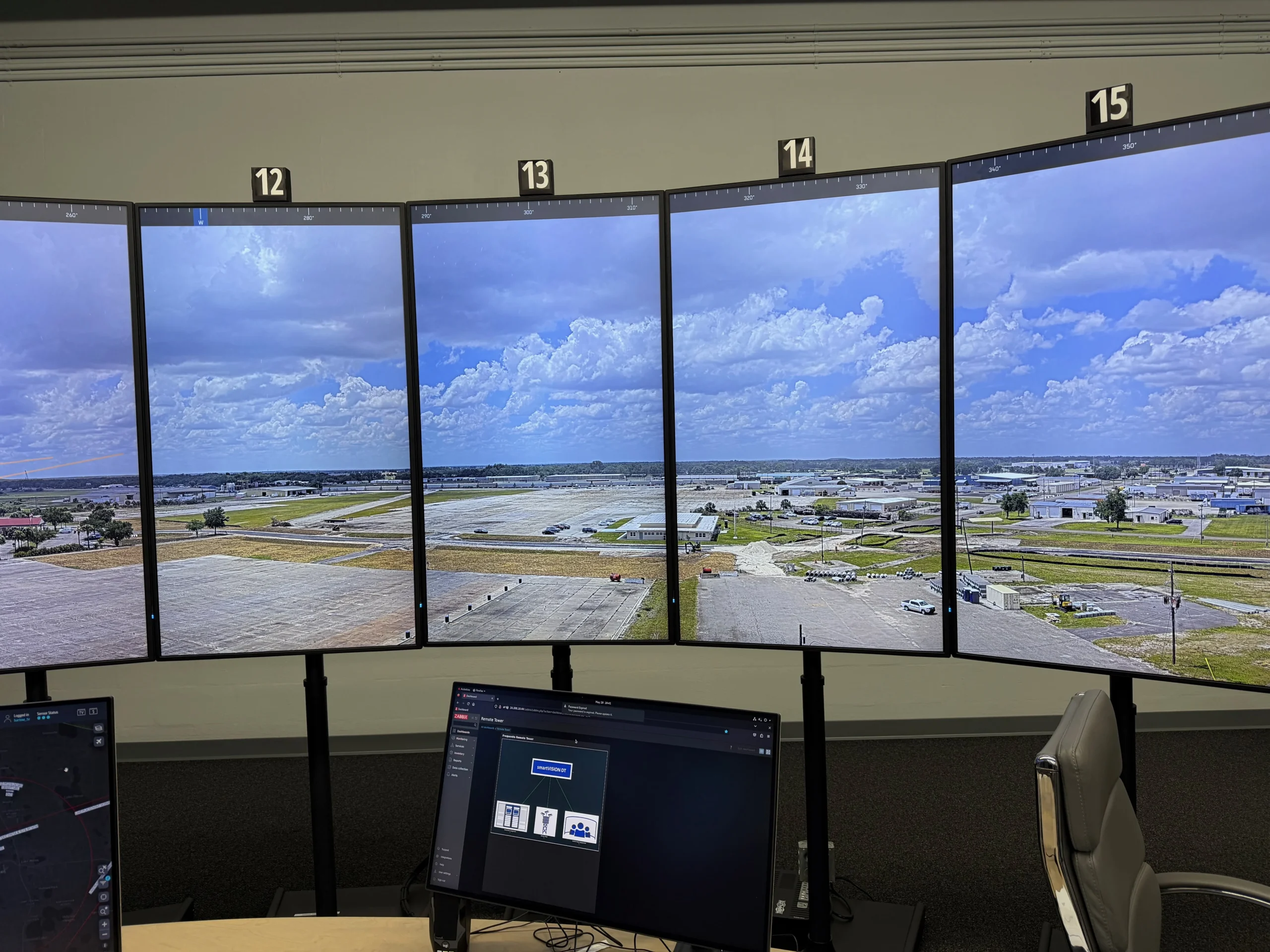
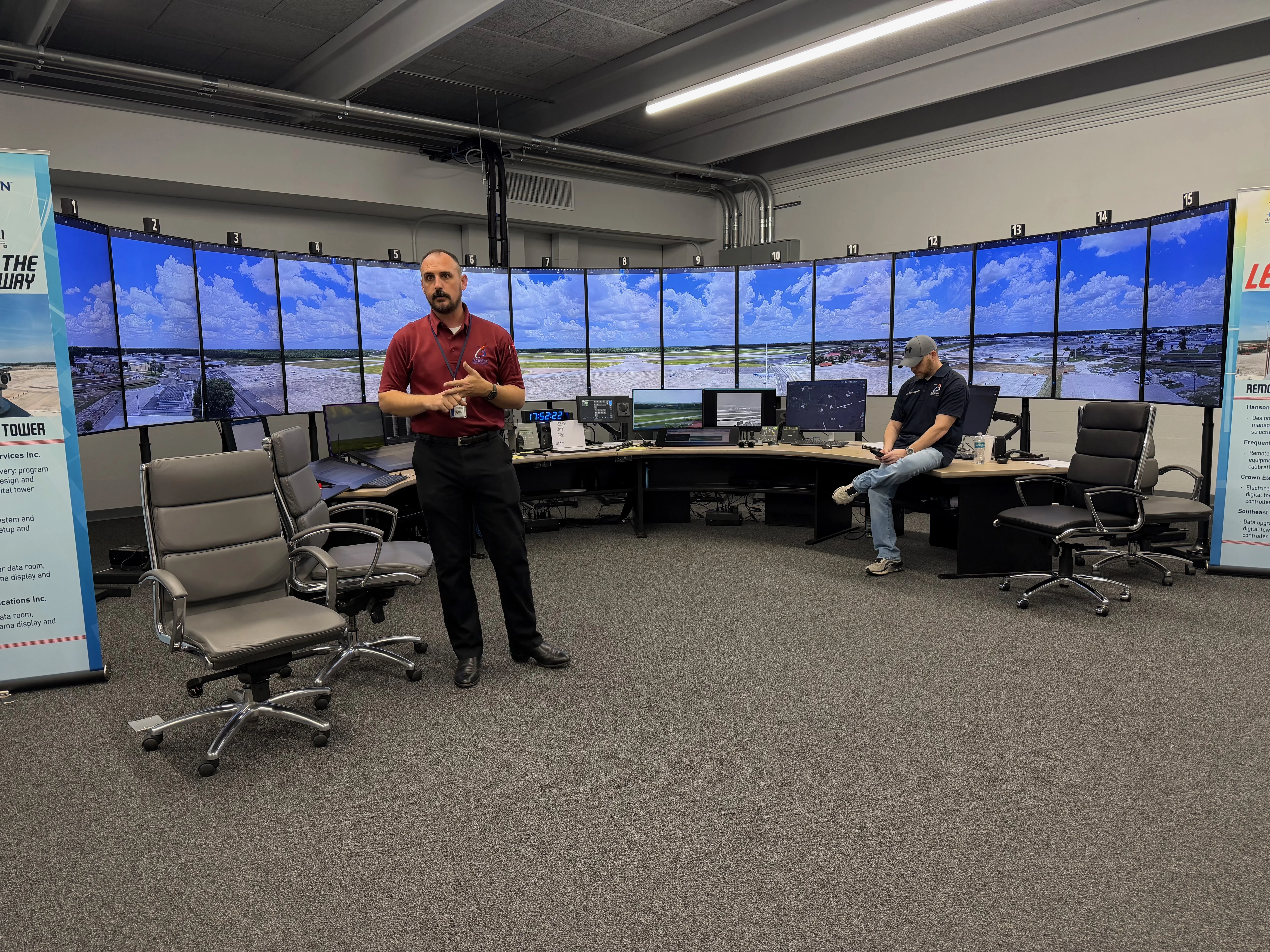
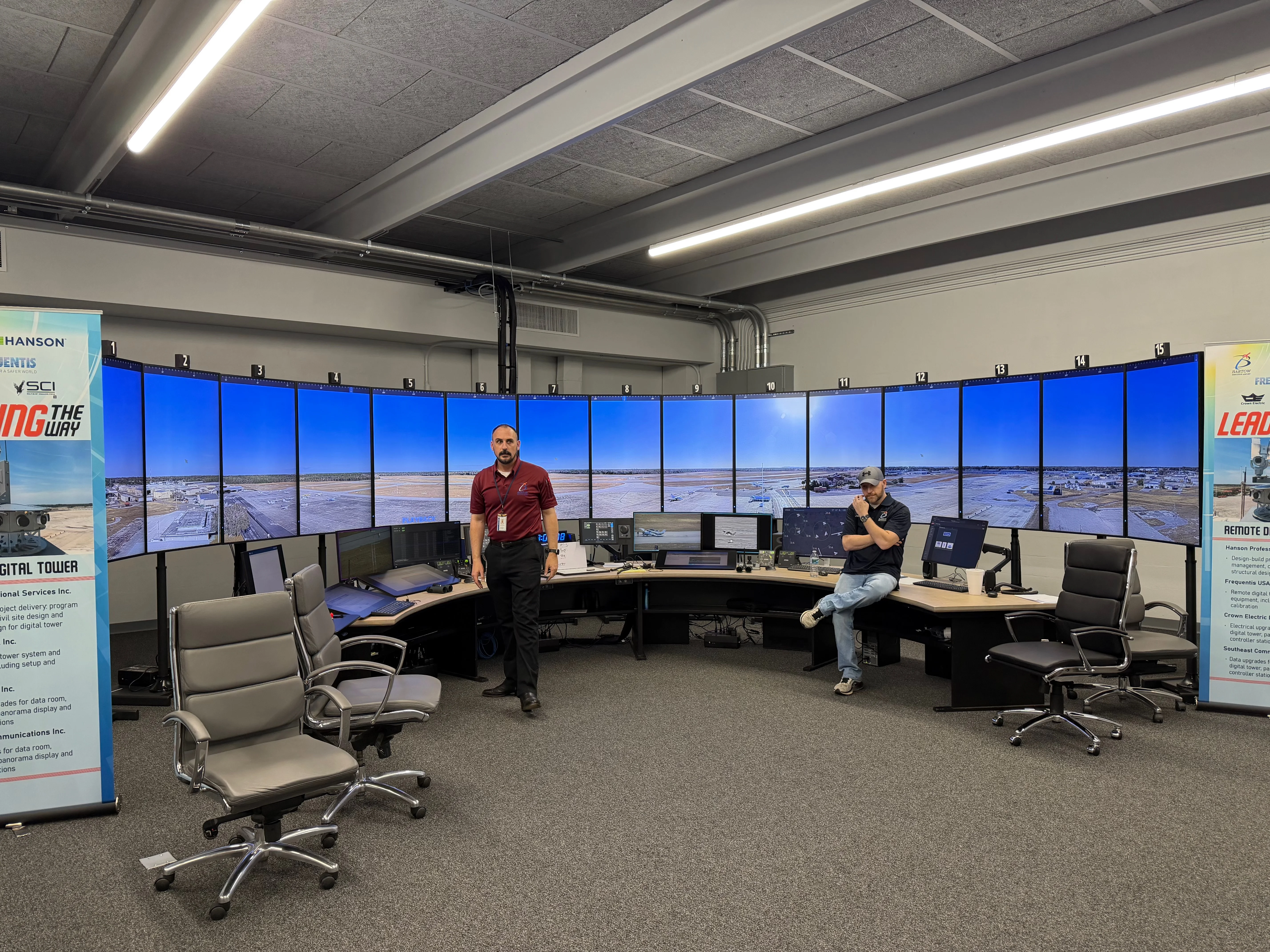
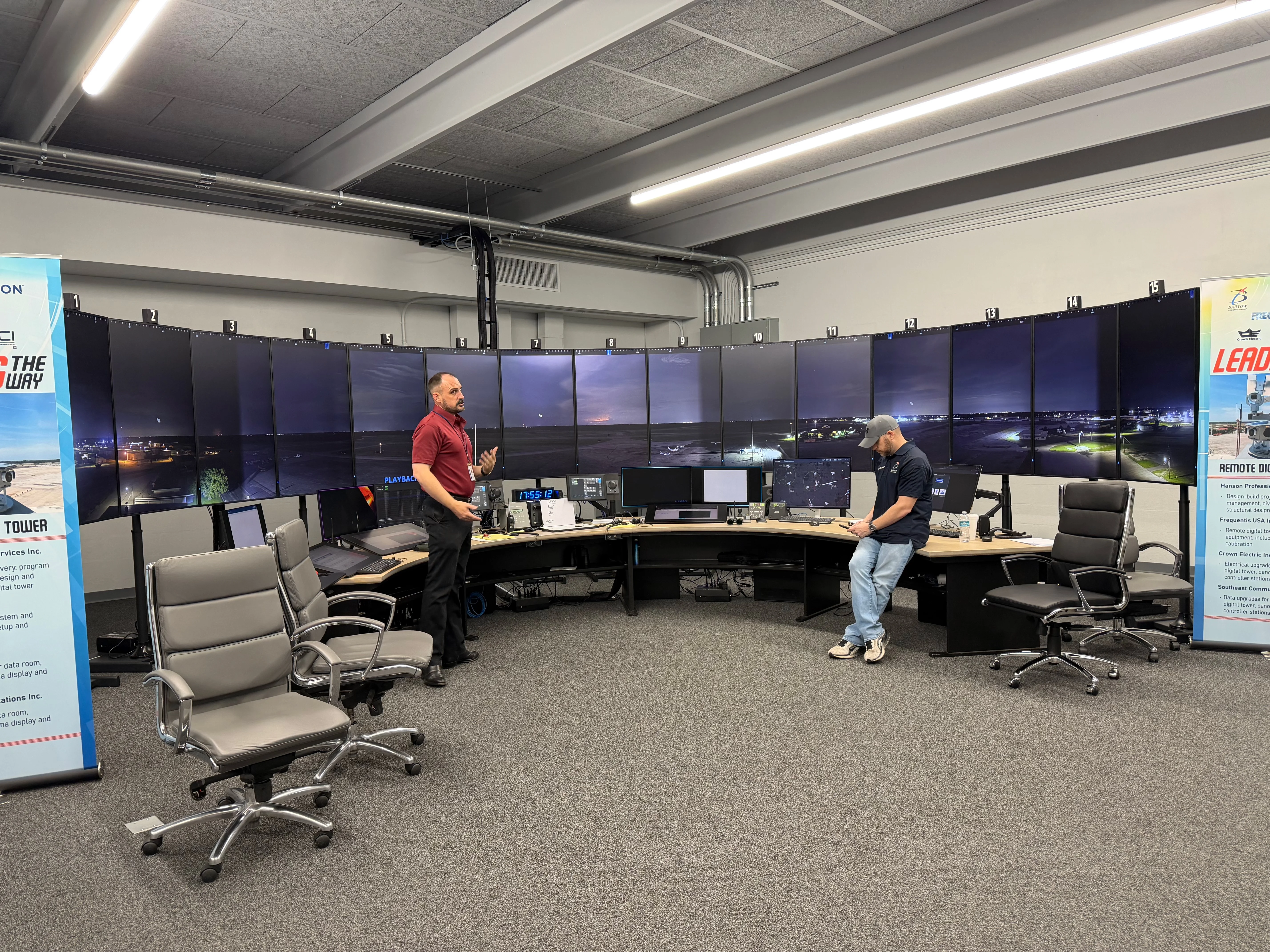
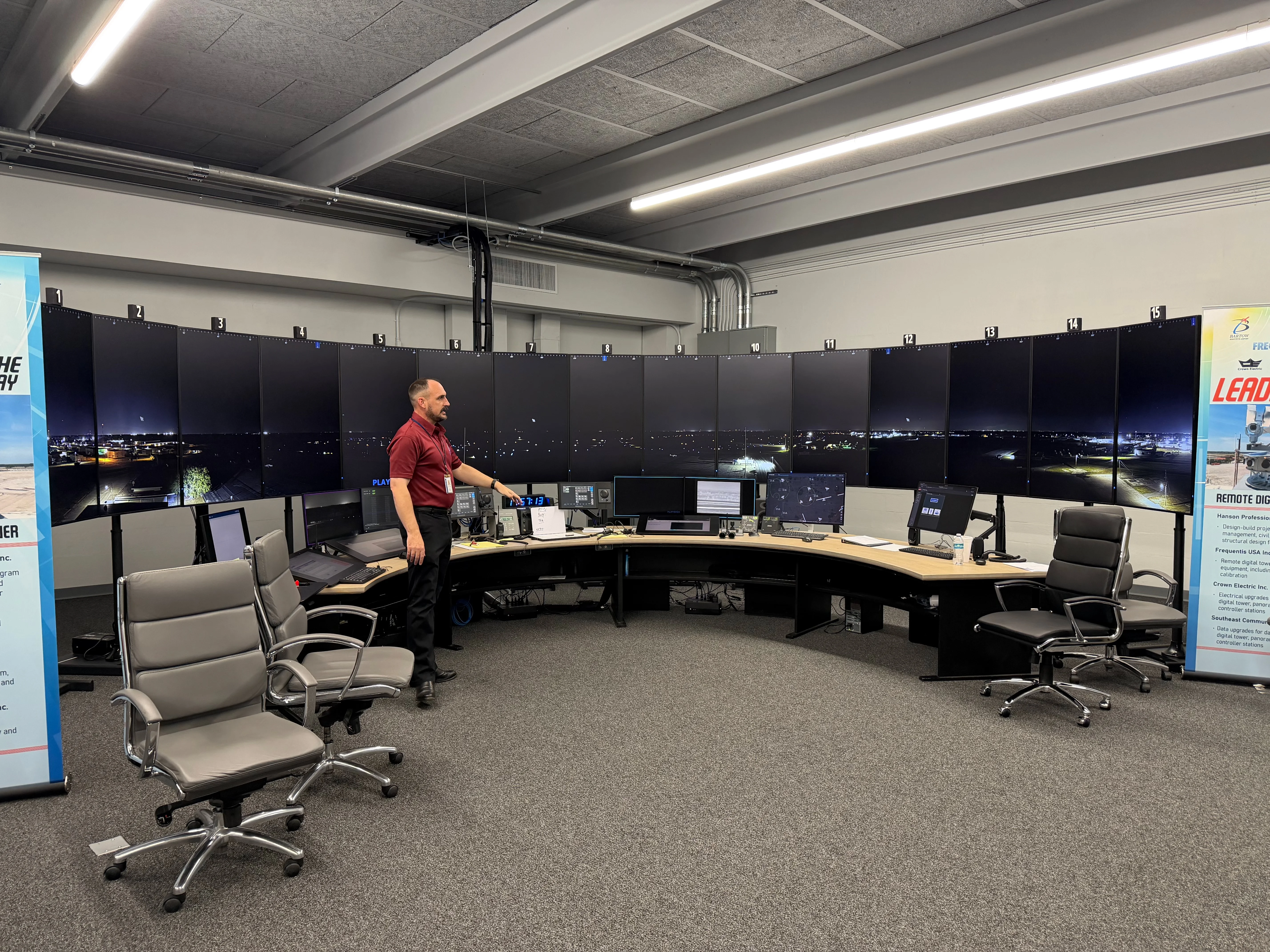
Walking into the facility at Bartow Municipal Airport, the first thing that grabs you is the wall. Fifteen high-definition monitors curve around the room in a seamless panorama — and across every screen, the Bartow ramp stretches out below in full detail: taxiways, runway markings, aircraft on the apron. You are looking at a live airport. You are standing on the ground.
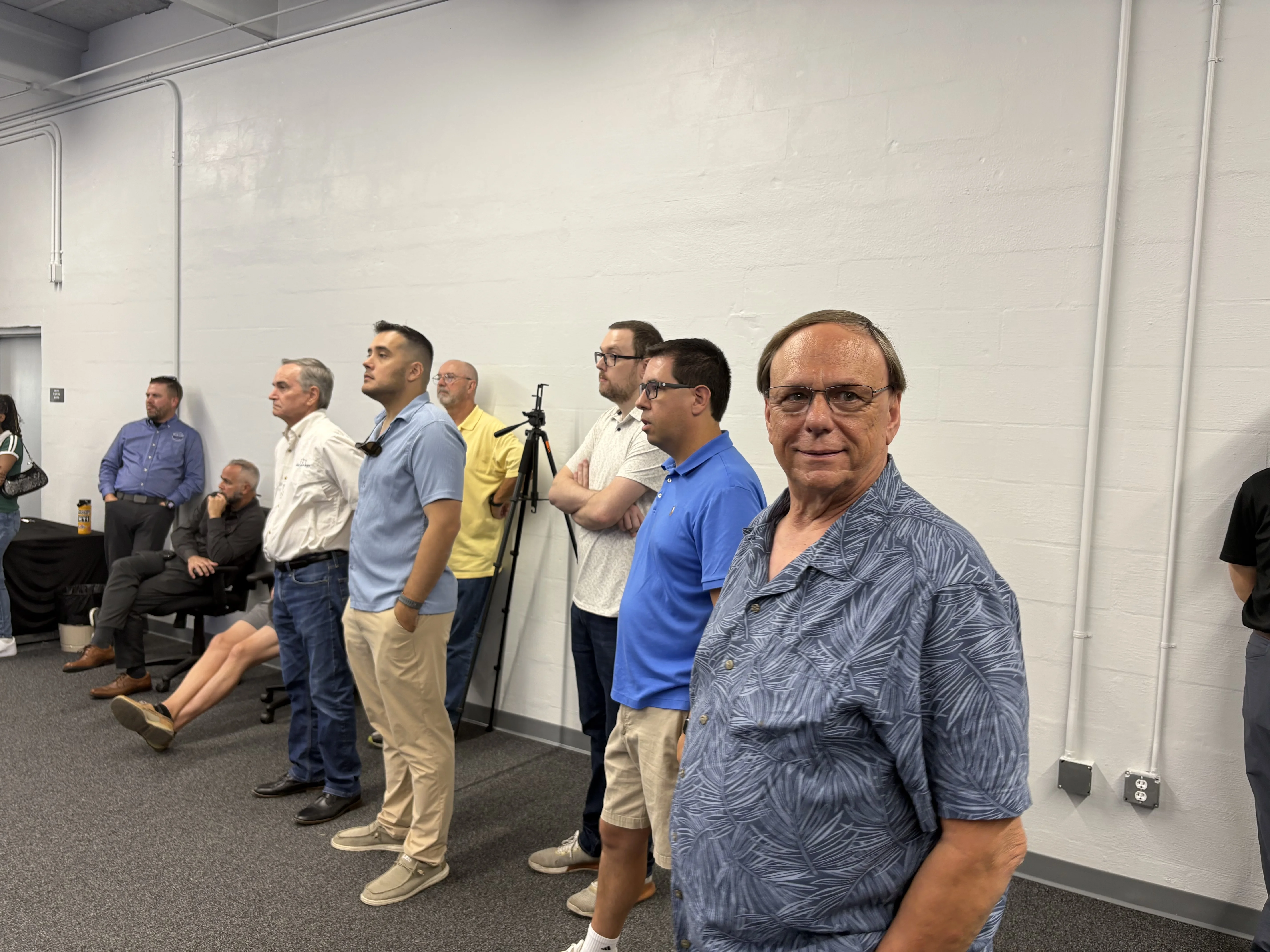
That is the idea behind the Remote Digital Tower — and on Monday, May 18, members of EAA Chapter 229 got a firsthand look at a technology that is already being tested in our own backyard.
What Is a Remote Digital Tower?
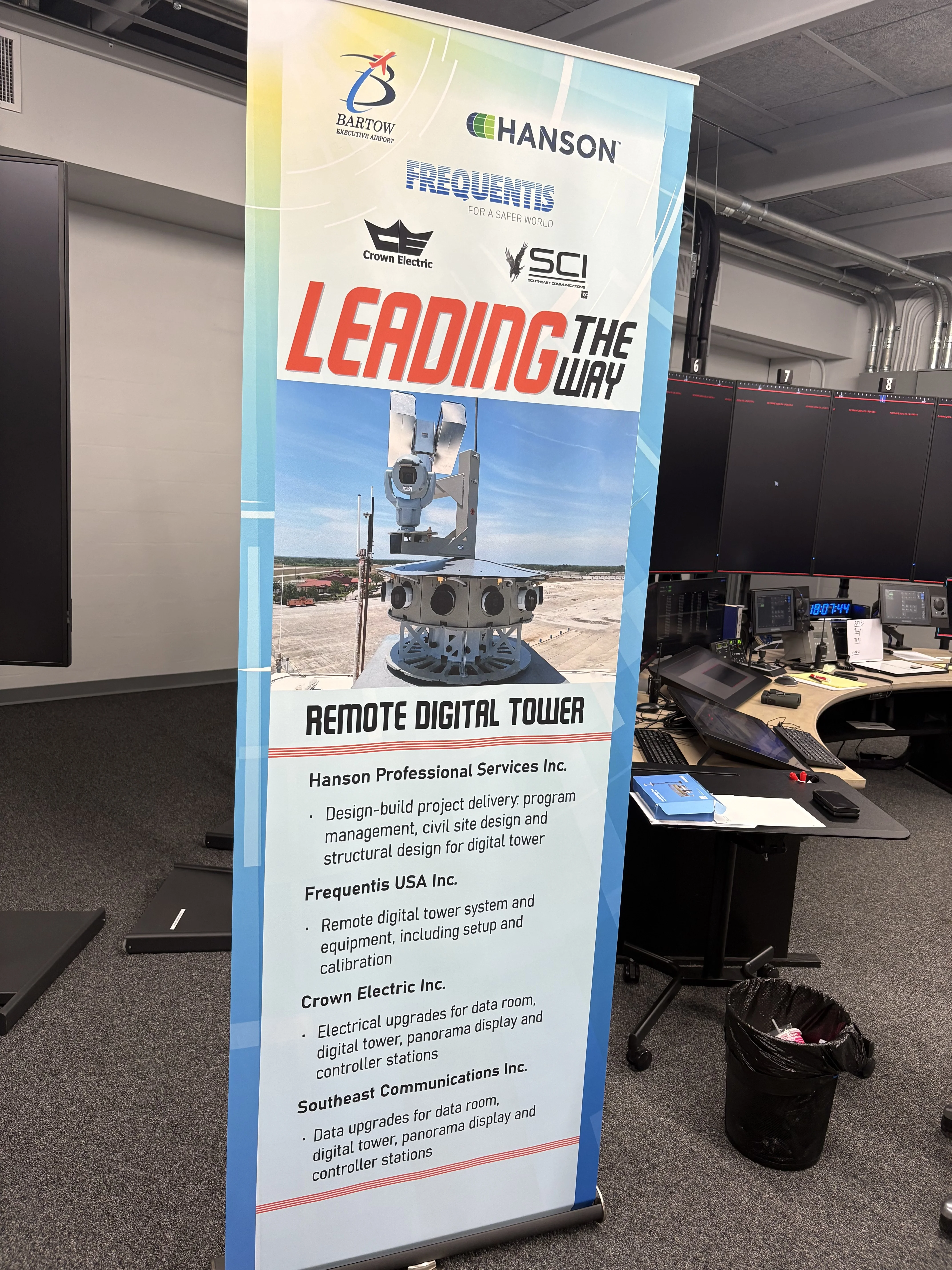
In a traditional control tower, air traffic controllers work from a glass cab perched high above the airport, relying on direct line of sight to manage traffic. A Remote Digital Tower replaces that glass cab with a network of high-definition cameras mounted around the airport, feeding a live 360° panoramic view to controllers working from a ground-level facility — anywhere.
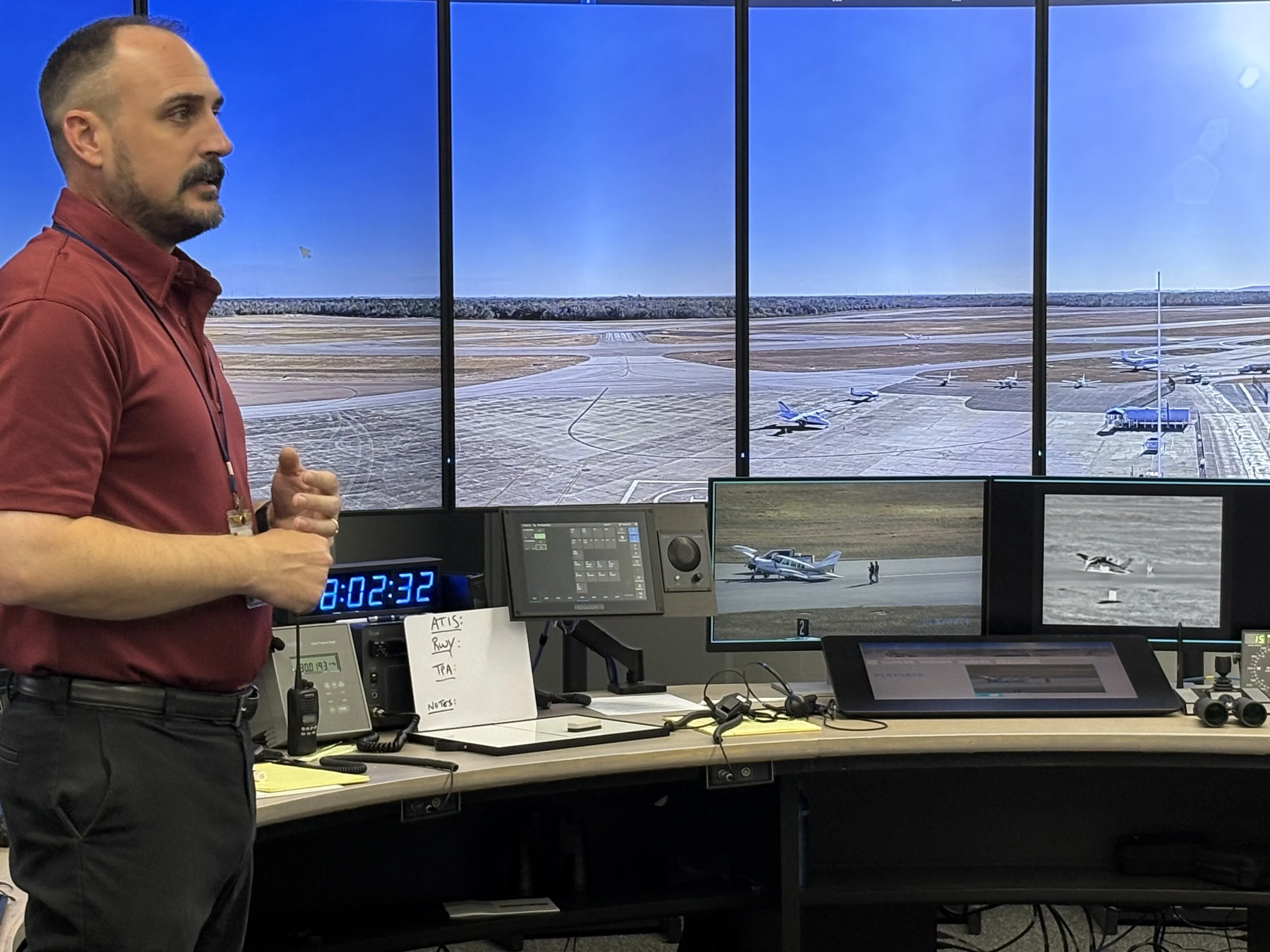
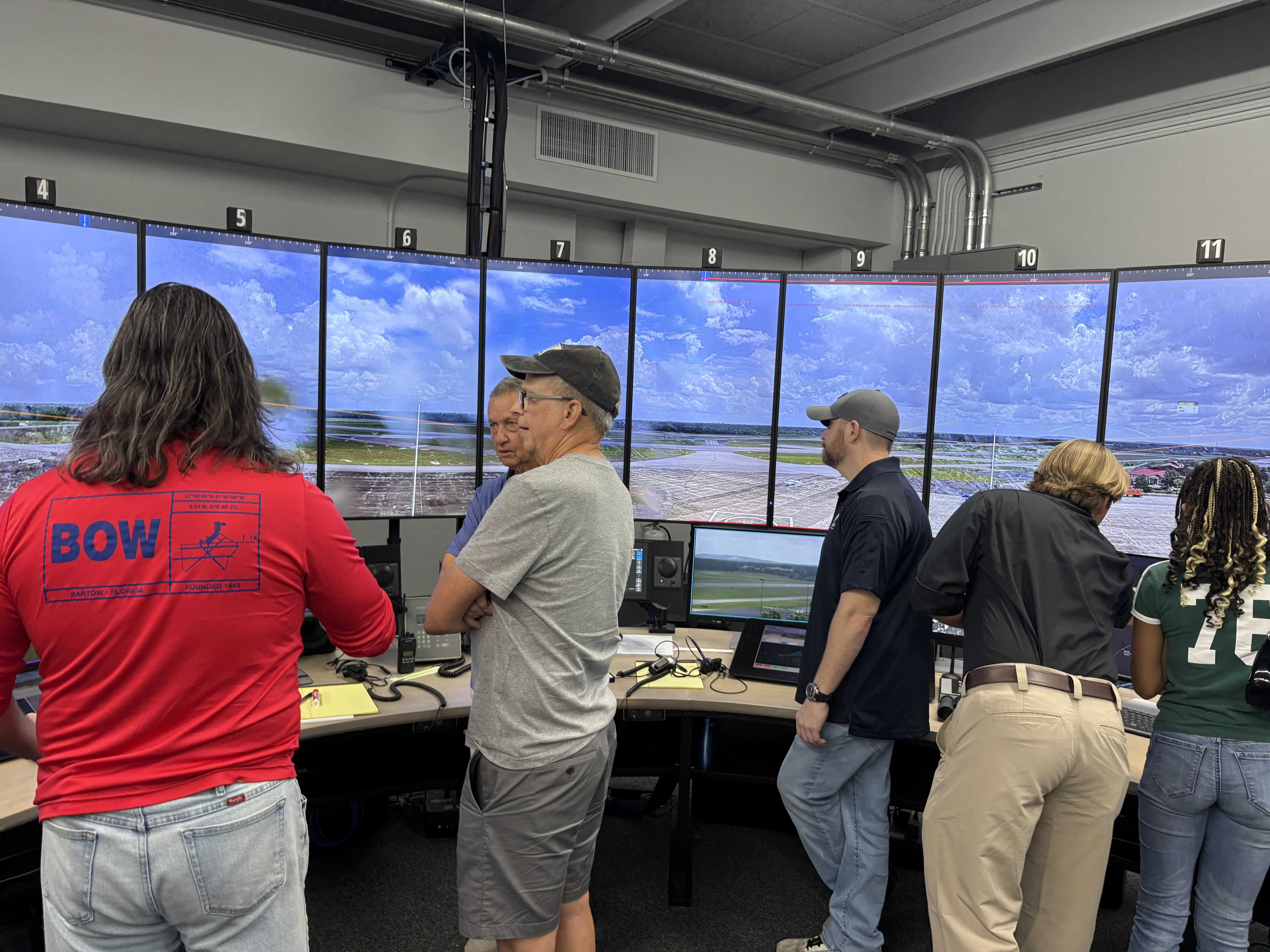
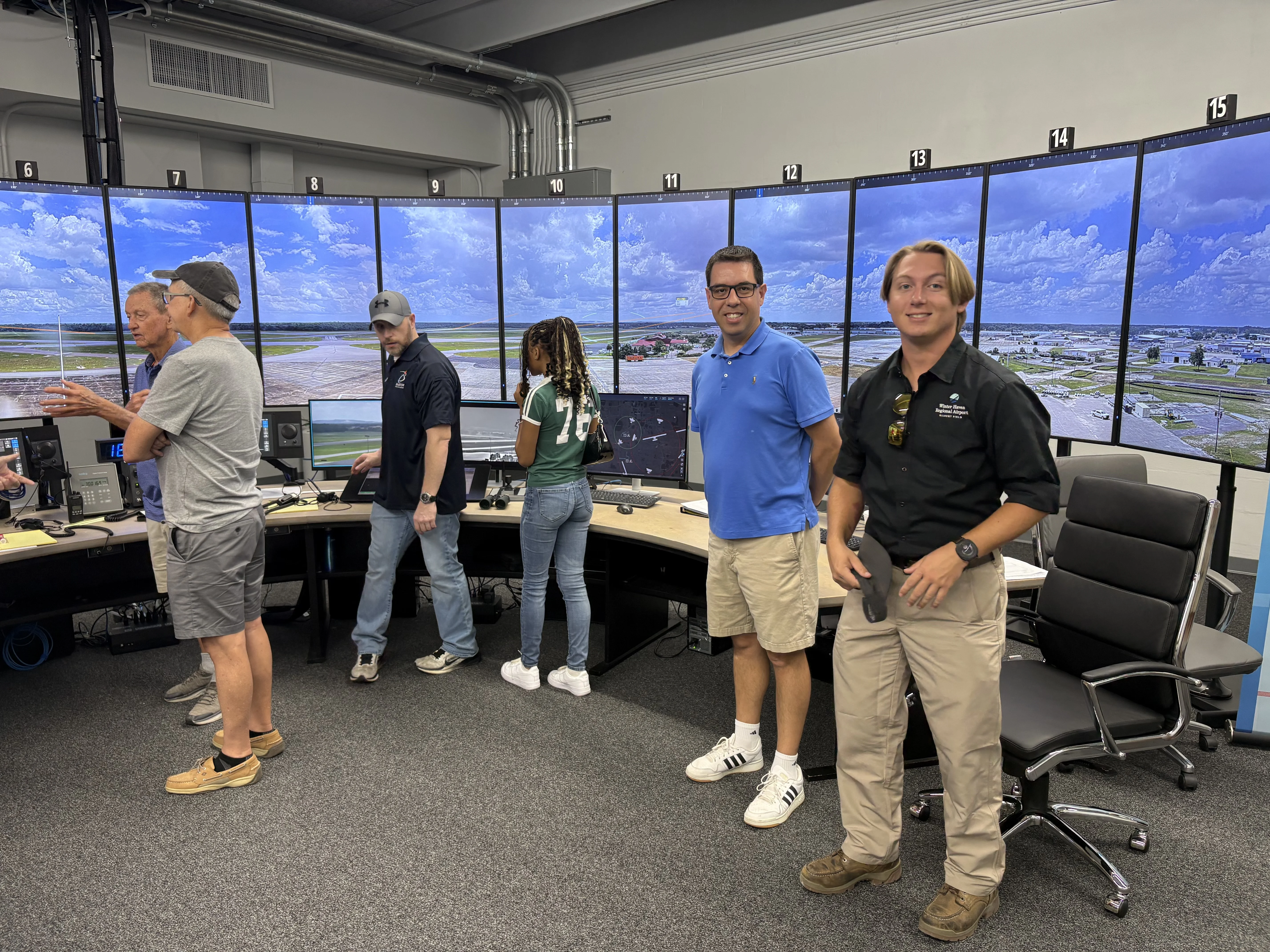
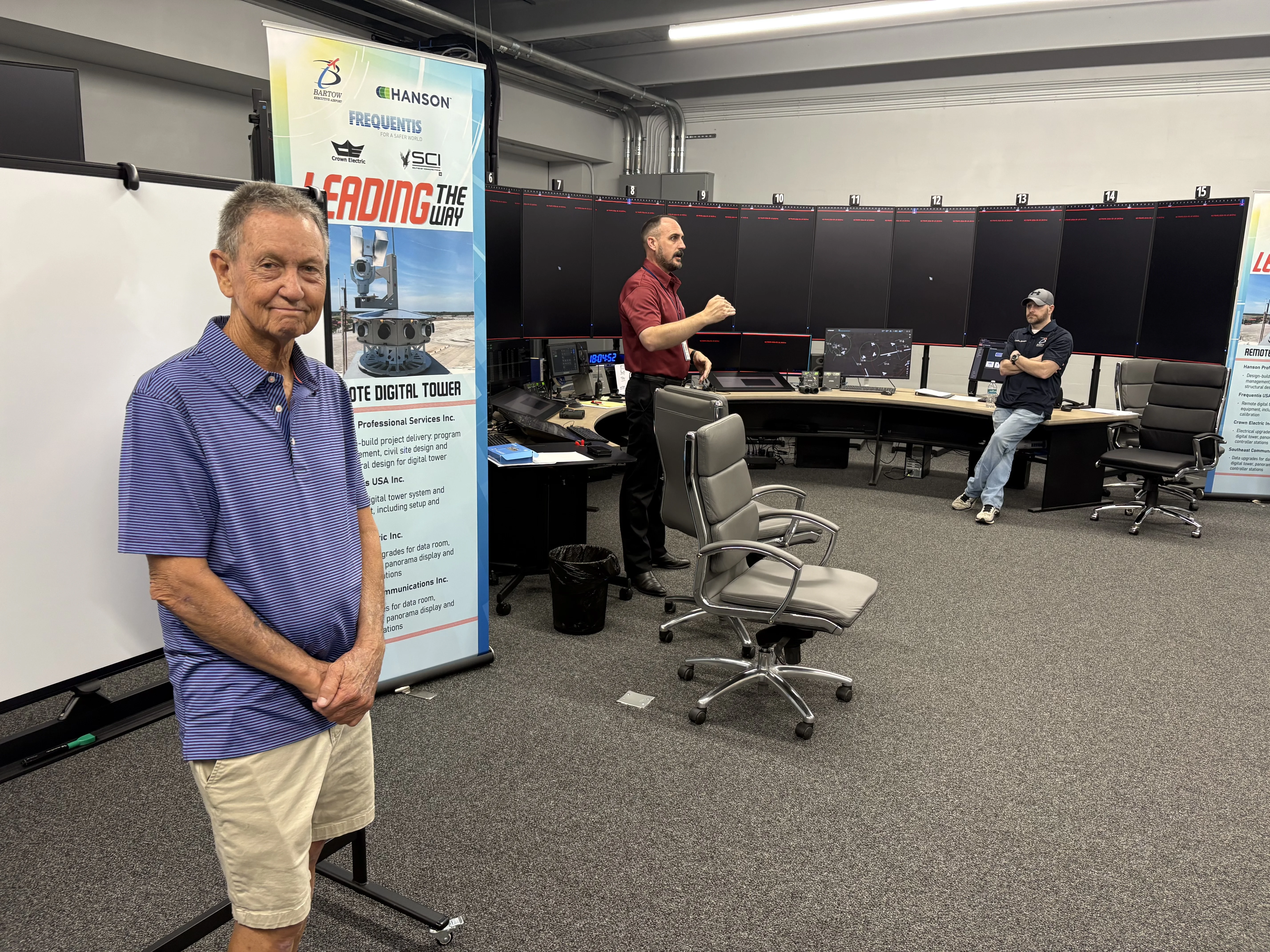
Bartow Municipal Airport (KBOW) is currently running the system in a test phase. John Helms, Executive Director of Bartow Airport, led our group through the facility and walked us through every piece of the operation.
What the System Can Do
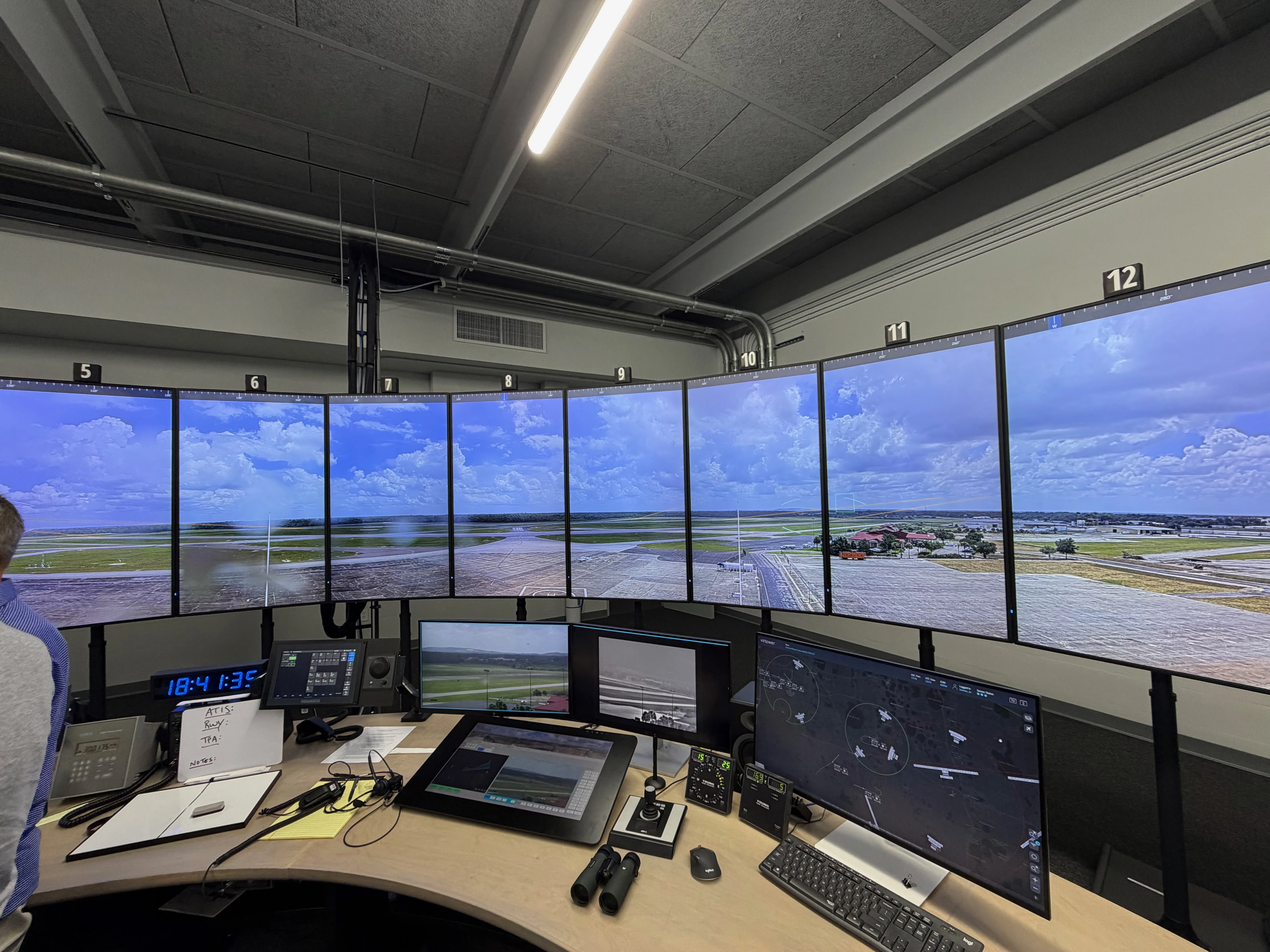
The curved monitor wall holds 15 numbered screens displaying a continuous panoramic view of the airfield. Controllers can work in standard daylight mode or switch to a thermal camera layer that cuts through darkness and low-visibility conditions — providing situational awareness that goes beyond what the human eye can do from a traditional cab.
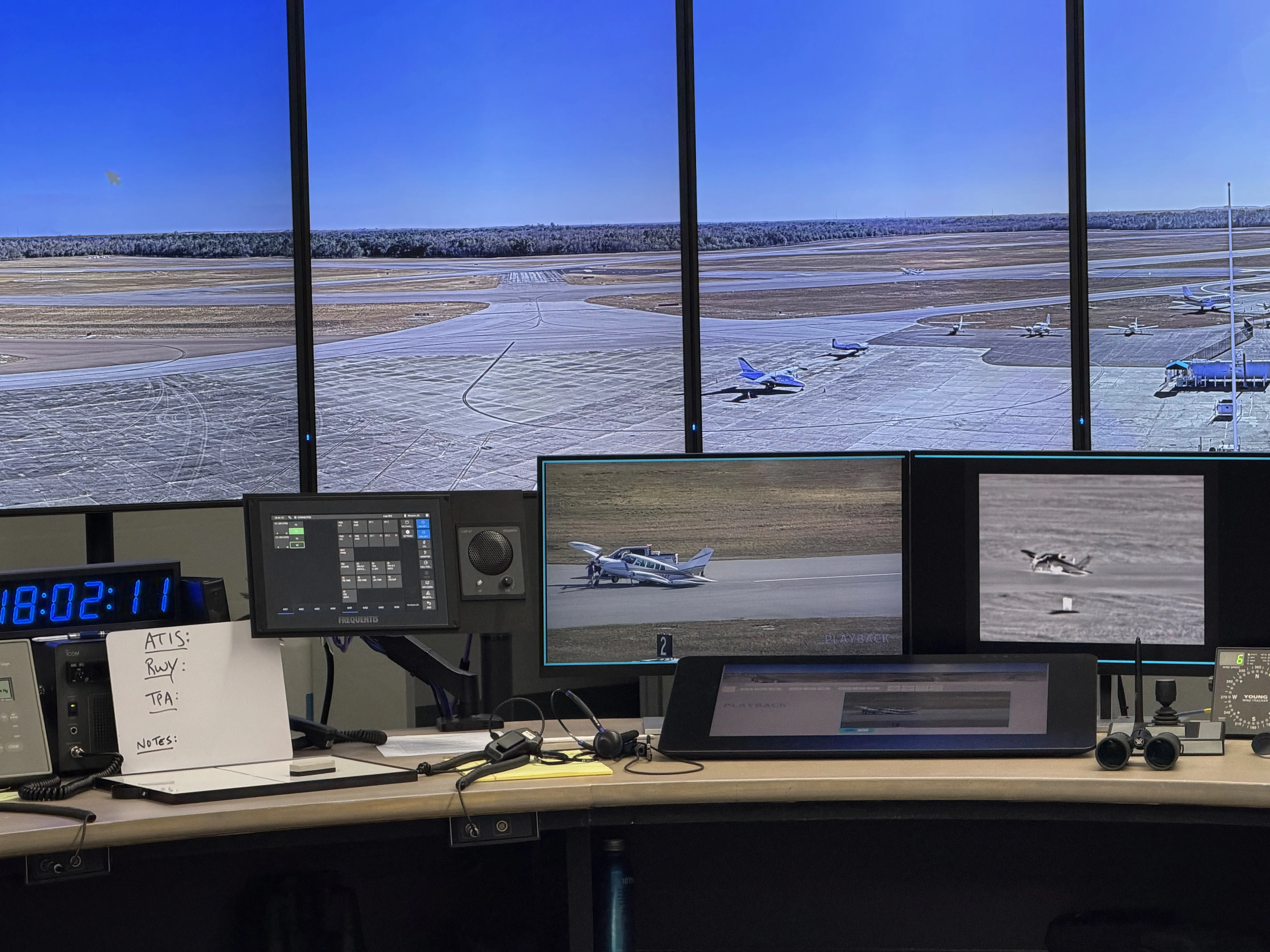
The view is not just a video feed. Runway overlays, airport diagram annotations, and final approach path visualization are rendered directly on the live image, giving controllers a heads-up display of sorts layered over the real world. Two additional monitors provide zoomed-in feeds for close-up surveillance of specific areas, and the system includes a 4K optical zoom capability built into the camera array itself.
One detail that surprised the group: each camera is equipped with a built-in blower that clears raindrops, bugs, and debris from the lens within seconds. In Florida, that matters.
The system — supplied and calibrated by Frequentis USA Inc., a global leader in safety-critical ATC communications technology — also supports full footage playback. Controllers can review recorded video from any camera angle at any point in time, a capability with real value when the NTSB (National Transportation Safety Board) needs to reconstruct what happened following an incident.
Coming Home to KGIF
The part that hits closest to home: the program is not stopping at Bartow.
Gilbert Field (KGIF) — our home airport here in Winter Haven — is next in line. The plan calls for a backup physical tower unit to be installed at KGIF in the near term, with full remote digital tower operations managed from Bartow targeted to go live around April 2027. Controllers guiding traffic over our runway could one day be seated a few miles away, watching every approach and departure through that same wall of cameras.
We are grateful to John Helms and the entire Bartow Airport team for hosting us and sharing a look at what is coming. The technology is impressive — and it is closer than most pilots realize.
Join Us — Next Meeting June 6
Our next chapter meeting is Saturday, June 6 at 9:00 AM at Hangar 100. Chapter member Rick Belford will be presenting on off-airport landing sites — six locations worth knowing before you need them. We would love to see you there.